The article China puts the world’s first CO2 power generator into operation first appeared in the online magazine BASIC thinking. With our newsletter UPDATE you can start the day well informed every morning.
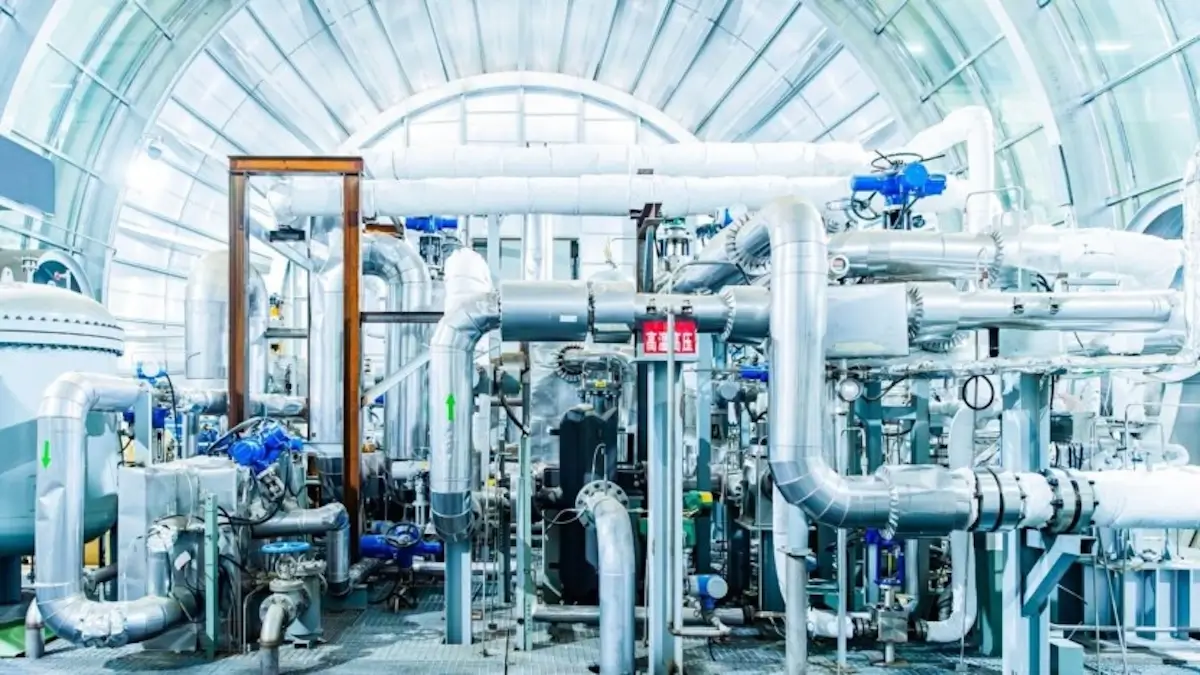
China has commissioned the world’s first CO2 power generator, the Chaotan One, to generate electricity from heat. It uses carbon dioxide instead of steam to transfer heat.
With the Chaotan One project in the Chinese province of Guizhou, China is using waste heat more efficiently than before to generate electricity. A CO2 generator is using supercritical carbon dioxide commercially for the first time. The system completes a technical cycle using carbon dioxide as the working medium to transform heat into energy.
Compared to previous systems, the method is intended to increase the efficiency of electricity generation by around 85 percent. With an output of twice 15 megawatts, the project supplies energy from sources that have so far remained largely unused.
Chaotan One: The world’s first CO2 power generator
The engineers have built the system so compactly that it only takes up half the usual space. The system should only require half as much space for the same performance. This small space requirement allows companies to retrofit the technology even in narrow industrial areas.
Since the system requires fewer components and auxiliary systems, maintenance costs are also reduced. Until now, there have been technical hurdles to efficiently use heat in the medium and high temperature range at low power levels.
The Chaotan One is intended to solve this problem by making energy usable for industry. The technology could also be supplemented with solar systems.
In another test run, experts are already combining the system with liquid salt storage to stabilize the power grid if necessary. This combination of storage and highly efficient power generation is expected to be fully operational by 2028 in order to integrate renewable energy even more flexibly into the existing network.
Early recognition by international experts
What is now in commercial operation in China was already classified as a strategic future technology by the US Department of Energy in 2017 and MIT in 2018. The project marks a global transition from laboratory research to industrial application.
The development promotes new capacities in the energy industry and strengthens collaboration between research and practice. For global industry, this progress means that billions of kilowatt hours of waste heat no longer have to be blown unused into the atmosphere.
Also interesting:
- This is how you find out everything ChatGPT knows about you
- Depot move: What you should definitely pay attention to
- ChatGPT: Activate the reminder function – this is how it works
- ChatGPT 5.2: The new AI model from OpenAI in the test
The post China puts the world’s first CO2 power generator into operation appeared first on BASIC thinking. Follow us too Google News and Flipboard or subscribe to our newsletter UPDATE.
As a Tech Industry expert, I am highly impressed and excited about China’s advancement in clean energy technology with the world’s first CO2 power generator being put into operation. This innovative solution has the potential to significantly reduce carbon emissions and combat climate change on a global scale.
The use of CO2 as a power source not only helps in reducing greenhouse gas emissions but also has the potential to create a more sustainable energy future for all. This breakthrough marks a significant step towards a cleaner and more environmentally friendly energy sector.
I believe that this technology has the potential to revolutionize the way we generate power and could serve as a model for other countries to follow. It is a clear indication that advancements in clean energy technology are not only possible but also necessary for a sustainable future.
I look forward to seeing how this technology evolves and its impact on the global energy landscape. It is a great example of how innovation and technology can be used to address pressing environmental issues and create a more sustainable future for all.
Credits