The article 5-minute training sharpens your eyesight to recognize AI faces first appeared in the online magazine BASIC thinking. With our newsletter UPDATE you can start the day well informed every morning.
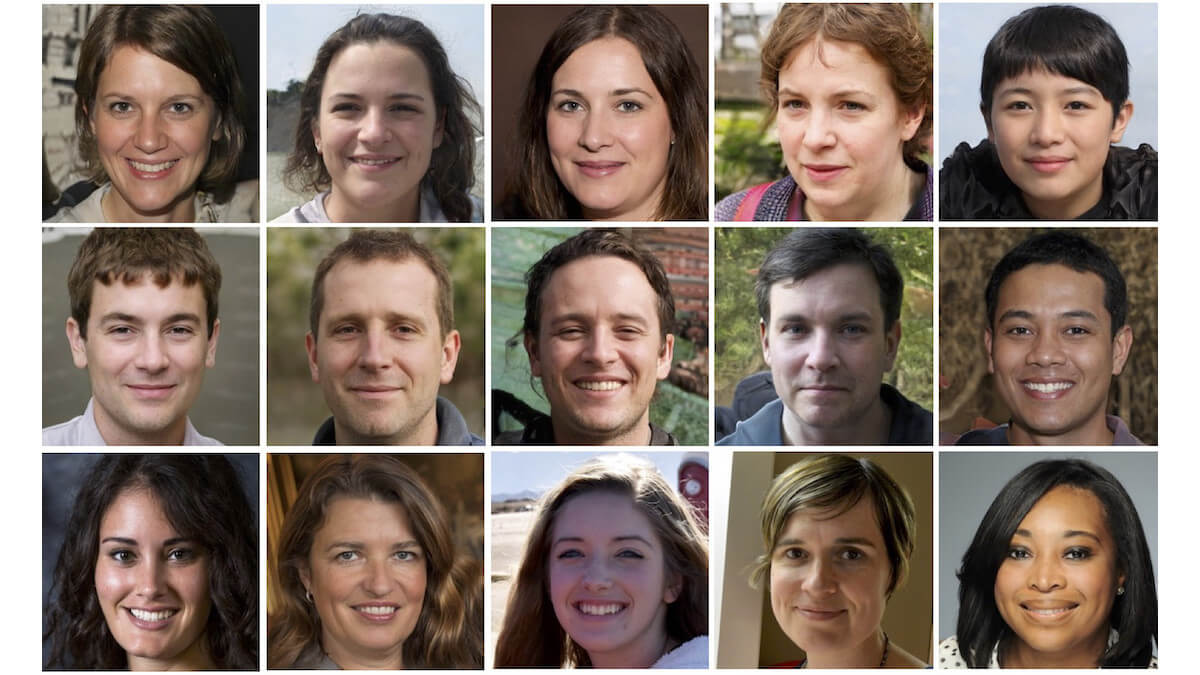
AI-generated faces can be used specifically to deceive and thus facilitate disinformation, identity abuse and manipulation in social networks. However, a new study shows that just a few minutes of training is enough to make people significantly better at recognizing AI-generated faces.
Fake content can spread particularly quickly on social networks. They often remain unchecked and can therefore significantly influence opinions, trust and social debates. This is particularly problematic as users increasingly make decisions based on digital content whose origin and authenticity are difficult to verify.
Ever-improving AI generators are making this problem even worse. Because they make fake content more and more realistic, which enables targeted deception on a large scale.
The boundaries between real and fake are becoming increasingly blurred, making it increasingly difficult to reliably classify digital content. Researchers from the Universities of LeedsReading, Greenwich and Lincoln have now found that just five minutes of training can make people significantly better at distinguishing AI-generated fake faces from real ones.
How well can humans recognize AI-generated faces?
For their study, the in the scientific journal Royal Society Open Science published researchers examined 664 participants’ ability to distinguish between real human and AI-generated faces.
The participants were divided into several groups. A total of 283 participants were classified as so-called super recognizers. These are people who can recognize faces particularly well.
Both groups were then confronted with real and AI-generated images of human faces. To create the fictional images, the researchers used the computer software StyleGAN3. According to the researchers, this was the most advanced system at the time of the study.
“AI images are becoming increasingly easier to create and increasingly difficult to recognize,” explains Dr. Eilidh Noyes from the School of Psychology at the University of Leeds. “They can be misused for criminal purposes, so for security reasons it is crucial that we test methods to detect artificial images.”
Without any training, the super-recognizers were able to correctly recognize fake faces 41 percent of the time. However, study participants with normal abilities only achieved an average of 31 percent.
Training increases the detection rate
Even though AI-generated faces are getting better, there are still often display errors, such as misaligned teeth, unusual hairlines, or deformed or mismatched ears or earrings. With the help of a short training course, the study participants were trained in these errors.
This significantly improved the detection rate in both groups. Super recognizers were able to increase their rate by 20 percent and achieved an average of 61 percent after their short training. Normal participants also recorded an increase of 20 percent after the training and subsequently recognized an average of 51 percent of the fake images.
The fact that the training had the same effect in both groups suggests that the so-called super-recognizers may use different visual cues than typical observers when identifying AI-generated faces. By combining training and using the natural abilities of super-recognizers, problems caused by fake faces on the Internet could be solved, the researchers say.
Also interesting:
- Water consumption by AI: Between scaremongering and real numbers
- ChatGPT: Activate the reminder function – this is how it works
- AI is diluting science – through more and more articles
- This is how you find out everything ChatGPT knows about you
The post 5-minute training sharpens your eyesight to recognize AI faces appeared first on BASIC thinking. Follow us too Google News and Flipboard or subscribe to our newsletter UPDATE.
As a Tech Industry expert, I believe that the development of AI technology has significantly impacted the way we interact with and understand facial recognition. The ability to train individuals to recognize AI faces in just 5 minutes is a remarkable advancement in this field.
This type of training not only sharpens our vision and improves our ability to identify AI faces accurately but also highlights the potential for rapid skill acquisition in the realm of artificial intelligence. By leveraging quick and efficient training methods, we can enhance the capabilities of individuals to identify and work with AI technology more effectively.
Furthermore, the implications of this training extend beyond just recognizing AI faces. It also has the potential to improve overall AI literacy and understanding among the general population, ultimately leading to greater acceptance and integration of AI technology into various aspects of society.
Overall, the development of 5-minute training to sharpen vision for recognizing AI faces is a significant step forward in advancing our understanding and utilization of artificial intelligence. It underscores the importance of continuous learning and adaptation in the ever-evolving tech landscape.
Credits