The article How do Windows 10 and Windows 11 differ from each other? first appeared in the online magazine BASIC thinking. With our newsletter UPDATE you can start the day well informed every morning.
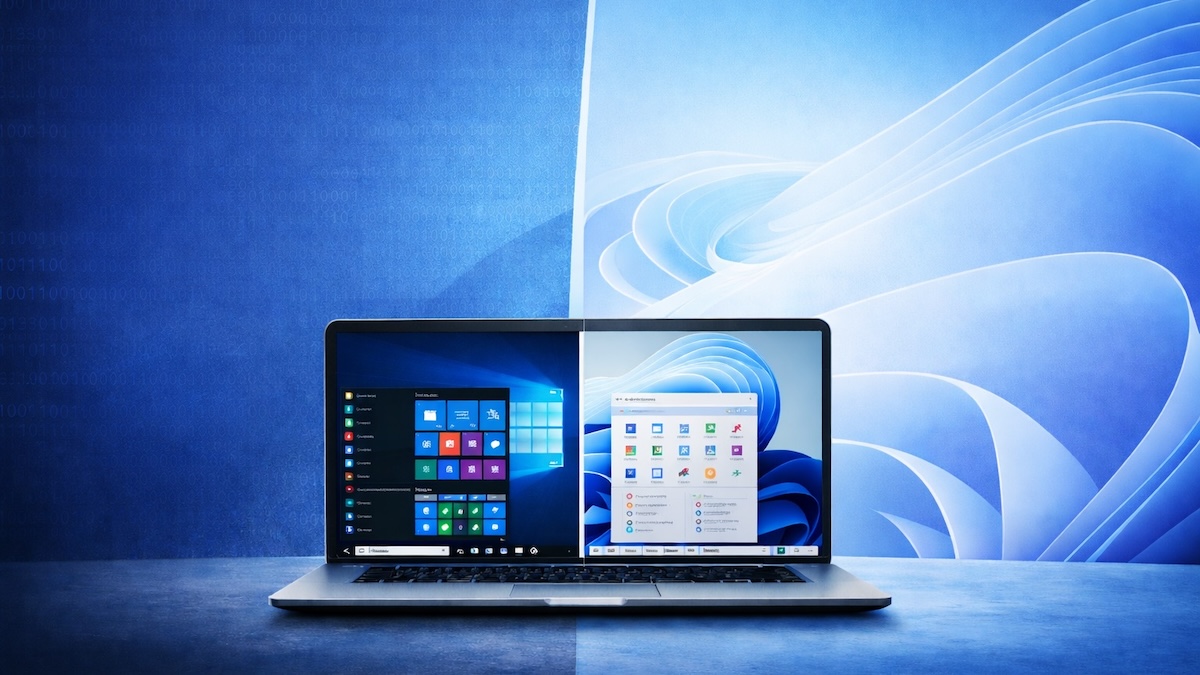
On October 14, 2025, free support for Windows 10 officially ended. There have been no new security updates since then. However, if you don’t want to do without the operating system and have a Microsoft account, you can extend it until October 13, 2026 through a paid ESU program. But is it worth it? Or is switching to Windows 11 the better choice?
Windows 11 – more modern and user-friendly
Compared to Windows 10, the successor operating system comes with a whole range of visual and functional changes. By the way, it doesn’t matter whether you choose the classic version or the Pro version Windows 11 decides.
In both cases, Windows 10’s traditional left-hand layout is replaced with a centered taskbar. Accordingly, the start menu moves to the middle of the screen, which can be a bit unusual at first.
However, most users get used to the change quite quickly. If you can’t get used to it at all, you still have the option of moving both – the start menu and the taskbar – back to the left.
The widgets, which were rather subtle in Windows 10, are also more clearly the focus in Windows 11.
More efficiency and performance with Windows 11
Windows 11 has also taken a huge step forward in terms of performance – especially in terms of energy efficiency and response speed.
For example, the operating system was optimized for the use of multi-core processors. This means that it runs particularly quickly on computers with new hardware.
The improved speed is also noticeable in the boot time. Since this is significantly shorter than with Windows 10 thanks to the optimized memory core and sophisticated memory management, users can access their apps and the working environment more quickly.
Another plus point with Windows 11 is the improved security protocols. They offer a stable and secure system function that proves to be advantageous for private and professional users.
Also that one Energy consumption in the office or home office can be slightly lower thanks to Windows 11. At least when you use the operating system on the laptop. Compared to Windows 10, it promises longer battery life thanks to revised energy management.
Windows 11 offers new features
Windows 11 is not only an improved version of its predecessor in many areas – the operating system offers a number of completely new functions.
For example, the Microsoft Teams program is not presented as a separate app, but is integrated directly into the taskbar. An advantage for anyone who primarily uses their PC or laptop as a means of communication. You can now access chats and video conferences even faster.
One of the notable features of Windows 11 is undoubtedly DirectStorage. It enables more efficient data processing and can therefore load PC games faster.
Another highlight for gamers: With Windows 11, Auto HDR is being introduced for games on the computer. The function can increase the quality of both contrast and colors in games. This means that game worlds are presented visually in a higher quality and with more detail.
Is Windows 11 less compatible compared to Windows 10?
Compared to Windows 10, the subsequent operating system has higher requirements to support hardware. A computer should have TPM 2.0 and Secure Boot to qualify for the switch.
In particular, backward compatibility with drivers and software is less efficient than with Windows 10. As a result, adjustments may be necessary so that older programs work as desired with the new operating system.
The article How do Windows 10 and Windows 11 differ from each other? first appeared on BASIC thinking. Follow us too Google News and Flipboard or subscribe to our newsletter UPDATE.
As a Tech Industry expert, I can say that Windows 10 and Windows 11 have some key differences that set them apart from each other.
One of the main differences between Windows 10 and Windows 11 is the user interface. Windows 11 features a more modern and streamlined design with a centered Start menu, rounded corners, and new animations. This gives Windows 11 a more polished and cohesive look compared to Windows 10.
Another significant difference is in terms of system requirements. Windows 11 has stricter hardware requirements compared to Windows 10, which means not all devices that are currently running Windows 10 will be able to upgrade to Windows 11. This has been a point of contention for some users who may not be able to take advantage of the new features of Windows 11 due to their older hardware.
Additionally, Windows 11 includes new features such as Snap Layouts and Snap Groups, which make it easier to organize and multitask with multiple windows on your desktop. There are also improvements to virtual desktops, gaming performance, and overall system performance in Windows 11.
Overall, Windows 11 builds upon the foundation of Windows 10 with a more modern design and new features, but it also comes with stricter hardware requirements that may limit its adoption for some users. It will be interesting to see how the tech industry responds to these changes and how users will adapt to the new operating system.
Credits