The article From Munich: Europe’s first neuromorphic AI chip first appeared in the online magazine BASIC thinking. With our newsletter UPDATE you can start the day well informed every morning.
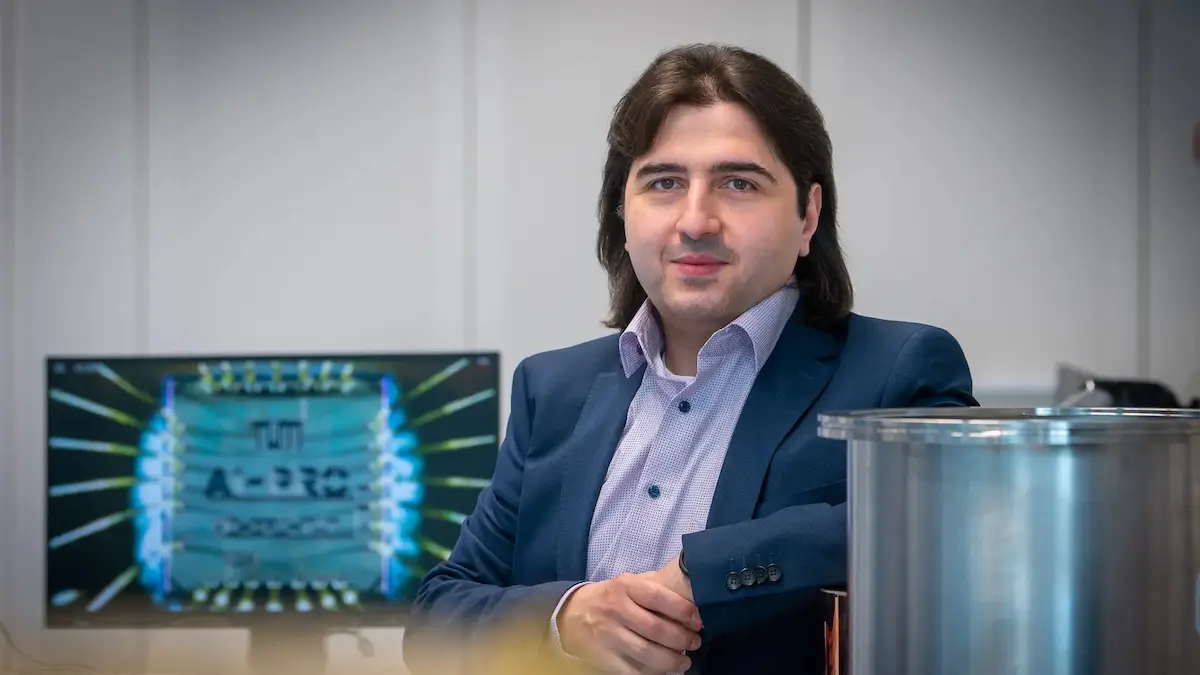
The Technical University of Munich has developed a neuromorphic AI chip based on the modern 7 nanometer standard for the first time, thereby setting an example for technological sovereignty in Europe. The chip processes data locally and is intended to protect privacy.
Europe’s first neuromorphic AI chip is at the Technical University of Munich developedwhich is based on modern seven-nanometer technology. Professor Hussam Amrouch developed it according to the standard of the Taiwanese manufacturer TSMC.
The aim of the project is to strengthen Europe’s technological sovereignty, protect the privacy of end users and reduce dependence on global supply chains. In the future, the researchers want to design at least three new chip designs per year. The European Semiconductor Manufacturing Company (ESMC) will take over production in Dresden from 2028.
Neuromorphic AI chip from Munich: More independence for Europe
This regional production should secure the supply of key technologies and enable local companies to develop AI chips and algorithms independently. Previous experiences from the pandemic and geopolitical changes have shown how vulnerable global trade routes are to disruption.
That’s why the chosen approach covers the entire chain from training to design to physical production. This sequence from teaching to finished hardware is intended to ensure that technological knowledge and production capacities remain within the European Union.
Security through local data processing
In contrast to many cloud-based AI chips, such as those produced by Nvidia, the chip from Munich processes data directly on the device. This so-called edge technology prevents sensitive information from reaching external servers in the cloud. The hardware architecture therefore protects the privacy of the end user.
The chips are based on the open standard RISC-V. This allows engineers to optimize them for specific tasks. The chips are suitable, among other things, for medical applications to evaluate heartbeats or brain signals in real time.
The specialization in individual tasks makes them significantly more efficient compared to general-purpose processors. The specialized processors will also soon be used to control electronics in the field of quantum computing.
Protection against manipulation and promotion of offspring
A central aspect of in-house development is guaranteed security against built-in vulnerabilities or Trojans. Because: Anyone who designs and builds a chip themselves knows exactly its inner workings. Components from non-European countries often represent an incalculable risk, especially for the automotive or defense industries.
By designing and manufacturing in Germany, the developers guarantee the integrity of the hardware for these sensitive areas. The university opened the MACHT-AI research and training center just three months ago. There, students learn the design of processors and the development of suitable algorithms for industry. The Bavarian ministries of science and economics support the center.
Also interesting:
- What are AI agents?
- Gemini: Everything you need to know about Google AI
- ChatGPT is listening: This is how you can deactivate background conversations
- Electricity through steps: the future of sustainable energy?
The post From Munich: Europe’s first neuromorphic AI chip appeared first on BASIC thinking. Follow us too Google News and Flipboard or subscribe to our newsletter UPDATE.
As a Tech Industry expert, I am excited about the development of Europe’s first neuromorphic AI chip in Munich. Neuromorphic computing is a cutting-edge technology that mimics the structure and function of the human brain, allowing for more efficient and powerful artificial intelligence applications.
This new chip has the potential to revolutionize the way we approach AI and machine learning, enabling faster computation and more accurate results. The fact that this innovation is coming out of Europe showcases the region’s commitment to advancing technology and staying competitive in the global tech industry.
I look forward to seeing how this neuromorphic AI chip will be utilized in various industries, from healthcare to autonomous vehicles, and how it will push the boundaries of what is possible with artificial intelligence. This development signifies a significant step forward in the evolution of AI technology, and I am eager to see the impact it will have on the tech industry as a whole.
Credits