The article Green hydrogen: New process uses light and liquid metal first appeared in the online magazine BASIC thinking. With our newsletter UPDATE you can start the day well informed every morning.
Researchers have developed a method to obtain green hydrogen without expensive filters. The process uses liquid metal and sunlight instead of electrolysis.
The School of Chemical and Biomolecular Engineering at the University of Sydney has developed a new method that uses liquid metals and sunlight to produce green hydrogen from water. The researchers published their results in the scientific journal Nature Communications.
The method specifically bypasses technical barriers that previously significantly limited the spread of green hydrogen. Since the process works directly in fresh or sea water, the biggest economic hurdles are eliminated.
Green hydrogen from liquid metal and sunlight
Conventional production of green hydrogen often fails due to the need for high-purity water. Because: Cleaning causes additional costs and significantly increases the technical complexity. The new process, however, processes seawater directly, which simplifies production near ports and industrial areas. The process could enable the generation of sustainable energy in water-scarce regions.
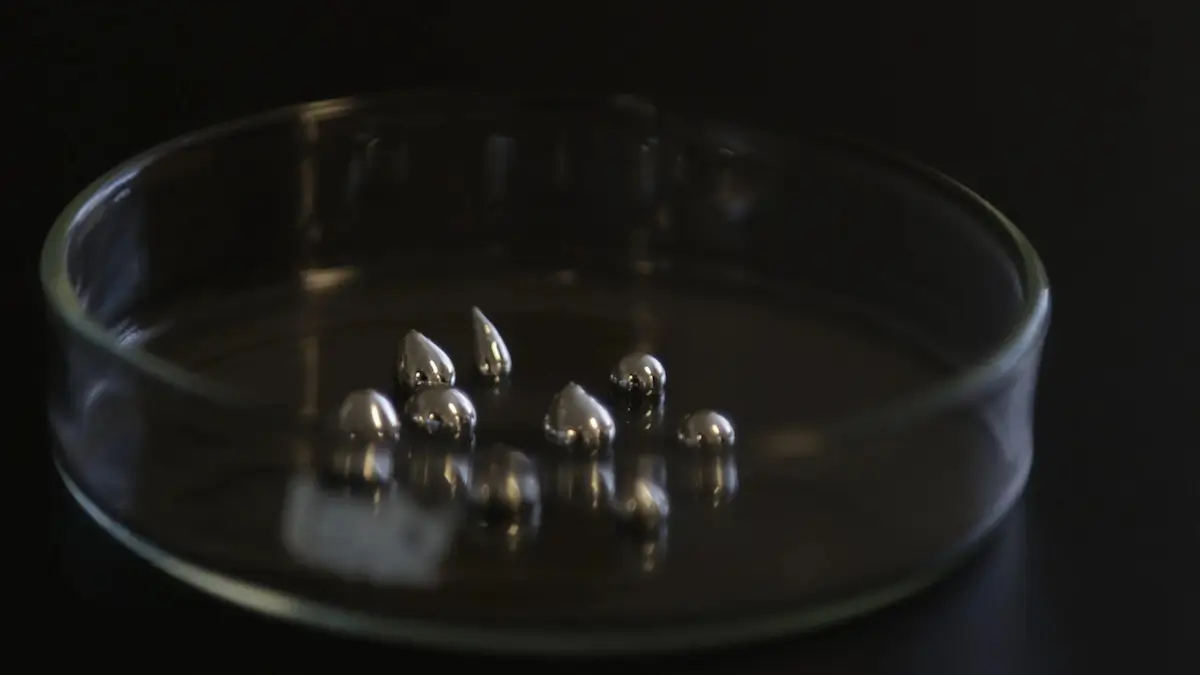
The researchers used tiny gallium particles in the water. The metal has a “non-stick” surface, meaning other materials will not stick to it under normal conditions. While gallium appears solid at room temperature, it melts into reflective puddles at around body temperature. As soon as light hits the droplets immersed in water, the metal on the surface oxidizes and corrodes in a controlled manner.
This targeted corrosion is the real key to releasing the clean hydrogen gas. Gallium absorbs light excellently and actively drives the chemical reaction. Lead researcher Professor Kourosh Kalantar-Zadeh describes the discovery as a simple observation that science had previously simply ignored. By using light sources, the system efficiently breaks down the chemical bonds in the water.
Experimental setup and circular economy
In laboratory experiments, the scientists examined the behavior of liquid gallium in Petri dishes and scaled the structure in cylinders. Doctoral student Luis Campos and his colleagues activated the suspended particles using both natural sunlight and artificial radiation.
The metal reacted with the water to form gallium oxyhydroxide and released the desired hydrogen. The Australian Research Council Discovery Project provides significant funding for the research.
The circular process completely recovers the material used. After extracting the hydrogen, the team chemically reduced the resulting gallium oxyhydroxide. This reduction produced liquid gallium again, so that the closed cycle ensures the constant reuse of the metal. The process therefore saves valuable resources when generating energy.
Hydrogen from sunlight
The researchers achieved a peak hydrogen production efficiency of 12.9 percent. Kalantar-Zadeh considers this value to be highly competitive even in the early stages. He compares the progress with the history of solar energy: silicon-based solar cells started at just six percent in the 1950s. It was only in the 1990s that the cells exceeded the ten percent mark.
The researchers now plan to build a medium-sized reactor to prove the scalability of the technology. Since the process is circular, it conserves resources and enables sustainable energy production. The process therefore offers an efficient solution to meet the global demand for green hydrogen. The simple structure also promises uncomplicated industrial application in the future.
Also interesting:
- ChatGPT is listening: This is how you can deactivate background conversations
- Solar implant with AI should enable blind people to read again
- Vertical wind turbine with AI – for houses in the city
- Electricity through steps: The future of sustainable energy?
The post Green hydrogen: New process uses light and liquid metal appeared first on BASIC thinking. Follow us too Google News and Flipboard or subscribe to our newsletter UPDATE.
As a Tech Industry expert, I am extremely excited about the new process that uses light and liquid metal to produce green hydrogen. This innovative approach has the potential to revolutionize the way we produce hydrogen, which is a crucial element in the transition to a more sustainable energy future.
Green hydrogen, which is produced using renewable energy sources, is a key component in reducing carbon emissions and combating climate change. The traditional methods of producing hydrogen, such as steam methane reforming, are energy-intensive and rely on fossil fuels, making them environmentally damaging.
By using light and liquid metal to produce hydrogen, we can create a more efficient and sustainable process that does not rely on fossil fuels. This could significantly reduce the carbon footprint of hydrogen production and help accelerate the adoption of hydrogen as a clean energy source.
Overall, I believe that this new process has the potential to be a game-changer in the green energy industry and I am excited to see how it develops in the coming years.
Credits