The article Cause of breakdown No. 1: Researchers are making the 12-volt battery in electric cars unnecessary appeared first in the online magazine BASIC thinking. With our newsletter UPDATE you can start the day well informed every morning.
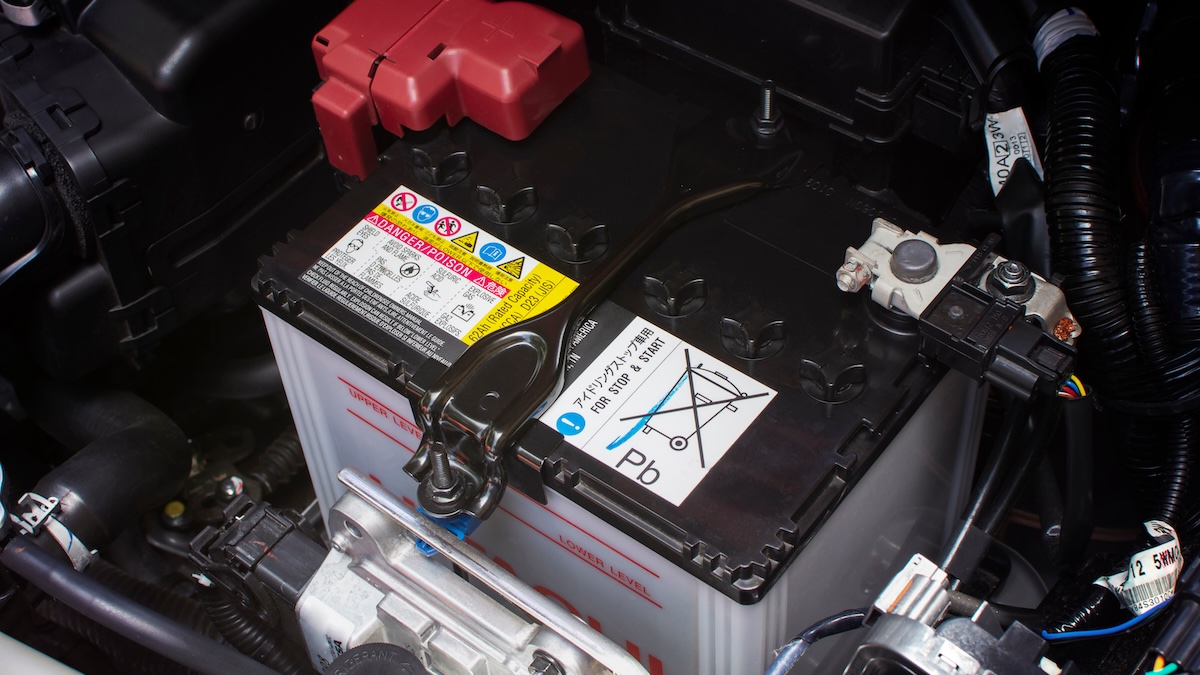
Electric cars could soon do without a central component: the classic 12-volt battery. The Austrian research project REDSEL has developed an electrical system architecture that is intended to make exactly this possible – through redundant high-voltage systems and modern semiconductor technology.
Researchers from Silicon Austria Labs (SAL), Infineon Technologies Austria and AVL List have this REDSEL research project successfully completed after two years at the Graz location. They developed a new architecture for the on-board network of electric vehicles, which should enable a more flexible energy supply in the future.
According to the research report, the structure includes a redundant design for both the high-voltage and low-voltage areas. The aim is to increase the reliability and safety of future electrical systems. The researchers presented the results in the specialized Power Lab at SAL in Graz.
Why the 12-volt battery could be eliminated in electric cars
The research center focuses on electronics and software-based systems at its locations in Graz, Villach and Linz. The scientific work is carried out in close coordination with partners from industry and science along the entire value chain.
Albert Frank, project manager at Silicon Austria Labs, “The technologies developed create the basis for lighter and more robust electrical system systems and thus make an important contribution to the further development of electromobility – including future autonomous applications.”
According to those involved, a central advantage of the new concept is the saving of components in the vehicle. A redundant structure could eliminate the need for classic low-voltage batteries in electric cars in the long term. Eliminating this component gives designers more flexibility in vehicle design. The freed-up space can be used to integrate additional technical components.
New system distributes energy in the vehicle
Future generations of vehicles could have advantages in daily operation thanks to the improved specifications. The results should allow the construction of more compact and fault-tolerant electrical architectures. Such stable systems are considered an essential prerequisite for autonomous driving.
A reliable power supply acts as a safety-critical element for future applications. The core of the REDSEL architecture is active balancing between two high-voltage batteries. This procedure ensures an even load distribution in the vehicle and increases operational safety.
The engineers also designed a power electronics converter with multiple inputs. A novel magnetic integration concept made it possible to realize this converter in a particularly compact and space-saving manner. The system works highly efficiently and saves considerable space compared to conventional models.
To control the voltages on the high-voltage side, the partners installed 750-volt silicon carbide MOSFETs from the CoolSiC series. According to the project report, these components enable reliable processing of high energy flows. They form the technological backbone for the system’s high-voltage architecture.
Semiconductors instead of relays: lighter, safer and more compact
Semiconductors allow precise control of energy flows, which is crucial for the efficiency of the drive train. On the low-voltage side, researchers used OptiMOS-7 components with a voltage of 30 volts for the first time. According to the research report, these should offer significant efficiency advantages compared to the usual 40 volt solutions.
Improved electrical system specifications of modern vehicles made the use of these early development models possible. One focus of the cooperation was on a new security architecture for shutdown functions. Technicians replaced conventional mechanical relays with modern semiconductor switches.
The change reduces the weight and increases the operational reliability of the system. Graduate engineer Ernst Katzmaier, project manager at Infineon Technologies Austria, explains that the system demonstrator impressively demonstrates the advantages of new electrical system architectures. The cooperation shows how practical solutions are created through collaboration between industry and research.
Also interesting:
- Battery technologies in comparison: lithium, sodium, solid state and redox flow
- Buying a used electric car: This is what you should pay attention to
- Why electric cars are cheaper in China than in Germany
- Electric car: What happens if the battery is empty?
The post Cause of breakdown No. 1: Researchers are making the 12-volt battery in electric cars unnecessary appeared first on BASIC thinking. Follow us too Google News and Flipboard or subscribe to our newsletter UPDATE.
As a Tech Industry expert, I believe that the cause of breakdown No. 1, researchers making the 12-volt battery in electric cars unnecessary, is a significant development in the automotive industry. This advancement represents a shift towards more efficient and innovative technologies in electric vehicles.
By eliminating the need for a separate 12-volt battery, researchers are streamlining the design of electric cars and potentially reducing their overall weight and complexity. This could lead to improved performance, increased range, and lower production costs for electric vehicles.
Additionally, the removal of the 12-volt battery could also have positive environmental impacts by reducing the use of lead-acid batteries, which can be harmful to the environment if not properly disposed of.
Overall, I see this development as a positive step forward in the evolution of electric vehicles, and I look forward to seeing how this technology continues to advance in the future.
Credits