The post Do we still need ChatGPT? 4 AI chatbots from Europe at a glance first appeared in the online magazine BASIC thinking. With our newsletter UPDATE you can start the day well informed every morning.
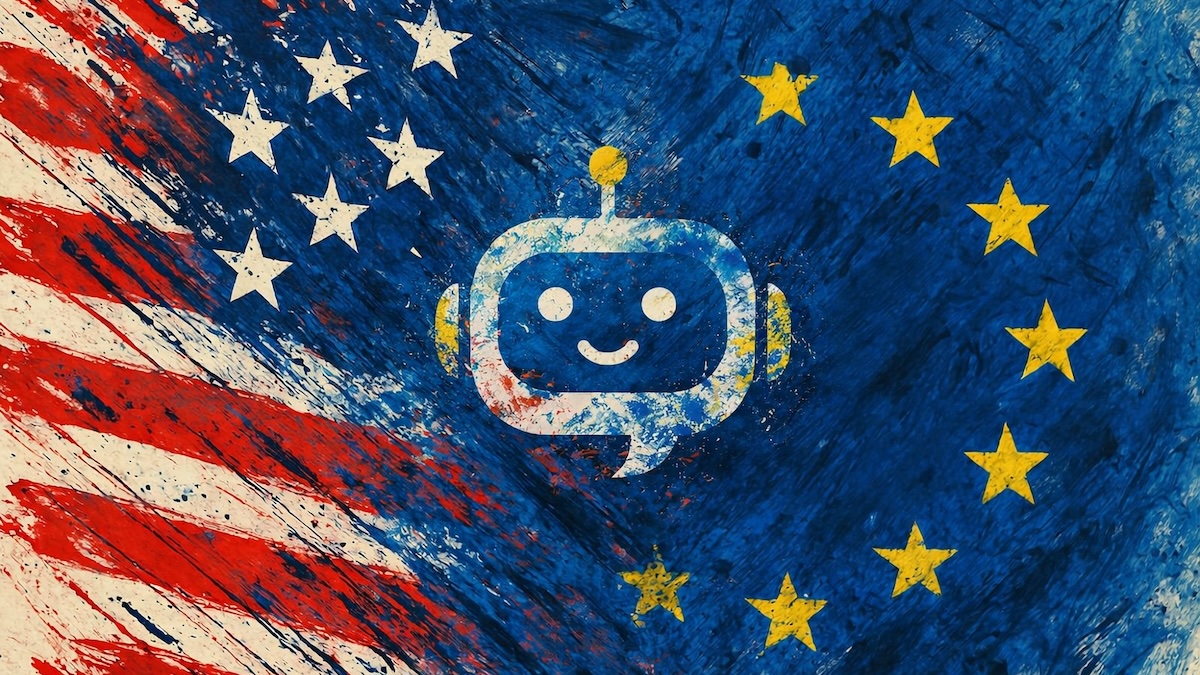
More and more EU citizens are looking for alternatives to ChatGPT. Not only because of data protection, but also because of growing political tensions with the USA. The good news: Europe has now produced its own AI models that can keep up technically.
For decades, Europe’s dependence on American technology was accepted and formed the foundation of our modern IT infrastructure. But in addition to the aversion to digital services from China that has grown in recent years, products from the United States are now also being questioned.
Companies like Apple, Microsoft, Amazon, Google, OpenAI and Meta not only have enormous market power, but they also exploit it – sometimes with anti-competitive practices. Many users also have concerns that sensitive data is not safe in the hands of US companies.
Since US President Donald Trump took office again, the topic has become more important again, as the question increasingly arises as to whether the USA is still a reliable partner for Europe. Trump’s foreign and trade policy decisions, such as his tariff policy, at least fuel doubts.
Why chatbots from Europe are becoming more important
Critics see politics and business becoming ever more closely intertwined in the USA, as Trump appears to be cooperating with many tech CEOs. Money and progress come first, user interests and data protection must come second. Fortunately, Europe has caught up significantly technologically in recent years.
Many alternatives “Made in Europe” see themselves as a counter-model to American technologies. The providers often rely on sustainability, data protection and clear terms of use. That’s why we present four chatbots from Europe here. Previously we looked at office applications and payment providers.
1. Le Chat: What can Europe’s fastest chatbot do?
Le Chat from Paris-based Mistral AI is a powerful all-rounder that has quickly established itself as a serious European alternative. Mistral AI takes an open source approach. This not only means transparency for the community, but also enables developers worldwide to adapt the various models and securely integrate them into their own products. Technically, Le Chat is one of the fastest AIs on the market with response times of up to 1,000 words per second. The tool supports multiple languages and offers access to live data from the Internet. Thanks to a cooperation with the Freiburg startup Black Forest Labs, it is also possible to generate high-quality images directly in the chat. The basic version is accessible free of charge, and the Pro version with additional capacities and even faster processing times is available for around 15 euros per month.
2. Lumo by Proton: The chatbot that doesn’t store data
Lumo, developed by Proton, promises secure communication. Users are not exploited as a data source by Swiss AI, and stored conversations can only be read on their own device. Even Proton has no access to the data. Lumo is powered by optimized open source models and optionally foregoes online research to maximize privacy. In addition, the source code is publicly visible, which means that tracking or secret training with user data can be ruled out. The infrastructure is entirely in Europe, which guarantees compliance with the GDPR. Lumo is available in a free version, the Plus plan for around 10 to 13 euros per month allows unlimited chats and the upload of large amounts of data.
3. Aleph Alpha: Why authorities rely on this AI
While other AI models often hallucinate, the Heidelberg company Aleph Alpha relies on maximum transparency with its models Luminous and Pharia. At the push of a button, users can see which specific passages in the sources an answer is based on. This makes the bot an ideal tool for authorities, law firms and industrial companies that cannot afford to make mistakes. The focus is on data sovereignty and European security standards. Companies can seamlessly integrate AI agents into their own systems without sensitive data leaking out.
4. Kyutai: This is how Europe’s first native language model works
The French company Kyutai offers models that can compete with the voice functions of ChatGPT and Co. With the AI Moshi, the research laboratory has developed the first native language model from Europe. Unlike traditional bots that first need to convert text into speech, Moshi “thinks” as it speaks. This leads to low latencies and natural conversation dynamics. Moshi can understand and imitate emotions in real time. Another model of Kyutai is Hibiki, which offers real-time simultaneous translation. Since Kyutai relies on “open science”, the technology is particularly popular in the developer scene.
Conclusion: Chatbots from Europe
The selection of European chatbots is now quite diverse. If you are looking for an assistant suitable for everyday use with a focus on transparency, Le Chat is the right choice. AI is currently the EU’s flagship product. For private users who prioritize the protection of their personal data, Proton’s Lumo is a good choice. Companies and government institutions that rely on reliability and transparency will find the ideal partner in Aleph Alpha. And Kyutai’s models offer real innovations when it comes to voice features.
Also interesting:
- 4 password managers from Europe that protect your data securely
- Alternatives to US software: 4 video call providers from Europe
- Alternatives to US software: 4 search engines from Europe
- Analysis: Why Apple is in the AI crisis
The post Do we still need ChatGPT? 4 AI chatbots from Europe at a glance appeared first on BASIC thinking. Follow us too Google News and Flipboard or subscribe to our newsletter UPDATE.
As a Tech Industry expert, I believe that ChatGPT and other AI chatbots still have a valuable role to play in today’s digital landscape. While advancements in AI technology have allowed for more sophisticated and personalized interactions, there is still a need for chatbots that can provide quick and efficient responses to basic queries and tasks.
The 4 AI chatbots from Europe mentioned in the article each bring their own unique features and capabilities to the table. It is important for businesses to carefully evaluate their needs and choose a chatbot that aligns with their goals and objectives. Some may prioritize natural language processing and sentiment analysis, while others may value multilingual support and integration with existing systems.
Overall, the continued development and adoption of AI chatbots in various industries demonstrates the importance of leveraging technology to improve customer service, streamline operations, and drive business growth. While human interaction remains essential in certain situations, chatbots can serve as a valuable tool in enhancing efficiency and delivering a seamless customer experience.
Credits