The article Cars with solar cells could cover up to 80 percent of their energy needs first appeared in the online magazine BASIC thinking. With our newsletter UPDATE you can start the day well informed every morning.
Electric cars that supply themselves with electricity: What sounds like a dream of the future is already within reach, according to a new EU study involving Fraunhofer ISE. In southern Europe, vehicles with integrated solar cells could cover up to 80 percent of their energy needs themselves. This would not only have advantages for vehicle owners, but could also reduce the burden on Europe’s power grids by terawatt hours.
In Central Europe, cars could produce up to 55 percent of their annual energy needs using their own solar cells. In southern Europe this proportion is said to be up to 80 percent. The prerequisite: short usage cycles and a large roof area. For vehicle owners, this would mean fewer charging processes and a significant increase in comfort in everyday life.
The SolarMoves project investigated the potential of vehicle-integrated photovoltaics on behalf of the European Commission. There were next to it the Fraunhofer ISE International partners also involved. The research team tested vehicles with solar modules integrated into roofs, hoods and side walls. The electricity was thus generated directly at the point of consumption.
How much solar vehicles could relieve pressure on Europe’s power grids
In addition to the advantages for consumers, the results reveal a significant impact on the basic energy supply. A simulation showed that electricity demand from the European grid could fall significantly. If all new vehicles between 2024 and 2030 were equipped with solar modules, around 15.6 terawatt hours could be saved in 2030. This corresponds to the annual production of 2,200 onshore wind turbines with an output of three megawatts.
The research team based its calculations on a broad database of practical data. Weather data was also included in the evaluation. Christian Braun, scientist at Fraunhofer ISE, explained the data collection procedure:
The study analyzed data from 23 different vehicle types – from compact city cars to heavy trucks – and combined detailed vehicle and driving profiles with Meteosat satellite data, as well as meteorological data from Amsterdam and Madrid. For this purpose, the vehicles were equipped with sensors and measurement data from 1.3 million kilometers driven were evaluated.
Why solar cells on trucks pay off particularly quickly
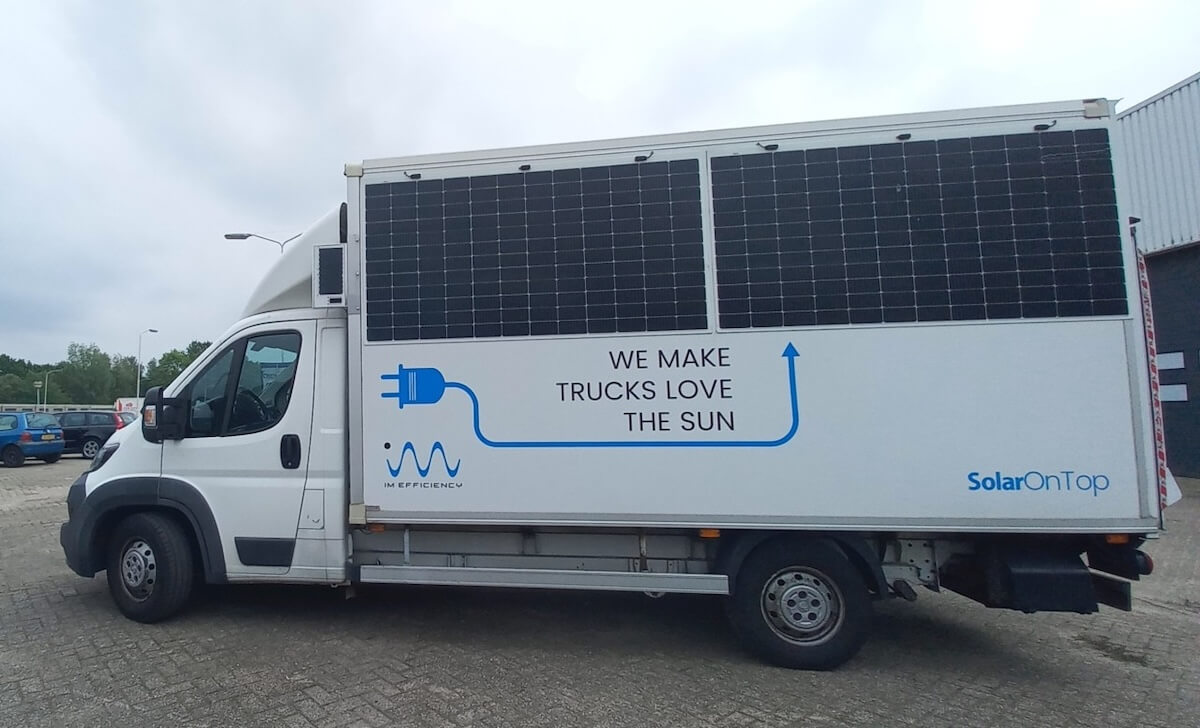
The research team sees great potential in the logistics sector. Delivery vans and trucks have large roof areas and would require a lot of energy for cooling or heating. In electric trucks, the daily range could be extended by up to 15 percent using the cells. Truck trailers with solar panels on the roof and side walls could generate enough electricity in the summer to run cooling systems with completely zero emissions.
The technology also offers economic incentives for diesel trucks. If auxiliary units require less fuel, overall consumption drops significantly. According to the calculations, the investment costs for the solar modules could be paid back in less than two years. The research consortium therefore recommends including vehicle-integrated photovoltaics in official test procedures and creating a tax framework.
Also interesting:
- Register a balcony power plant: This is how you avoid a fine of up to 50,000 euros
- Balcony power plant with 7,000 watts: Who is the new VDE rule worthwhile for?
- Balcony power plant from 200 euros: This is how quickly the investment pays off
- Mini wind turbine for the home: Why the yields are often disappointing
The post Cars with solar cells could cover up to 80 percent of their energy needs appeared first on BASIC thinking. Follow us too Google News and Flipboard or subscribe to our newsletter UPDATE.
As a tech industry expert, I believe that cars with solar cells that can cover up to 80 percent of their energy needs have the potential to revolutionize the automotive industry. This technology represents a significant step towards reducing our dependence on fossil fuels and transitioning towards more sustainable energy sources.
Not only will cars with solar cells help reduce carbon emissions and combat climate change, but they also have the potential to significantly reduce operating costs for drivers. By harnessing the power of the sun, drivers can potentially save money on fuel and electricity costs, making electric vehicles even more cost-effective and appealing to consumers.
Additionally, cars with solar cells can help increase energy independence and resilience, as drivers can generate their own electricity on the go. This can be especially beneficial during natural disasters or emergencies when access to traditional fuel sources may be limited.
Overall, I believe that the development and adoption of cars with solar cells represent a promising and exciting advancement in the automotive industry. With continued research and innovation, I am confident that we will see even greater advancements in this technology in the years to come.
Credits