The article Cloud Edge Enhancement: Cloud effect pushes solar systems above rated output first appeared in the online magazine BASIC thinking. With our newsletter UPDATE you can start the day well informed every morning.
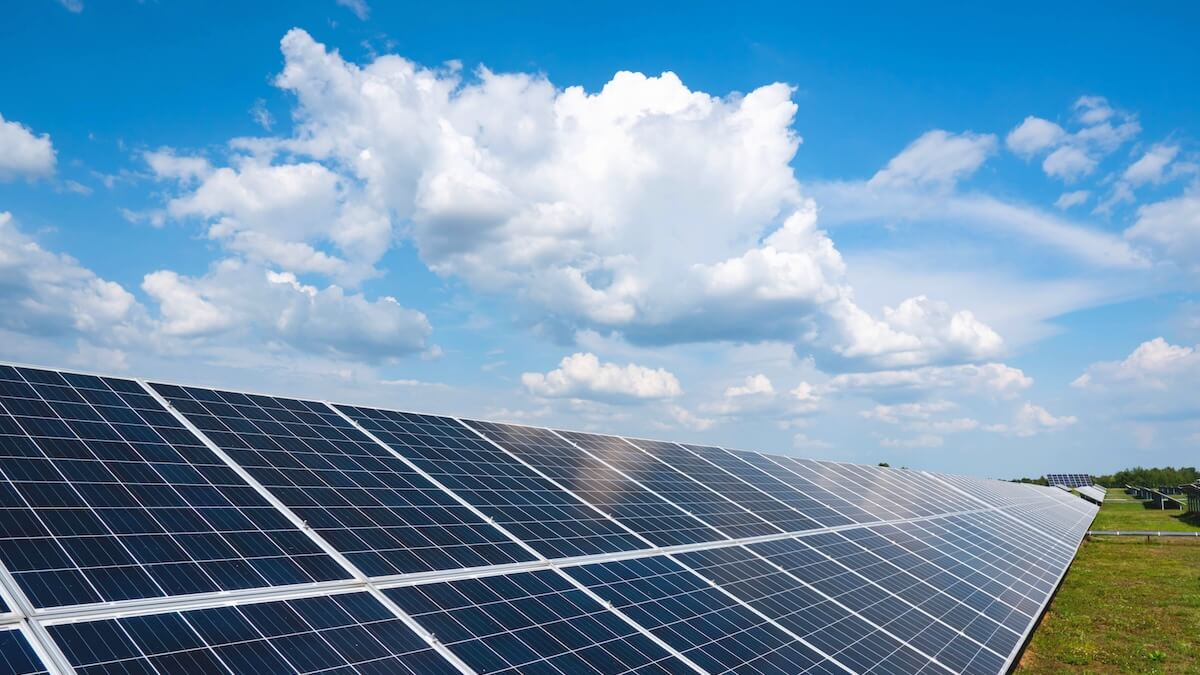
Clouds are considered the natural enemy of every solar system. But under certain conditions, they can even increase electricity production beyond the modules’ rated output. This is due to the so-called cloud edge enhancement effect, which researchers from Finland’s Tampere University documented in a study in the journal Solar Energy. We will explain to you here what exactly happens and how strong the effect is.
Solar energy is one of the most important pillars of the energy transition. Because it supplies climate-friendly electricity and can thus reduce dependence on fossil fuels.
However, how efficiently a photovoltaic system actually works depends largely on the location. In addition to the number of hours of sunshine, factors such as orientation, angle of inclination, possible shading from buildings or trees and regional weather conditions also play a decisive role.
Bad weather in particular can significantly affect electricity production. For example, dense cloud cover can reduce solar radiation, while rain and fog also weaken the intensity.
But clouds do not necessarily have to be negative for electricity production with solar systems. Because under certain conditions they can actually significantly increase performance.
What is Cloud Edge Enhancement?
This phenomenon is known as the “cloud edge enhancement” effect and describes a short-term increase in the performance of solar systems. This is caused by the reflection and scattering of sunlight at the edges of clouds.
The clouds also reflect and concentrate the sunlight. As a result, more radiation hits the solar modules in the short term than when the sky is completely clear.
This effect can significantly increase electricity production for a short period of time. In these cases, the performance is sometimes even higher than the usual peak values when the sky is clear.
The modules can even exceed the rated power specified by the manufacturer. This is because manufacturers measure performance under standardized test conditions with uniform sunlight.
An irradiation of exactly 1,000 watts per square meter is simulated under laboratory conditions at a cell temperature of 25 degrees Celsius. Weather phenomena, such as the “Cloud Edge Enhancement” effect, are not taken into account.
Up to 1.5 times the irradiance: When the edges of clouds direct sunlight onto solar modules
Even if the cloud edge enhancement effect seems surprising at first glance, it is no longer a fringe phenomenon in science. Researchers in atmospheric and solar technology have repeatedly measured the short-term power boost under certain cloud constellations and documented it in numerous studies.
The radiation enhancement at the edge of the cloud that occurs during this effect is a physically explainable and reproducible weather phenomenon that can occur under clearly defined conditions. Especially in photovoltaic research, it is considered an important factor for short-term power peaks and network fluctuations.
A study by the Finnish Tampere University in the specialist journal Solar energy published confirmed the effect. Accordingly, in Nordic latitudes the irradiation could be 1.5 times the expected irradiation under clear skies.
The typical duration of radiation amplification ranges from a few seconds to tens of seconds. The effect can last for a maximum of several minutes.
Also interesting:
- Wind and solar are not enough: phasing out fossil fuels requires 80 percent more electricity
- Climate change puts a strain on the power grid: 53 percent more outages in summer
- Balcony power plant with 7,000 watts: Who is the new VDE rule worthwhile for?
- PV system: payback in 10 years? An honest calculation
The post Cloud Edge Enhancement: Cloud effect pushes solar systems above rated output appeared first on BASIC thinking. Follow us too Google News and Flipboard or subscribe to our newsletter UPDATE.
As a tech industry expert, I find the concept of Cloud Edge Enhancement fascinating. By leveraging advancements in cloud computing and edge computing technologies, solar systems can now achieve output levels that exceed their rated capacity. This is a significant development in the renewable energy sector, as it allows for increased efficiency and productivity in solar energy generation.
Cloud Edge Enhancement works by using real-time data and predictive analytics to optimize the performance of solar systems based on cloud cover and other environmental factors. By adjusting the angle of solar panels, tracking the movement of clouds, and dynamically managing energy storage, solar systems can now consistently produce more energy than previously thought possible.
This technology has the potential to revolutionize the solar energy industry, making renewable energy sources even more reliable and cost-effective. By maximizing the output of solar systems, Cloud Edge Enhancement can help reduce reliance on traditional fossil fuels and accelerate the transition to a cleaner, more sustainable energy future.
Overall, I believe that Cloud Edge Enhancement represents a significant advancement in the field of renewable energy and demonstrates the power of innovation in driving positive change for the environment and society as a whole.
Credits