The article AI watches you in the supermarket – and not just as a store detective – first appeared in the online magazine BASIC thinking. With our newsletter UPDATE you can start the day well informed every morning.
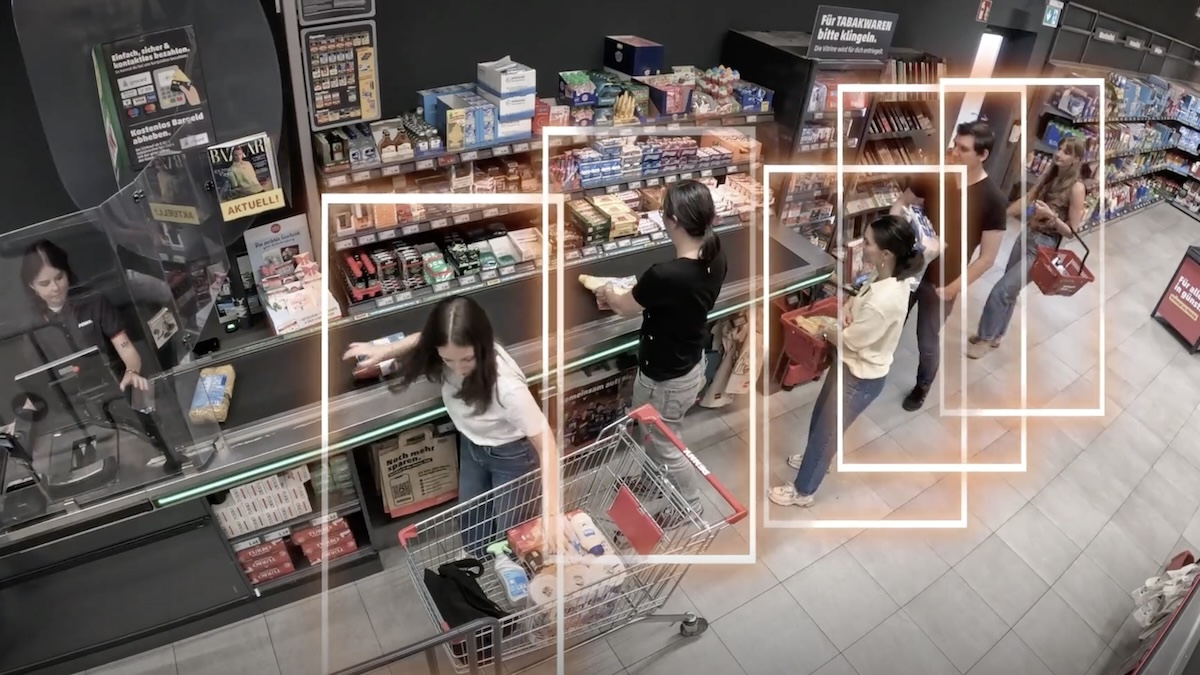
Rewe uses AI to observe suspicious shopping baskets at the self-service checkout. Penny controls the checkout queues with cameras and Aldi is testing completely cashierless branches. A new digital infrastructure is currently being created in the German food trade that goes far beyond simple automation. But where algorithms prepare decisions, there are always reservations and risks. A commentary analysis.
In the supermarket: Rewe, Penny and Aldi are already using AI
- The Rewe Group now uses various AI technologies. One announcement According to this, artificial intelligence should in the future avoid long queues at the checkouts of the subsidiary Penny. The AI model Eagle Eye To do this, scans the number of customers and informs employees as soon as there are too many people at a checkout. Employees can then decide whether to respond accordingly.
- Rewe uses this in its own branches AI model to catch shoplifters. The system is supposed to do this Recognize abnormalities when paying at the self-service checkout can. If there are inconsistencies at self-scanning checkouts, the AI should alert employees to take a closer look at a shopping basket. Artificial intelligence scans products using a camera to check purchases for plausibility.
- Aldi Süd is also using its “SHOP&GO” approach cashier-free shopping with app, cameras, AI and sensors. There is a similar Rewe store in Munich. In the “Pick and Go” branch Purchases are recorded automatically using camera and sensor technology. The artificial intelligence recognizes the products in the shopping cart and debits the amount directly via the app. Customers do not have to place goods on the conveyor belt, scan them themselves or pay at the checkout.
Comfort or control? What AI really means in the supermarket
Supermarkets are increasingly becoming surveillance rooms. What cashiers once mastered with experience, knowledge of human nature and a quick glance will now be taken over by algorithms. AI becomes not just a tool that promises efficiency, but one invisible branch managerwho constantly calculates and observes.
A previous one The basic principle is massively shifted. The technology does not only intervene once something has happened, but rather assesses probabilities in advance. Anyone who makes an unusual purchase at a self-service checkout will not necessarily be noticed because of misconduct, but because of a statistical deviation.
The retail groups are selling this development as a convenience gain. In theory, shorter lines or faster checkout processes can make shopping more pleasant. But if you want comfort, also makes itself somewhat transparent.
But that’s exactly where the explosiveness lies; in a gradual shift in what is considered normal. Because hardly anything works as harmless as weekly shopping. But AI supermarkets could make it a larger venue. But: How much control do consumers accept in everyday life if they save a few seconds of time?
Voices
- Alexander Kelleter, digitalization project manager at Pennyto Feature of Eagle Eye: “The AI counts the skeletons, i.e. the customers in the checkout area. As soon as a certain threshold is exceeded, the system then reports to the checkout that another checkout should be opened.” Lukas Fömpe, Product Owner Store Automation Solution at REWE digital, added: “Because we look from the ceiling perspective, a person looks different to us than they look from the front. We had to invest a lot in development. (…) The solutions we use are data protection compliant.”
- Rewe CEO Lionel Souque declared to be an AI store detective to Focus Online (€): “An AI program can be used to recognize if a shopping basket that is scanned at the self-service checkout is not plausible. (…) If a customer scans ten Red Bull cans on Friday afternoon but not a vodka bottle, the AI can give a tip. The AI knows, based on millions of comparison data from digital shopping baskets, that something might not add up.”
- A Reddit user mockingly: “We’re firing 10 people because we no longer need them thanks to self-service checkouts. We’re hiring 15 people because they have to check the AI results. We’re losing 20 customers because they feel like they’ve been screwed over. I only see winners.” Another added: “How can you, as a CEO, make such a stupid statement? If you don’t buy alcohol, you’re suspicious?”
What the supermarket of the future could look like
The classic supermarket checkout could increasingly disappear. Many companies are implementing a completely new infrastructure with cameras, sensors and AI systems. The supermarket of the future not only recognizes what customers buy, but also when they come, how they move and where bottlenecks arise. Business will become smarter as a result, but also less understandable.
This also increases the pressure in terms of transparency. Because the more decisions algorithms prepare, the more precisely consumers will want to know according to which rules they are evaluated. The next question of trust in retail may not be about prices or products, but rather about the digital house rules behind the cameras.
If the technology works unobtrusively and comprehensibly, it could one day become self-evident. But it gives the impression of one digital general suspicionthe promise of customer friendliness threatens to become a reputational risk.
Also interesting:
- New network fees: Solar owners should pay up to 100 euros in the basic price
- Leasing: Will electric cars become smartphones on wheels?
- A world without AI? Germany is deeply divided
- Constant digital stress: The big fight against your own smartphone
The article AI watches you in the supermarket – and not just as a store detective appeared first on BASIC thinking. Follow us too Google News and Flipboard or subscribe to our newsletter UPDATE.
As a Tech Industry expert, I am fascinated by the potential applications of AI watches in supermarkets beyond just security purposes. These devices have the capability to revolutionize the retail experience by providing valuable data and insights to both customers and store owners.
For customers, AI watches could offer personalized shopping recommendations based on their past purchases and preferences. This could enhance the overall shopping experience and make it more convenient and efficient. Additionally, AI watches could also help customers navigate the store more easily by providing real-time updates on the location of products and promotions.
From a store owner’s perspective, AI watches could provide valuable data on customer behavior and shopping patterns. This information could be used to optimize store layout, product placement, and pricing strategies to maximize sales and improve overall customer satisfaction.
Overall, the potential of AI watches in supermarkets goes far beyond just security monitoring. With the right implementation and integration, these devices have the power to transform the retail experience and drive innovation in the industry.
Credits