The article First large hydrogen engine feeds electricity into the Spanish grid first appeared in the online magazine BASIC thinking. With our newsletter UPDATE you can start the day well informed every morning.
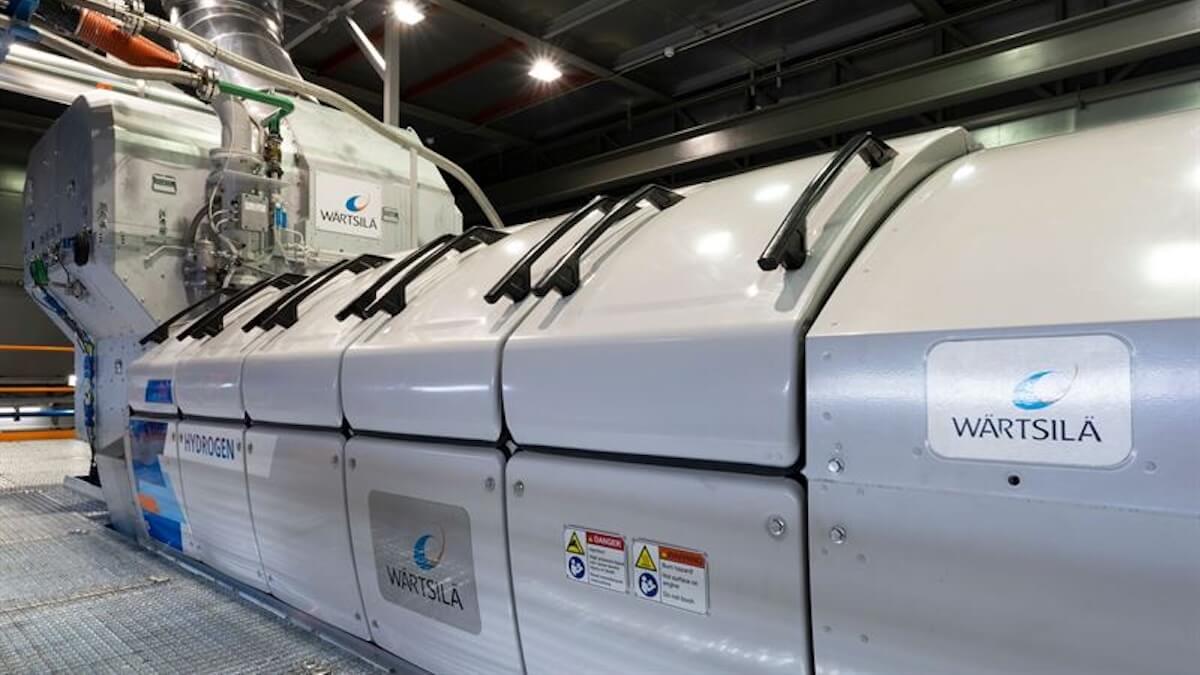
A newly developed large engine was operated entirely with hydrogen for the first time in Spain and was able to successfully feed electricity into the grid. The test is considered an important step on the way to climate-neutral power plant solutions for industry. The system was developed to generate flexible, emission-free energy on a large scale in the future.
The European Union has undertaken a far-reaching restructuring of the energy system with the goal of climate neutrality by 2050. In order to achieve these targets, the expansion of renewable energies must be massively accelerated in the coming years.
At the same time, this transformation poses significant challenges for the energy system. The feed-in from renewable sources such as sun and wind can fluctuate greatly depending on the weather and season.
It is precisely for these lulls that flexible backup capacities are needed that can be accessed at any time and can compensate for short-term fluctuations in the electricity supply. In addition to modern storage technologies, this also includes controllable power plants that can be operated with climate-neutral energy sources such as hydrogen.
Such technology has now been launched in Spain. In the Wärtsilä laboratory in Bermeo For the first time, a large engine was put into operation that runs 100 percent on hydrogen and can feed electricity into the Spanish grid.
Large hydrogen engine is the first of its kind in the world
The test in Bermeo, Spain, is based on a record-breaking engine from shipping. The Wärtsilä 31 was released as a marine engine in 2015 and went straight away as the world’s most efficient four-stroke diesel engine in the Guinness Book of Records a.
“As countries rapidly advance the expansion of wind and solar energy, one of the biggest challenges of the energy transition is to sustainably ensure reliable electricity supply even during periods of low renewable generation or peak demand,” explains Rasmus Teir, Director of Technology Strategy & Decarbonization at Wärtsilä. “Our Wärtsilä 31H2 hydrogen engine today runs on 100 percent hydrogen and feeds electricity into the Spanish national grid.”
The company is proving that large hydrogen engines can deliver flexible, sustainable energy on demand, which is necessary for future systems based on renewable energy. According to the manufacturer, the power plant in which the Wärtsilä 31H2 engine is installed is designed to supply fast-growing and energy-intensive industries.
These include, among others, data centers, manufacturing companies and industry. With the help of a power plant based on large hydrogen engines, locations can be supplied with sustainable electricity independently of the grid and flexibly.
Why hydrogen electricity is not really green yet
Wärtsilä’s research and development laboratory in Bermeo has been working on this development since 2020. First, mixtures were prepared to which more hydrogen was gradually added.
The laboratory was now able to operate the engine completely with pure hydrogen under full load. Unfortunately, the facility is not yet completely green.
Because as José Ramón Isasi, director of the center in Bermeo, to the Spanish newspaper El Economista saidit is currently “not green hydrogen”. The hydrogen used is “produced through an electrolytic process using electricity that does not come from solar energy”.
This means that for now only the combustion of the hydrogen itself is CO2-free. However, the very hot combustion produces nitrogen oxides that must be treated in order to reduce emissions. Climate-neutral production is aimed for in the future, but has not yet been implemented.
Also interesting:
- Cloud Edge Enhancement: Cloud effect pushes solar systems above rated output
- Wind and solar are not enough: phasing out fossil fuels requires 80 percent more electricity
- Climate change puts a strain on the power grid: 53 percent more outages in summer
- PV system: payback in 10 years? An honest calculation
The post First large hydrogen engine feeds electricity into the Spanish grid appeared first on BASIC thinking. Follow us too Google News and Flipboard or subscribe to our newsletter UPDATE.
As a tech industry expert, I am excited to see advancements in hydrogen engine technology being used to feed electricity into the Spanish grid. Hydrogen engines have the potential to play a significant role in the transition to a more sustainable energy system by providing a clean and efficient source of power generation.
This development demonstrates the growing interest and investment in hydrogen as a viable alternative to traditional fossil fuels. The use of hydrogen engines can help reduce greenhouse gas emissions and improve air quality, making it a promising solution for addressing climate change and meeting renewable energy targets.
I believe that continued research and development in hydrogen engine technology will be crucial in unlocking its full potential and driving widespread adoption. The successful integration of hydrogen engines into the electricity grid in Spain is a positive step forward, and I look forward to seeing similar initiatives in other parts of the world.
Credits