The article AI fraud: Why you can no longer trust your senses appeared first in the online magazine BASIC thinking. With our newsletter UPDATE you can start the day well informed every morning.
Scams have existed since the dawn of humanity. Every technological innovation has been misused by fraudsters to make a profit. We only think about text messages or emails that want our passwords. With AI tools improving every day, the point has come when common sense is no longer enough. A commentary analysis.
AI fraud continues to increase
- The Federal Office for Information Security (BSI) issues an annual report IT security situation in Germany. In the latest evaluation It is said that more than one in five Germans (22 percent) have already been affected by cybercrime. In 2025, seven percent of Germans will be that way Victim of an online crime become.
- At 43 percent, “fraud” comes in first place, ahead of fake online shops (22 percent) and data theft (20 percent). AI applications end up relatively far behind at two percent Ranking. However, the existence of AI fraud and AI manipulation in an official evaluation underlines that artificial intelligence is also on the dark side of the internet has arrived.
- This also underlines how great the danger actually is Risk barometer from the insurer Allianz, which was published in January 2026. According to this, “artificial intelligence” is the 32 percent after cyber incidents second largest source of danger. Not just anyone shares this assessment, but over 3,000 risk management experts in a representative survey.
Biggest weak point: people
Allianz’s risk assessment with regard to the dangers posed by artificial intelligence is certainly not exaggerated. This is evident from the alone diverse possible uses for AI Crime. Perfect messages without spelling or grammatical errors and tailored to the victim’s personal writing style? Delivers AI.
Fake calls of supposed accidents in which supposed relatives cry into the phone? Can be easily created from audio files – for example from publicly viewable Instagram Reels. AI regulates.
Your boss whose AI image asks you to make a transfer from your company account via a deepfake in a Teams meeting? AI makes it possible.
The problem – professionally and privately – is ourselves People are and remain the greatest weak point in technical systems. We respond wonderfully to emotional blackmail and forget to think when pressed for time. As a result, we make mistakes that we would deny that we made in everyday life. Transfer money to a stranger? Never! Nevertheless, fraudsters steal large sums of money every day.
Voices
- BSI President Claudia Plattner and Federal Minister of the Interior Alexander Dobrindt see in their conclusion The population has a duty: “Protecting attack surfaces is the decisive lever for improving cybersecurity in 2026. As this year’s report shows, attackers are increasingly choosing easy-to-attack targets with poor resilience. Only those who actively protect themselves increase the chances of escaping threats or minimizing harmful effects. Citizens must increase their awareness of cybersecurity and become more resilient.”
- The Internet Organized Crime Threat Assessment (IOCTA) of the European police authority Europol warns in one report: “Through the widespread use of Large Language Models (LLMs) and generative AI, social engineering methods are becoming more powerful: communication is tailored precisely to the victims, while criminal processes are automated at the same time.”
- Michael Bruch, Global Head of Risk Consulting Advisory Services at Allianz Commercialrefers to artificial intelligence as Big movers: “The rapid evolution and adoption of AI is fundamentally reshaping the global risk landscape, making it one of the key threats facing businesses. While it might be seen as just another item on the ever-growing list of business challenges, its transformative potential is a game-changer.”
AI fraud: Why you can no longer trust your senses
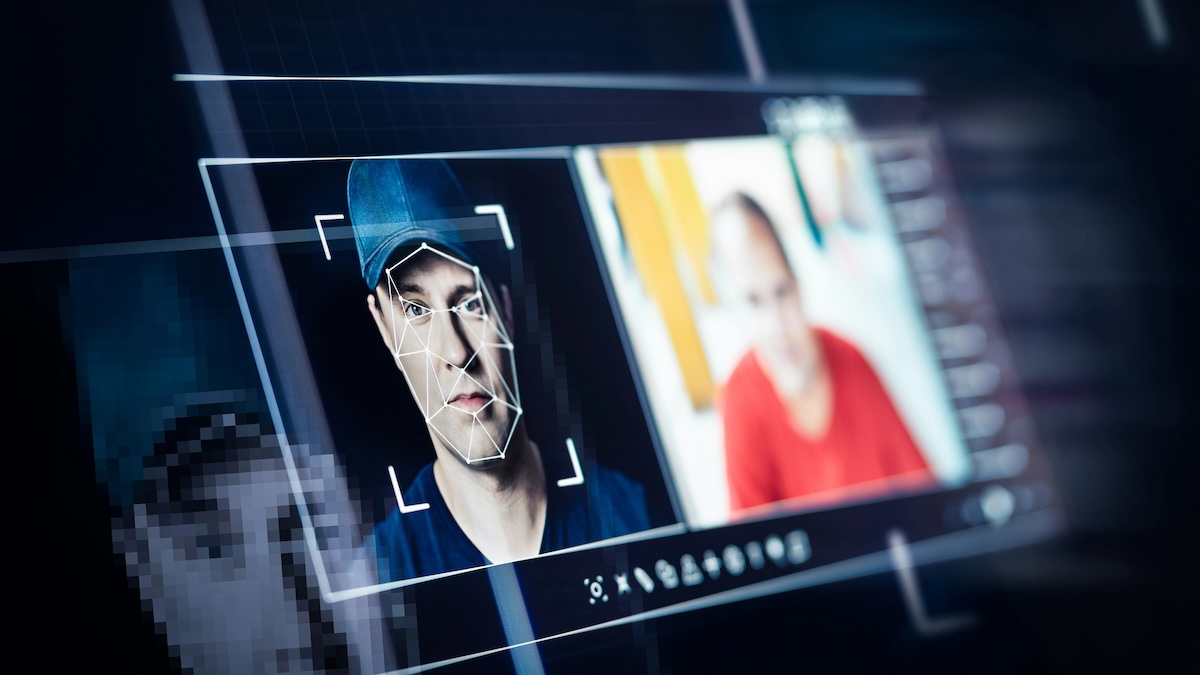
So what can we as consumers do? Anyone who believes that trained senses alone are enough to… Avoid AI fraudhe is wrong. A British study shows that even people with excellent facial recognition only recognize fake faces 41 percent of the time. The average person does significantly worse.
So we can’t rely on our brains – ours reliable companion in the last millennia of evolution – leave. That’s why we have to build as large a safety net as possible. Would you like an example? When making suspicious calls, you should always ask for a phone number to call back and the relevant office – this works great, for example, so that you don’t fall for AI police or fake bank employees.
This is equally important Multi-factor authentication. So: Don’t just use a password and rely on SMS codes, as these can now be intercepted. That’s why it’s better to rely on biometric keys such as your face or fingerprint. In the times of the AI revolution our humanity our best protection.
Also interesting:
- Physical AI: What threatens if AI gets a body
- A lesson for Germany: Energy policy is collapsing in Iran
- Telekom wants to turn every phone into an AI assistant – even ancient cell phones
- AI dispute in the White House: OpenAI sells ChatGPT to the US military
The post AI fraud: Why you can no longer trust your senses appeared first on BASIC thinking. Follow us too Google News and Flipboard or subscribe to our newsletter UPDATE.
As a Tech Industry expert, I am deeply concerned about the increasing prevalence of AI fraud and its implications for society. The rapid advancement of artificial intelligence technology has made it easier for fraudsters to create highly convincing and sophisticated scams that are increasingly difficult to detect.
One of the biggest challenges with AI fraud is that it can manipulate our senses and deceive us in ways that were previously unimaginable. With the ability to generate realistic images, videos, and audio that are indistinguishable from the real thing, AI fraud can easily trick our senses and convince us that something is genuine when it is actually a carefully crafted fake.
This means that we can no longer trust our senses alone to determine the authenticity of information or interactions in the digital world. It is becoming increasingly important for individuals, businesses, and organizations to be vigilant and employ advanced tools and strategies to detect and prevent AI fraud.
As the tech industry continues to evolve and develop new AI technologies, it is crucial that we also invest in robust cybersecurity measures and education to protect ourselves from the growing threat of AI fraud. Only by staying informed, proactive, and vigilant can we hope to safeguard our digital identities and assets in an increasingly complex and deceptive online landscape.
Credits