The article AI identifies Nazi perpetrators in Holocaust photos first appeared in the online magazine BASIC thinking. With our newsletter UPDATE you can start the day well informed every morning.
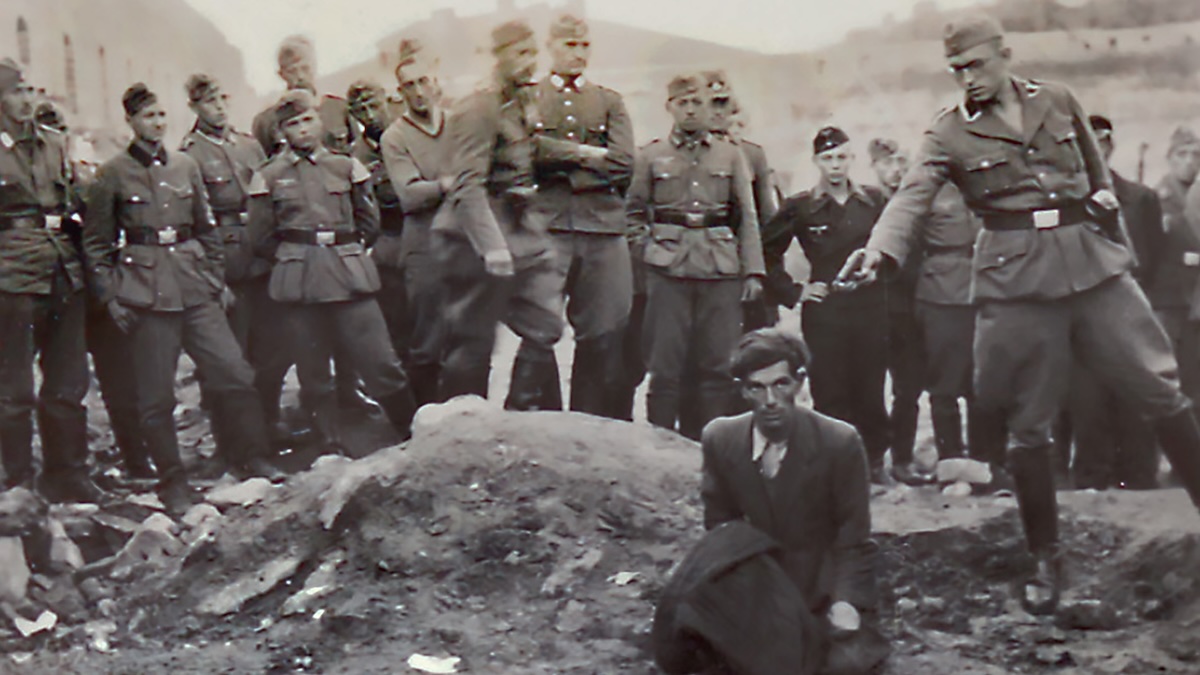
A US historian has used AI to identify a Nazi perpetrator in a historical Holocaust photo.
It is one of the most terrible photos of the Holocaust: A Nazi soldier aims a pistol at the head of a man kneeling in front of a mass grave. The picture is also known as “The Last Jew in Vinnitsa.” The identity of the perpetrator remained unknown for decades.
Now the American historian Jürgen Matthäus has apparently solved the mystery. And not just through dusty archive work, but with the active help of artificial intelligence. Matthäus, who formerly headed the research department of the Holocaust Memorial Museum in Washington, published his latest findings.
The massacre took place on July 28, 1941 in the citadel of Berdichiv in what is now Ukraine. The shootings were carried out by a commando from Einsatzgruppe C. The city, long mistaken for Vinnitsa, was previously a thriving center of Jewish life.
Holocaust photo: AI identifies Nazi perpetrators
The decisive twist in the historical criminal case is based on modern technology and a coincidence. A reader contacted Matthäus and told him about the suspicion that the shooter in the photo could be his wife’s uncle: Jakobus Onnen, a teacher, born in 1906. Onnen had already joined the NSDAP before 1933 and was part of the murder unit.
Although Onnen’s letters from the Eastern Front were destroyed by relatives in the 1990s, the relatives still had old photos of him. These images were used by investigative journalism group Bellingcat for AI image analysis.
Matthäus explained that the match percentage determined by the algorithm was unusually high. Due to the historical nature of the photo, AI cannot provide 98 percent forensic certainty, but the strong resemblance combined with a mountain of evidence was enough for publication. AI was one tool among many.
A photo as a trophy
Jakobus Onnen, who came from an educated family and enjoyed traveling and studying languages in his youth, was never promoted above a relatively low rank and died in combat in August 1943. According to Matthew, participation in such murders was taken for granted and did not earn bonus points in the units. Onnen was probably posing in the photo to impress.
The picture is one of many trophies that German soldiers sent home from the massacres. Matthäus believes the photo is significant: “I think this image should be just as important as that of the gate in Auschwitz because it shows us the direct confrontation between perpetrator and victim.”
The researchers are now working on finding the identity of the man kneeling in front of the pit. AI could also help with this if comparable images of the victim appear. The case shows how modern technology can help bring the nameless out of oblivion and the past.
Also interesting:
- Direct translations in WhatsApp: Everything you need to know
- Electricity through steps: The future of sustainable energy?
- How do lithium-ion batteries actually work?
- Electric car: What happens if the battery is empty?
The post AI identifies Nazi perpetrators in Holocaust photo appeared first on BASIC thinking. Follow us too Google News and Flipboard or subscribe to our newsletter UPDATE.
As a Tech Industry expert, I believe that the development and use of AI technology to identify Nazi perpetrators in Holocaust photos is a significant and powerful application of artificial intelligence. This technology has the potential to bring justice to the victims of the Holocaust and hold accountable those responsible for the atrocities committed during that time.
By leveraging AI to analyze historical images and identify individuals who were involved in the Holocaust, we can gain a better understanding of the events that took place and ensure that those responsible are not able to escape justice. This technology has the potential to help in the ongoing efforts to document and preserve the memories of the Holocaust, as well as educate future generations about the horrors of that period in history.
It is important, however, that this technology is used responsibly and ethically, with proper safeguards in place to protect individuals’ privacy and ensure that the identification of perpetrators is accurate and reliable. Overall, I believe that the use of AI in identifying Nazi perpetrators in Holocaust photos is a positive and important development that has the potential to contribute to the ongoing fight against Holocaust denial and ensure that the memory of those who suffered is never forgotten.
Credits