The article AI robot plants young corals in the Great Barrier Reef first appeared in the online magazine BASIC thinking. With our newsletter UPDATE you can start the day well informed every morning.
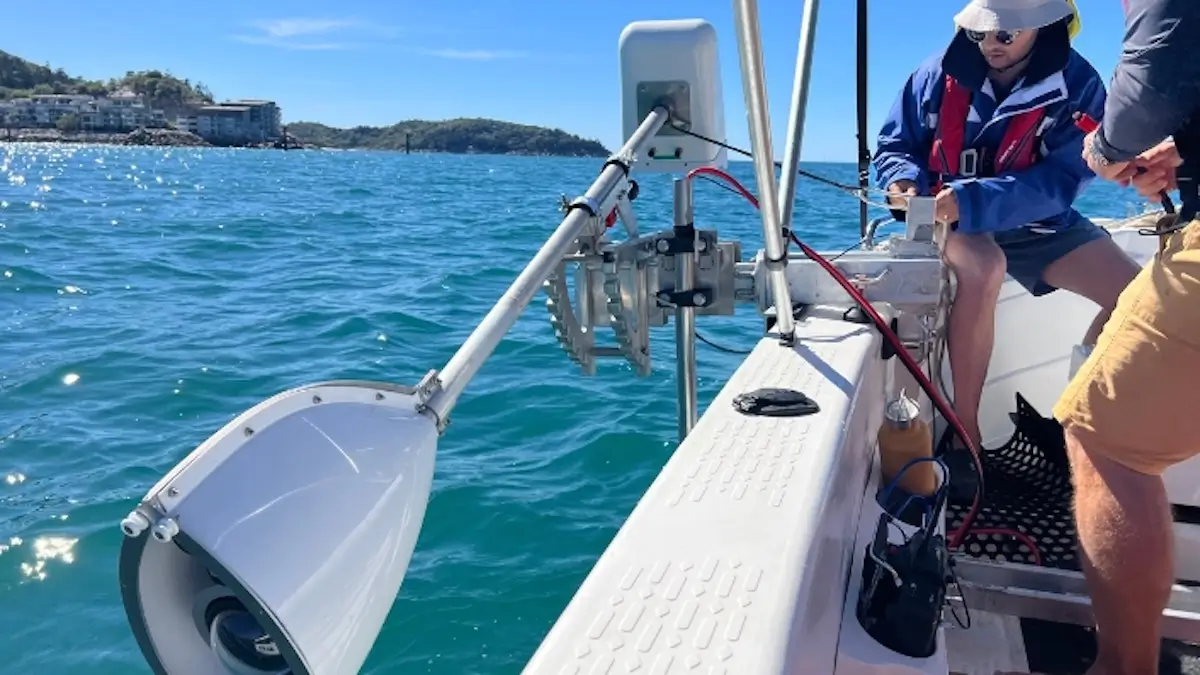
Researchers want to reforest the Great Barrier Reef using artificial intelligence and robotics. An AI robot is supposed to plant young corals.
Restoring ecosystems the size of the Great Barrier Reef requires work on a large scale. Ecologists, engineers and employees of the Australian Institute of Marine Science (AIMS) are therefore working on developing technologies for the reforestation of coral reefs.
The project participants have already developed techniques to breed young corals in aquaculture. They also designed tools that can be used throughout the reef. Another technology is now being used that is intended to optimize collaboration between humans and machines.
The so-called Deployment Guidance System (DGS) combines modern marine robotics with artificial intelligence. The aim is to release young corals housed in specially made devices into predefined areas of the reef.
Because there their probability of reaching adulthood is particularly high. This should be done on a scale that could hardly be achieved with manual work and human decision-making alone or only at extremely high cost.
AI robot is supposed to save coral reefs
The coral seeding devices are small ceramic objects with tiles to which young corals attach themselves. Once placed on the seabed, they help protect the corals, improving their chance of survival.
Since the project participants have to place the system in the best locations over a huge area, the DGS provides support in various ways. First, the system selects promising sites using a computer model based on the expertise of reef ecologists.
Cameras and real-time AI analysis are then used on site to control the suspension of the devices. The DGS releases them from the ship at the optimal moment, with the decision based on years of oceanographic and ecological observations by scientists.
Autonomy and geo-tagging
An important goal of the project is autonomy. The system is designed to enable autonomous ship navigation, similar to an autopilot, and automatically deploy the coral devices to appropriate locations. For this purpose, the DGS has integrated geo-tagging that records the exact positioning of the exposure points.
This feature allows scientists to later find the locations and monitor the growth of the young corals. AI technology is not intended to replace humans, but rather to enable scientific work to be implemented on a scale that was previously difficult to achieve.
Also interesting:
- Solar implant with AI should enable blind people to read again
- ChatGPT is listening: This is how you can deactivate background conversations
- Electricity through steps: The future of sustainable energy?
- Vertical wind turbine with AI – for houses in the city
The post AI robot plants young corals in the Great Barrier Reef appeared first on BASIC thinking. Follow us too Google News and Flipboard or subscribe to our newsletter UPDATE.
As a tech industry expert, I am excited to see AI being used to help restore and protect the Great Barrier Reef. The coral reefs are under immense threat due to climate change and other human activities, so innovative solutions like AI robot plants are crucial for their survival.
By using AI to plant young corals, we can potentially accelerate the restoration process and help rebuild the reef’s ecosystem. The precision and efficiency of AI technology can ensure that the corals are planted in the most optimal locations for their growth and survival.
However, it is important to also consider the potential limitations and risks of using AI in such a delicate ecosystem. We must ensure that the AI robots are programmed to prioritize the health and diversity of the coral reef, and that they do not inadvertently harm other marine life or disrupt the natural balance of the ecosystem.
Overall, I believe that the use of AI robot plants in the Great Barrier Reef is a promising development that has the potential to have a positive impact on the conservation efforts of this iconic natural wonder. It is a testament to the power of technology to aid in environmental protection and restoration.
Credits