The article Camera glasses with facial recognition: How Meta wants to make people more transparent appeared first in the online magazine BASIC thinking. With our newsletter UPDATE you can start the day well informed every morning.
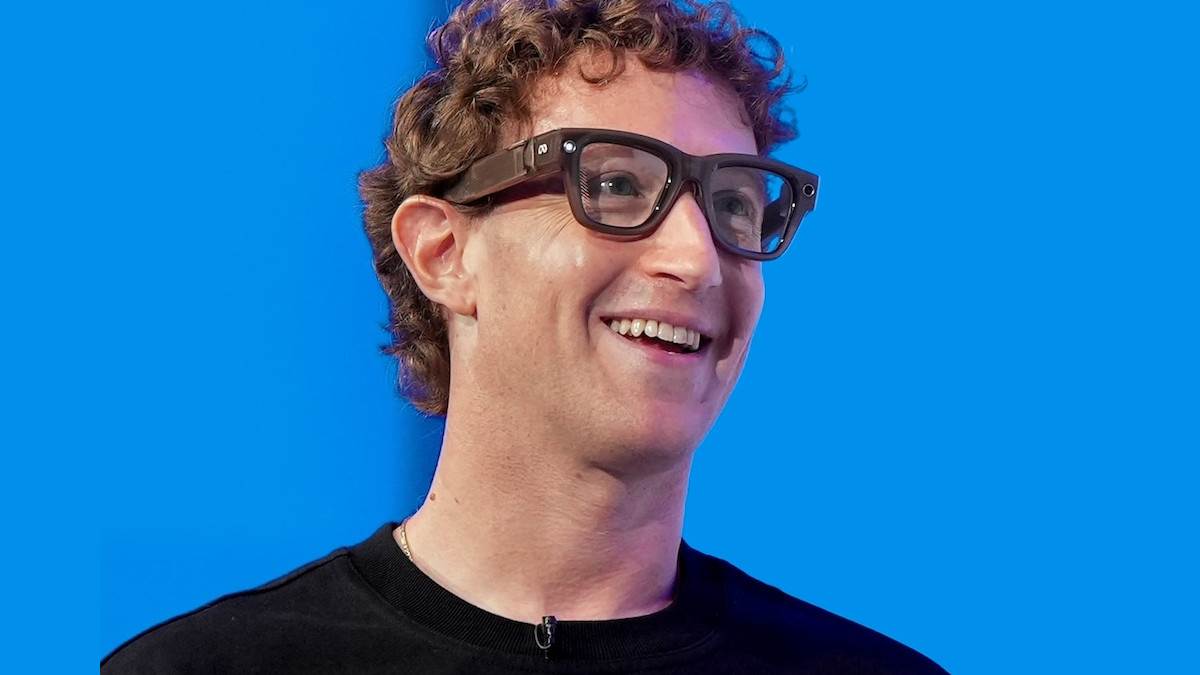
According to reports, Facebook company Meta wants to build a facial recognition function into its camera glasses. The idea: The company’s smart glasses should detect people on the street and compare them with a database in order to identify them. Or in short: Meta is working on a gigantic biometric surveillance tool to make people transparent. A commentary analysis.
Meta wants Install facial recognition function in camera glasses
- As the New York Times citing a internal meta document reports, the company could equip its camera glasses with a facial recognition function this year. According to the paper, corresponding plans were already in place years ago. Now the company apparently sees a good time to implement this. Meta’s smart glasses are under the brands Ray Ban and Oakley. You have Camera, microphone and speakers and are also in Europe available. Most recently, the company presented glasses that can show information on a small display in the glass.
- The initial plan was initially Camera glasses with facial recognition for the visually impaired to make accessible. The current project apparently goes far beyond that. Meta’s smart glasses are intended to capture faces via camera and compare them with a database – either with your own social media contacts or public profiles. Harvard students already demonstrated last yearthat this is possible. However, Meta is working on a solution that will provide direct access to its own platforms such as Instagram and Facebook without external tools.
- The Facebook group had to develop a similar facial recognition function that automatically tagged platform users in photos. discontinued a few years ago due to data protection criticism. The US judiciary condemned the company at the time to a billion dollar fine. The background was that Meta collected biometric data on a large scale without consent. However, the new function should not allow any person to be identified, but rather users of the meta platforms.
A gigantic surveillance instrument
The fact that Meta boss Mark Zuckerberg is turning the facial recognition screw again is not a technical coincidence, but rather strategic calculation. Because what sounds like science fiction has long been ready for the market – and is obviously well timed politically. While election campaigns and global crises dominate the headlines, the company is secretly testing gigantic surveillance instrument and the limits of data protection.
But while Meta sells facial recognition as a function via its camera glasses, a test run for permanent biometric monitoring is running in the background. The However, strategy is transparent. The Facebook Group apparently wants to initially establish this extremely dangerous technology on the market under a socially beneficial pretext.
But help for the visually impaired could quickly escalate into a comparison with social media contacts and ultimately possibly a recording of every public profile. The inconvenient truth is therefore: As soon as a facial recognition function is included in everyday glasses, there is hardly any turning back.
The Vision of Mark Zuckerberg is that an AI looks at millions of faces through millions of eyes. But it is also the responsibility of potential users to prevent such a surveillance infrastructure. In the worst case scenario, the last privacy concession could disappear as soon as acceptance increases – namely the LED display that shows when the glasses are recording.
Voices
- In the internal meta documentthat the New York Times (€), the planned facial recognition function says, among other things: “We will start in a dynamic political environment in which many civil society groups that we would expect to attack us will focus their resources on other issues.” One Company spokesperson opposite Business Insider (€): “While we often hear about interest in this type of feature – and there are already some products on the market – we are still exploring various options and will take a considered approach.”
- Alexandra Reeve Givens, CEO of the Center for Democracy & Technologyopposite Straight Arrow News: “The use of this type of facial recognition technology will become a privacy and surveillance nightmare. People should not have to hide and evade to avoid being monitored. These systems pose a real threat. People in sensitive locations – be it a doctor’s office, a nightclub or a place of worship – should not have to fear being secretly scanned and identified.”
- The Electronic Privacy Information Center (EPIC) in one Notice to the Federal Trade Commissionan independent consumer protection and competition agency in the US: “This feature would pose a serious risk to privacy, security and civil liberties and cause widespread harm to the public. It must not be allowed on the market. This feature would be easily abused and put Americans at risk of stalking, harassment, doxxing and worse.”
On the way to a surveillance state?
In Europe the General Data Protection Regulation applies regulatory bulwarks on biometric data collectors like Meta. Because companies in this country have to obtain user consent and prove that they are earmarked for a specific purpose – and that’s a good thing.
In the USA the situation is different. Since the second Trump administration at the latest, regulations for Big Tech have played an increasingly diminished role in the United States. Specifically means: The Not only can platforms do almost anything they want. Some of their technologies are even used or misused by the government itself.
The US administration is currently threatening the AI company Anthropic with repressionit should not release its AI software for the US military and civilian surveillance. Meanwhile, the scary thing about the meta plans is that the technology already works.
It could turn the USA into one unprecedented surveillance state if the government hijacks the data. Not to mention what happens if hackers capture them. Or what Meta himself does with it.
Because the company can theoretically use its camera glassesRecord every encounter, every conversation or even entire daily routines. Fortunately, society and users ultimately decide whether they want to indulge in such technology.
Also interesting:
- The federal government grills the heating law – and ignores reality
- When lies learn to walk: This is how you can recognize AI videos
- Digital house arrest: A social media ban does not solve the problems
- Real name requirement: The dangerous mistake of Friedrich Merz
The post Camera glasses with facial recognition: How Meta wants to make people more transparent appeared first on BASIC thinking. Follow us too Google News and Flipboard or subscribe to our newsletter UPDATE.
As a tech industry expert, I have mixed feelings about Meta’s push to create camera glasses with facial recognition technology. On one hand, this technology has the potential to revolutionize the way we interact with the world around us, providing seamless access to information and enhancing our understanding of the people and places we encounter.
However, the idea of making people more transparent through constant surveillance and data collection raises serious ethical concerns. Privacy is a fundamental human right, and the widespread adoption of facial recognition technology in everyday devices could erode that right significantly.
It is crucial for companies like Meta to prioritize user privacy and security in the development of these technologies. Clear policies and safeguards must be put in place to protect individuals from potential misuse of their personal data.
Ultimately, the decision to embrace or reject camera glasses with facial recognition technology will depend on how well these concerns are addressed by companies like Meta. As technology continues to advance, it is essential that we approach these innovations with a critical eye and a commitment to upholding the values that define a just and equitable society.
Credits