The article Conductive plastic: Researchers print electrodes directly onto the skin appeared first in the online magazine BASIC thinking. With our newsletter UPDATE you can start the day well informed every morning.
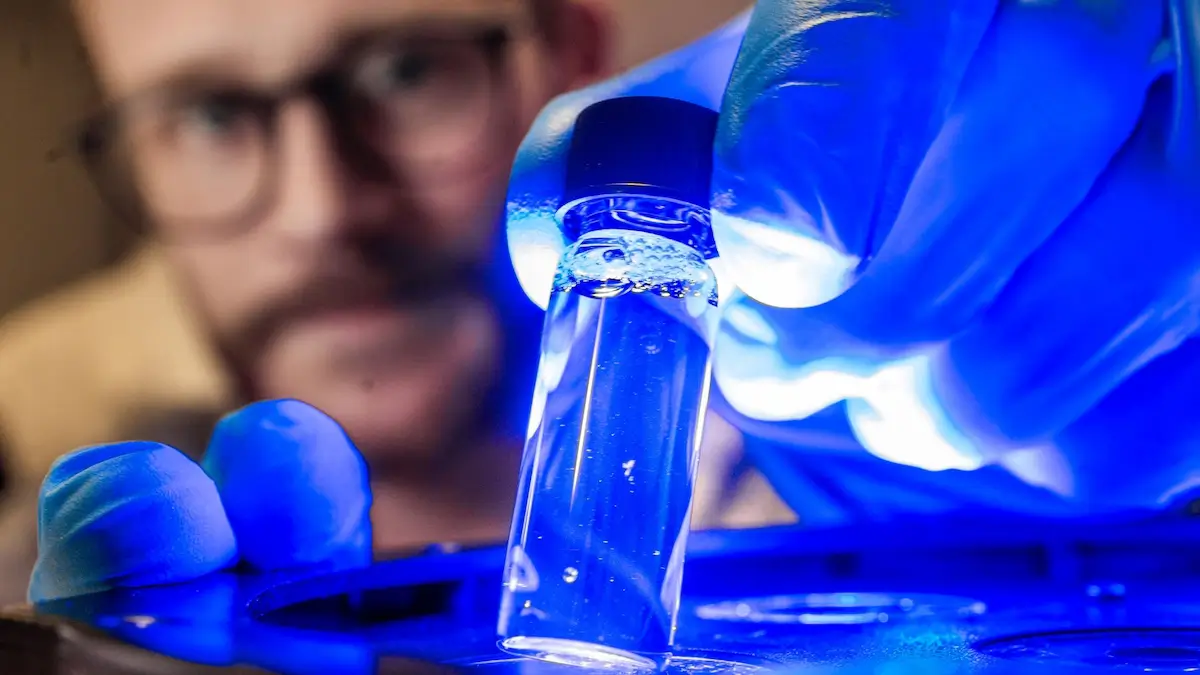
Researchers from Sweden have developed a process to produce electrodes in the form of conductive polymers directly on biological tissue. Instead of dangerous solvents or high-energy lasers, only visible light is used.
New Research results from Sweden suggest that light can be used to form electrodes from conductive plastic. Thanks to the use of non-toxic materials, it can be used on almost all surfaces. It should even be possible to produce electrodes in the form of conductive polymers directly on human skin.
Study author Professor Xenofon Strakosas emphasizes that the approach makes it possible to produce electronic components without complicated equipment. The researchers have been working for some time on solutions made of conductive plastic – so-called conjugated polymers – which have the same conductivity as metal.
Electrodes on the skin: Non-toxic polymers as a base
Typically, polymers are made up of long hydrocarbon chains, with each repeating unit called a monomer. In a process called polymerization, multiple monomers combine to form a polymer.
So far, this process has relied on toxic substances. This massively restricted its use in sensitive areas such as medicine. The researchers therefore developed an approach that makes this process possible only under visible light.
The basis is formed by special water-soluble monomers that were created in the laboratory. In practice, the liquid with the monomers is applied to any surface – such as glass or human skin. A laser or a standard household LED lamp then paints the classic conductor tracks onto the fabric.
Intelligent textiles and information highways on the skin
Remains can then simply be wiped away. All that remains are the freshly printed conductor tracks. In one experiment, the researchers printed such electrodes on mice. Compared to classic EEG electrodes, the printed pathways showed a clear picture of brain activity.
In the future, the approach could enable information highways on the skin or even clothes to flexibly exchange information. The researchers hope to sustainably improve the security of devices and systems in the long term.
Also interesting:
- This is how you find out everything ChatGPT knows about you
- Depot move: What you should definitely pay attention to
- ChatGPT: Activate the reminder function – this is how it works
- ChatGPT 5.2: The new AI model from OpenAI in the test
The post Conductive plastic: Researchers print electrodes directly onto the skin appeared first on BASIC thinking. Follow us too Google News and Flipboard or subscribe to our newsletter UPDATE.
As a Tech Industry expert, I find the concept of printing electrodes directly onto the skin using conductive plastic to be a very exciting and innovative development. This technology has the potential to revolutionize the field of wearable electronics and healthcare monitoring by making it easier and more convenient to collect data from the body.
Conductive plastics offer a flexible and lightweight alternative to traditional metal electrodes, which can be uncomfortable and restrictive when attached to the skin for extended periods of time. By printing electrodes directly onto the skin, researchers are able to create a seamless and unobtrusive interface for monitoring physiological signals such as heart rate, muscle activity, and brain activity.
Furthermore, this technology opens up new possibilities for personalized healthcare and remote monitoring, as individuals can easily apply and remove the electrodes themselves without the need for specialized equipment or medical professionals. This could be particularly beneficial for patients with chronic conditions or athletes looking to track their performance during training.
Overall, I believe that the use of conductive plastic for printing electrodes directly onto the skin represents a significant advancement in wearable technology and has the potential to have a wide range of applications in healthcare, sports, and beyond. I look forward to seeing how this technology continues to evolve and improve in the future.
Credits