The article Cooling data centers: Salt trick reduces energy requirements first appeared in the online magazine BASIC thinking. With our newsletter UPDATE you can start the day well informed every morning.
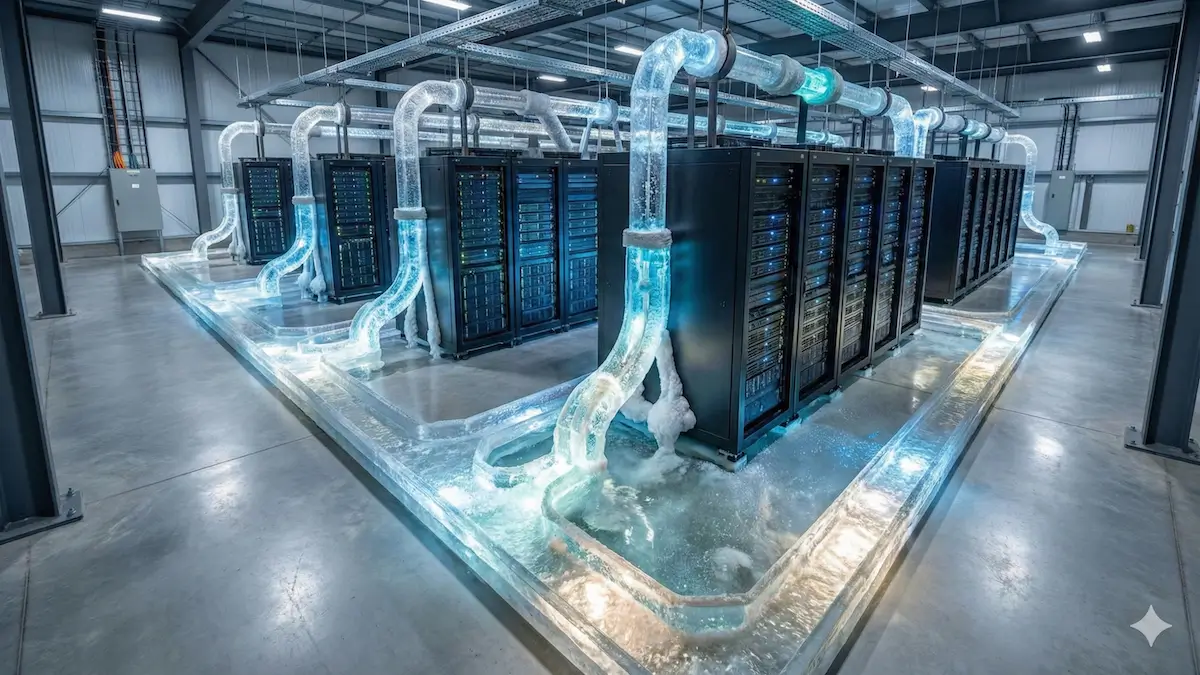
Researchers from China have developed a new technology for cooling data centers. With the help of a pressure-controlled salt solution, the energy requirement can be significantly reduced.
Artificial intelligence is driving digital development, but its energy requirements pose a problem. Data centers not only need electricity for calculations, but also for cooling the hardware. Researchers from the Chinese Academy of Sciences (CAS) have now presented a cooling technologywhich is intended to solve this heat problem.
The background: Data centers produce heat during operation, which the systems have to dissipate. With every new AI model, the computing effort and thus the waste heat in the systems increases. Traditional refrigeration systems use compressors and fluorine-containing refrigerants, which affects power consumption and emissions.
These systems work with mechanical components that require some of the energy to operate. Heat transfer occurs indirectly through several stations before it is dissipated. That takes time.
In contrast, the new technology from China dispenses with compressors and gases. Instead, a pressure-controlled saline solution is used. The cooling occurs directly in the medium, which accelerates heat exchange compared to conventional methods.
Cooling of data centers through physical pressure pulses
The system uses an aqueous solution of ammonium thiocyanate as a cooling medium. A mechanical pressure pulse controls whether the salt in the water crystallizes or dissolves. This physical process removes heat from the environment. In experiments, the temperature of the solution fell by around 27 degrees Celsius within 20 seconds.
At higher initial temperatures, the cooling was more pronounced. Cooling systems or solid caloric materials do not reach these values in this period of time. The solution of ammonium thiocyanate reacts to the change in mechanical pressure. As soon as the system adjusts the pressure in a pulse, the solubility of the salt changes. Dissolving the crystals binds energy in the form of heat from the immediate environment.
This principle cools the hardware directly on the processors. The liquid takes on two tasks: it generates cold and transports away heat at the same time. This eliminates the need for additional liquids as heat transfer media, which are necessary for solid materials.
The researchers describe the process as a Carnot-like cooling cycle. This theoretical model shows how efficiently a cooling system can work ideally. The system achieves key figures that were previously considered difficult to reconcile.
The Carnot-like cooling circuit in detail
The cooling capacity is 67 joules per gram of cooling medium and cycle. The system works with an efficiency of around 77 percent of the theoretical maximum. The combination of performance, response time and low emissions characterizes this design.
Alternatives to compression refrigeration often use solid materials. Although these substances cool, they only conduct heat slowly. You therefore need an additional heat transfer medium, which increases the complexity of the system. The liquid solution in the model accelerates this exchange. The temperature drops within seconds. This is a factor in system stability for applications with fluctuating loads, such as those found in AI models.
The technology could reduce the environmental footprint of digital infrastructure. Avoiding the use of refrigerants would also reduce direct emissions. This provides a basis for regulating the costs of AI infrastructure.
In addition to new cooling methods, China is pursuing approaches to location selection. The country is moving server farms, for example to the seabed. The aim of this measure is to save electricity and fresh water.
Also interesting:
- The next big thing: What are AI agents?
- Solar implant with AI should enable blind people to read again
- Electricity through steps: the future of sustainable energy?
- Vertical wind turbine with AI – for houses in the city
The article Cooling data centers: Salt trick reduces energy requirements appeared first on BASIC thinking. Follow us too Google News and Flipboard or subscribe to our newsletter UPDATE.
As a tech industry expert, I am always on the lookout for innovative solutions to improve the efficiency and sustainability of data centers. The use of salt to reduce energy requirements for cooling data centers is a fascinating concept that has the potential to revolutionize the way we approach cooling systems.
By using salt to absorb moisture from the air, data centers can reduce the amount of energy needed to maintain optimal temperatures. This not only helps to lower operating costs but also has a positive impact on the environment by reducing the carbon footprint of data centers.
I believe that this salt trick could be a game-changer in the tech industry, as data centers continue to grow in size and energy consumption. It is crucial for companies to adopt sustainable cooling solutions to ensure the long-term viability of their operations. I look forward to seeing how this technology develops and its potential impact on the industry as a whole.
Credits