The article Heat pumps: German company claims to have solved propane problem first appeared in the online magazine BASIC thinking. With our newsletter UPDATE you can start the day well informed every morning.
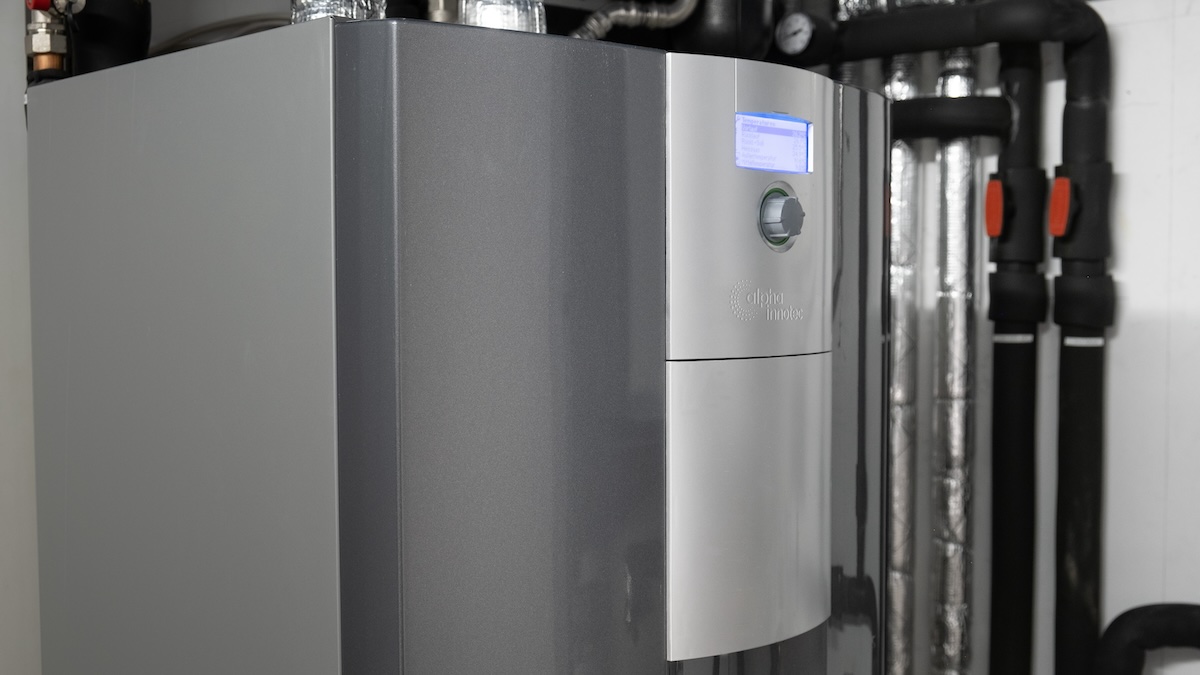
A German manufacturer wants to defuse a key safety problem in modern heat pumps by significantly reducing the filling quantity of the natural refrigerant propane. This is made possible by a new design that combines high efficiency and safety requirements.
The federal government relies heavily on heat pumps in its climate goals Key technology for the heat transition. By 2030, around six million heat pumps are expected to be installed in Germany.
In order to achieve this goal, an annual expansion of at least 500,000 devices is planned from 2024. The aim is to gradually replace fossil heating systems and significantly reduce CO2 emissions in the building sector.
Despite their potential for the energy transition, heat pumps can also be harmful to the climate due to the refrigerants used. The natural refrigerant propane represents an alternative. However, its flammability increases the safety requirements when developing, installing and operating heat pumps.
The Fraunhofer Institute for Solar Energy Systems ISE has therefore worked together with the German company Ait-Group on a solution to this problem. The amount of propane refrigerant was reduced to less than 150 grams, which significantly minimizes the risk of fire.
Propane: This makes heat pumps less dangerous
Fraunhofer ISE and the Bavarian Ait Group launched the “Low Charge 150” (LC150) project back in 2020. Together, a heat pump concept was to be developed that would enable the use of the natural refrigerant propane in significantly reduced quantities.
According to their own information, the research team was able to achieve an efficiency record with a filling quantity of just 124 grams of propane. With this amount of refrigerant, the heating output could be increased to 12.8 kilowatts.
This resulted in a specific refrigerant charge of around ten grams per kilowatt. The goal of the project was 15 to 30 grams per kilowatt – the team significantly exceeded the project goals.
With the help of the project results, the Ait Group was now able to develop a heat pump that is ready for series production and relies on a very low refrigerant charge. “Our goal was to specifically incorporate the knowledge gained in the project into the development of the next generation of highly efficient and environmentally friendly heat pumps,” explains Edgar Timm, Director R+D of the Ait Group.
Brine heat pumps are intended to be used in single- and multi-family homes
Despite the combustible material, heat pumps with the refrigerant propane are generally also suitable for use in buildings. However, until now the use required additional technical precautions in the form of an active ventilation concept.
Both Models alpha innotec WZSV 63 and NOVELAN WSV 6.3 However, according to the Ait Group, which is based on the research results of the LC150 project, such a ventilation concept can be dispensed with. Although the brine heat pumps use propane as a refrigerant, according to the manufacturer, such a concept is not necessary.
In the event of a refrigerant leak, the devices are designed so that a maximum of only 150 grams of the natural refrigerant is released. This ensures safe operation indoors and no additional ventilation concept is required.
The heat pumps were developed for space-saving use in single- and multi-family homes. A removable refrigeration circuit module is also intended to simplify transport and installation.
Also interesting:
- New material insulates windows like a wall – and is more translucent
- Home storage: Multilevel inverter is intended to reduce power losses
- Study reveals: How efficient are heat pumps really?
- What impact do solar parks have on the environment and ecosystems?
The post Heat pumps: German company claims to have solved propane problem appeared first on BASIC thinking. Follow us too Google News and Flipboard or subscribe to our newsletter UPDATE.
As a Tech Industry expert, I am intrigued by the claim made by the German company regarding solving the propane problem with heat pumps. Propane is commonly used as a refrigerant in heat pumps, but it is known to have a high global warming potential. Finding an alternative solution to eliminate the reliance on propane in heat pumps is a significant step towards reducing carbon emissions and mitigating climate change.
If the German company has indeed developed a technology that eliminates the need for propane in heat pumps, it could have a major impact on the industry. Heat pumps are becoming increasingly popular as a more energy-efficient and environmentally-friendly heating and cooling solution, so any advancements that make them even cleaner and more sustainable are welcome.
I would be interested in learning more about the specifics of how this technology works and the potential implications for the wider adoption of heat pumps in the market. If this solution proves to be viable and scalable, it could set a new standard for environmentally-friendly heating and cooling systems and pave the way for a more sustainable future in the HVAC industry.
Credits