The article Hydrogen-iron battery stores electricity for days – and lasts up to 25 years appeared first in the online magazine BASIC thinking. With our newsletter UPDATE you can start the day well informed every morning.
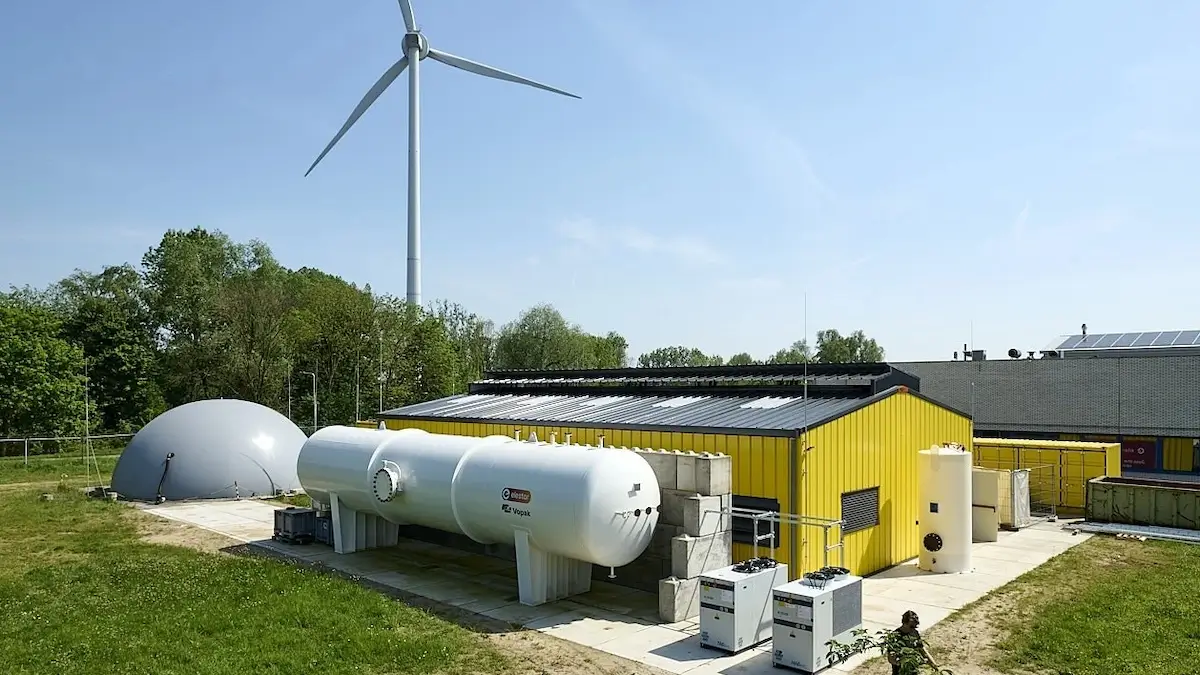
A new hydrogen-iron flow battery from Dutch company Elestor could revolutionize the energy transition with cheap and long-lasting grids for wind and solar. But how does the technology work and what advantages does it offer compared to conventional electricity storage systems?
The Dutch company Elestor from Arnhem has developed a hydrogen-iron flow battery for the long-term stabilization of power grids. In realistic tests, the system should achieve high efficiency and complete tens of thousands of charging cycles, with performance remaining stable. The developers calculate based on this data according to a report with a possible operating life of 20 to 25 years.
Long-term storage is becoming increasingly important for an energy supply with a high proportion of wind and solar power. These systems keep energy available for several days or during long periods of darkness. A dark lull refers to periods in which hardly any renewable energy is produced due to calm winds and cloud formation. While conventional lithium-ion batteries can primarily compensate for short-term fluctuations in the range of a few hours, flow batteries take a much longer storage approach.
How the new hydrogen-iron flow battery stores energy
Unlike traditional batteries, flow batteries store energy in a liquid electrolyte that circulates through an electrochemical reactor system. This principle enables performance and storage capacity to be scaled separately. The electrochemical cell stack determines the performance, while the size of the installed tanks determines the amount of energy.
Elestor’s technology utilizes the chemical reaction between gaseous hydrogen on the anode side and a liquid iron solution on the cathode side. The system is based on the redox couple Fe3+/Fe2+ and thus combines a hydrogen cycle with an aqueous electrolyte. When charging and discharging, these chemical processes take place in the opposite direction.
The developers tested a large-scale cell stack under industrial design principles and realistic operating conditions. The system is said to have achieved an electrochemical efficiency of over 80 percent. Automated controls permanently monitored all parameters to ensure a high level of stability in daily network operation.
Efficiency and stability of electricity storage
The round-trip efficiency of the entire system, i.e. the ratio of energy extracted to energy fed in, was more than 75 percent. The system restored full performance through conditioning cycles without technicians having to replace components. The system also survived the intensive stress tests without any structural damage, says Elestor.
Hydrogen-iron technology is in direct competition with other long-term storage systems such as vanadium flow batteries or sodium-sulfur storage. Pumped storage power plants and pure hydrogen storage also remain important technological alternatives on the market. Which technology will prevail in the long term will largely depend on scalability and future operating costs.
A key advantage of the new approach is the use of cost-effective raw materials such as iron and hydrogen. The company estimates the costs for the active materials to be around 2.80 euros per kilowatt hour. This allows the manufacturer to avoid potential supply chain problems that often arise with materials such as lithium, cobalt or vanadium.
Economic viability of new electricity storage systems
According to the manufacturer’s model calculations, optimized systems could achieve long-term storage costs of around 0.02 euros per kilowatt hour. Practical testing in large-scale industrial use has yet to show whether the system really works so cheaply. So far, the predicted lifespan of up to 25 years is based on a scientific extrapolation.
Despite the advantages, the system requires more space than comparable lithium storage devices due to the lower energy density. The complexity with pumps and hydrogen management is more similar to industrial process systems than to classic batteries. The coming years will show whether the expected practical suitability will be achieved in the long term in industrial pilot operations.
Also interesting:
- Electricity through steps: the future of sustainable energy?
- Simply explained: How does a wind turbine actually work?
- E20: What you need to know about the new organic fuel
- Pseudo-noise and infrasound: No evidence for wind turbine myths
The post Hydrogen-iron battery stores electricity for days – and lasts up to 25 years appeared first on BASIC thinking. Follow us too Google News and Flipboard or subscribe to our newsletter UPDATE.
As a Tech Industry expert, I am excited about the potential of hydrogen-iron batteries to revolutionize energy storage. The ability to store electricity for days and have a lifespan of up to 25 years is incredibly promising for a wide range of applications, from renewable energy integration to grid stabilization.
These batteries have the potential to address some of the key challenges facing current energy storage technologies, such as limited capacity and short lifespans. By harnessing the power of hydrogen and iron, these batteries offer a more sustainable and long-lasting solution for storing electricity.
I believe that the widespread adoption of hydrogen-iron batteries could have a significant impact on the way we generate and use energy, paving the way for a more reliable and resilient energy system. I look forward to seeing how this technology develops and its potential to shape the future of energy storage.
Credits