The article In crises and disasters: This system is intended to maintain communication appeared first in the online magazine BASIC thinking. With our newsletter UPDATE you can start the day well informed every morning.
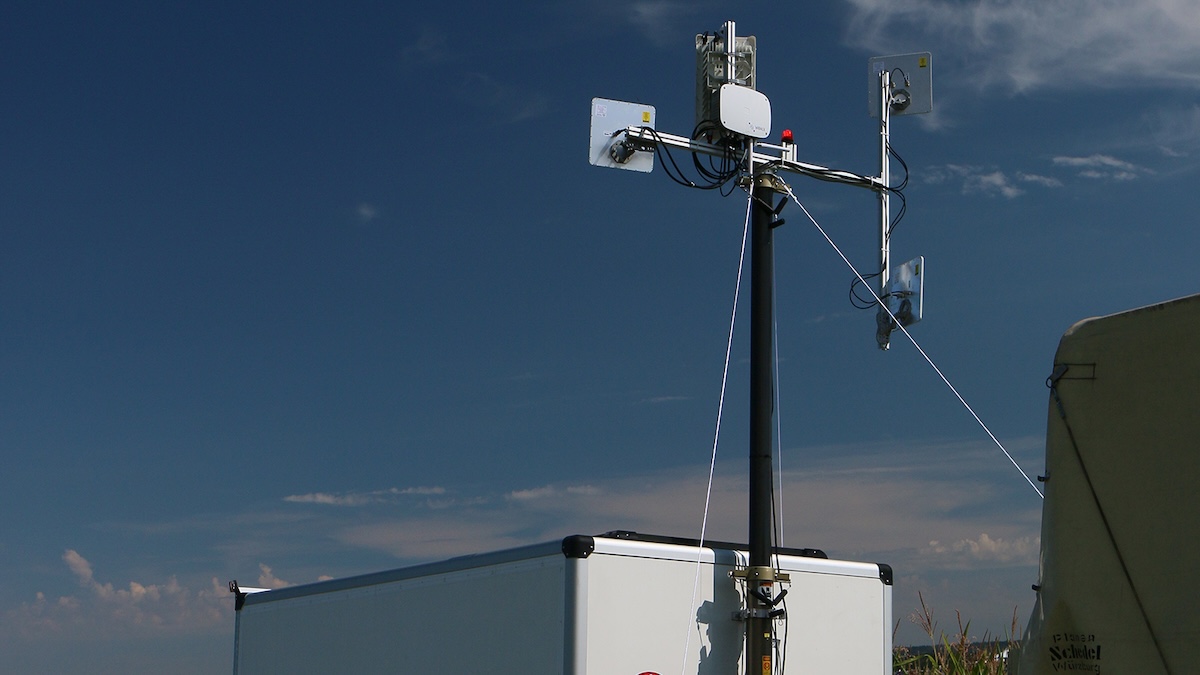
In the event of a disaster, network failures pose massive problems for the communication of rescue workers. German researchers have therefore developed a system that works even if the infrastructure fails.
When a disaster occurs, quick action is required. Rescue workers in particular rely on being able to organize and coordinate quickly. However, crises in recent years have revealed a critical weakness in Germany’s security architecture: when an emergency occurs, mobile communications are often overloaded and massive network failures occur.
Researchers at the Fraunhofer Institute for Applied Information Technology FIT have developed a solution for this case: a mobile, self-organizing communication network connects emergency services with each other, with the operations management and the Internet.
Communication in the event of a disaster
The software-based, wireless and ad-hoc-capable communication network is based on the so-called Wi-BACK technology (Wireless Backhaul). It was developed as part of the “5G Opportunity” project and tested together with the project partners from the Friedrich-Alexander University Erlangen-Nuremberg and the Bonn-Rhein-Sieg University of Applied Sciences.
The special thing about the technology is the use of multi-hop radio links. This process makes it possible to extend the range of radio links by forwarding data via several intermediate stations. This means that there is no need for a direct line of sight between distant points, which makes the network flexible in any terrain.
The foundation for WiBACK technology was laid ten years ago to connect rural areas with limited or no internet connectivity to remote network infrastructure.
“A WiBACK network can be set up in a very short time and immediately operated in compliance with the regulations,” explains project manager Dr. Mathias Kretschmer, scientist at Fraunhofer FIT in Sankt Augustin. “The hardware consists of self-sufficient, portable components. All you have to do is connect the batteries, align the antennas and the network is ready to go.
5G and microwave radio provide a stable network in times of crisis
To establish the connection to the emergency services’ end devices, the system uses its own 5G cells based on Open RAN and WiFi. “We address the smartphones via our own small 5G cells and we bring the network to the vehicles via WiBACK,” says Kretschmer.
This use of private 5G networks via campus frequencies is essential for relieving the load on public networks. The frequencies, which are currently hardly used, could be made available exclusively to authorities and organizations with security tasks in the event of a disaster.
In the event of a disaster, IT specialists for communications are not necessary
The researchers tested the functionality of the communication system at, among other things, the Summer Breeze Open Air 2024. At the festival, the project partners provided the network and connected the Maltese medical stations with the operational service and the Internet – with success.
“The radio or network nodes were able to […] can be reliably powered by solar panels and batteries, which underlines the potential for energy self-sufficient communication networks in crisis areas,” says one official statement.
Another advantage: In the event of a disaster, no IT specialists are necessary. The radio nodes configure themselves automatically so that aid organization employees can establish the alternative network quickly and without in-depth IT knowledge.
New system as the future of crisis communication
The development of Fraunhofer FIT creates an important basis for digital resilience in civil protection. The follow-up project HiLeit has now been started.
It is intended to enable rapid provision and adaptation of communication to the respective situation using modular network nodes. The plan is to expand the WiBACK architecture to include a LEO (Low Earth Orbit) satellite interface so that it can be used as an Internet connection.
In addition, the project partners want to combine several technologies, including public communication networks, fiber optics, LEO/IRIS2 terminals, field cables and WLAN point-to-point radio, in order to build a flexible, highly available network that can be configured depending on the location and needs.
The main focus is on intuitive usability, says Kretschmer. This means that even emergency services without in-depth technical knowledge should be able to put the system into operation quickly.
Also interesting:
- Which is better: fiber optic or satellite internet?
- How AI is making the internet worse and worse
- The most dangerous roads in Germany
- Google billions for Germany: Sovereignty looks different
The post In crises and disasters: This system is intended to maintain communication appeared first on BASIC thinking. Follow us too Google News and Flipboard or subscribe to our newsletter UPDATE.
In times of crises and disasters, maintaining communication is absolutely crucial for coordinating relief efforts, disseminating important information, and keeping people safe. The tech industry plays a critical role in providing the tools and infrastructure needed to ensure that communication channels remain open during these challenging times.
Whether it’s through mobile networks, satellite communication, or social media platforms, technology allows for real-time communication and information sharing that can make a significant difference in the response to a crisis. Additionally, advancements in AI and data analytics can help in predicting and monitoring disasters, as well as in identifying areas that are most in need of assistance.
It is essential for tech companies to prioritize building resilient communication systems that can withstand the impact of disasters, as well as to work closely with governments, NGOs, and other stakeholders to ensure that these systems are effectively utilized during crises. By leveraging technology in times of need, we can better prepare for and respond to disasters, ultimately saving lives and mitigating the impact of these events.
Credits