The article Patients instead of paperwork: German company brings AI to hospitals first appeared in the online magazine BASIC thinking. With our newsletter UPDATE you can start the day well informed every morning.
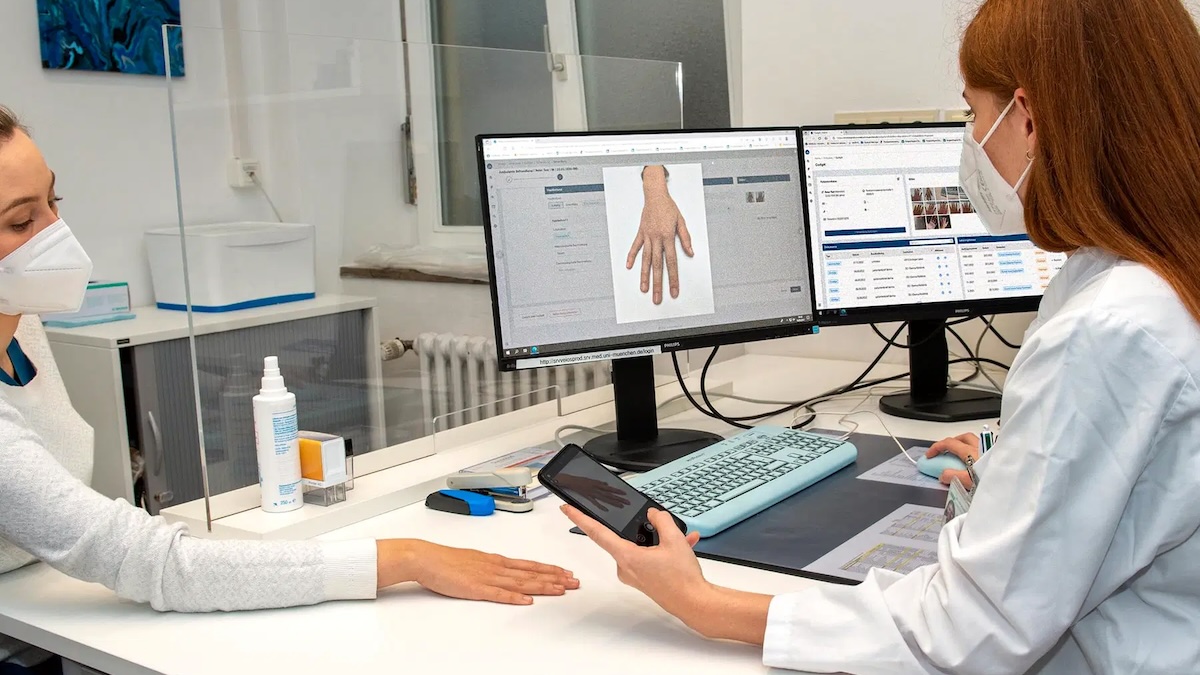
In the series “Start-up Check!” We regularly examine the business models of start-ups. What is behind the company? What makes the start-up so special and what is there to criticize? Today: Avelios Medical.
Start-ups: That sounds like inventiveness, future technologies, new markets. But in reality, many of the start-ups unfortunately often turn out to be a mixture of an e-commerce idea, haphazard founders and shaky future prospects.
They certainly do exist: the thought leaders who work on the big problems and revolutionize business models. Finding and presenting them is the task of the “Start-up Check” format. Today: Avelios Medical, a MedTech start-up from Munich.
What is Avelios Medical?
- Industry: MedTech / HealthTech
- Founder: Christian Albrecht (CEO), Nicolas Jakob, Dr. Sebastian Krammer
- Year founded: 2020, Munich
- Business model: SaaS platform with modular hospital software (KIS 2.0) as a monthly subscription, on-premise or in the cloud, in addition to existing systems
- Goal: First-class patient care through digital clinical processes, structured data and integrated AI
Hospitals employ highly qualified staff, but their outdated IT systems slow down efficient everyday work. A hard theory, but everyday life in most hospitals. One shows how strong this burden actually is Survey of 39 hospitals by KPMG: The existing hospital software in particular is causing considerable dissatisfaction.
Also frightening: According to the German Hospital Association, doctors and nursing staff spend an average of three hours a day on documentation work, which often has no direct benefit for the treatment of patients. Time that is missing in care and further increases the pressure in everyday hospital life.
The solution: modular clinic software instead of complete replacement
Against this background, Christian Albrecht, Nicolas Jakob and Dr. Sebastian Krammer in 2020 Avelios Medical. The start-up originally emerged from an AI research project at the university hospital.
This resulted in KIS 2.0, a modular hospital software that digitizes paper-based processes. Patient admission, treatment documentation, billing and appointment planning are automated.
Data such as vital parameters, therapy courses, laboratory values and treatment notes are recorded once and are only available to authorized clinical staff throughout the system in the clinic area, in strict GDPR compliance.
The cloud-native solution can be operated flexibly in the cloud or locally and integrated modularly like Lego alongside existing systems without the need for a complete IT conversion.
The integrated AI is particularly noteworthy: it significantly reduces the documentation effort by automatically generating up to 2,000 structured patient data per treatment. This is intended to make clinical decisions easier and improve internal research.
Business model and practical evidence
The business model follows a clear SaaS approach. Hospitals pay a monthly subscription fee instead of a large one-time investment. Updates, support and integration into existing IT systems are included.
Avelios Medical is already used at the Sana Clinics, the LMU Munich and the Hanover Medical School. The core promises:
- more patients per day through time savings due to less administrative effort,
- better treatments through structured data as well
- a long-term AI-capable system basis.
Scaling: market, capital and structural hurdles
In the Series A round, Sequoia Capital, Revent and High-Tech Gründerfonds (HTGF) invested 30 million euros. The capital will be used to scale the software on the German hospital market and prepare it for the first international pilot projects.
“I believe the potential of personalized medicine is still underestimated,” CEO Christian Albrecht told the Handelsblatt.
Today, precautionary measures in particular are based on assumptions that should apply to everyone. With better data, we could act much more individually – not just reactively when someone is sick, but particularly proactively, for example based on genetic information. That would significantly improve care.
The market exists: around 2,000 hospitals in Germany and billions in funding from the Hospital Future Act (KHZG) create scope for investment. The structural advantage of Avelios Medical lies in its modular entry.
Conclusion: Avelios Medical as a possible standard for modern hospital IT
Avelios Medical connects AI research directly with everyday clinical practice, thereby solving an urgent problem: outdated IT that robs doctors and nurses of valuable time. With customers like Sana Kliniken, strong investors and a scalable SaaS model, the start-up is positioning itself as a game changer.
HIS 2.0 could become the new standard for modern hospital software and thus give the healthcare system back valuable time for patients.
Also interesting:
- Turning gas into electricity: reversible power plants with fuel cells
- The Exploration Company: Europe on the way to its own space logistics
- SkoneLabs: How AI should ensure fresh food
- Tactile: German AI start-up wants to transform the financial industry
The post Patients instead of paperwork: German company brings AI to hospitals appeared first on BASIC thinking. Follow us too Google News and Flipboard or subscribe to our newsletter UPDATE.
As a Tech Industry expert, I believe that the integration of AI into hospitals has the potential to greatly improve patient care by reducing the burden of paperwork on healthcare professionals. By automating tasks such as data entry, scheduling, and administrative work, AI can free up more time for doctors and nurses to focus on providing quality care to patients.
The German company’s initiative to introduce AI into hospitals is a step in the right direction towards creating a more efficient and patient-centered healthcare system. By streamlining processes and reducing the time spent on paperwork, healthcare professionals can spend more time interacting with patients, listening to their concerns, and providing personalized care.
Additionally, AI has the potential to improve patient outcomes by analyzing data and identifying patterns that can help healthcare providers make more accurate diagnoses and treatment plans. By harnessing the power of AI, hospitals can improve efficiency, reduce errors, and ultimately enhance the overall patient experience.
Overall, the integration of AI into hospitals has the potential to revolutionize the healthcare industry and create a more patient-centric approach to care. I am excited to see how this technology continues to evolve and improve patient outcomes in the future.
Credits