The article Researchers develop a highly efficient microplastic filter for washing machines first appeared in the online magazine BASIC thinking. With our newsletter UPDATE you can start the day well informed every morning.
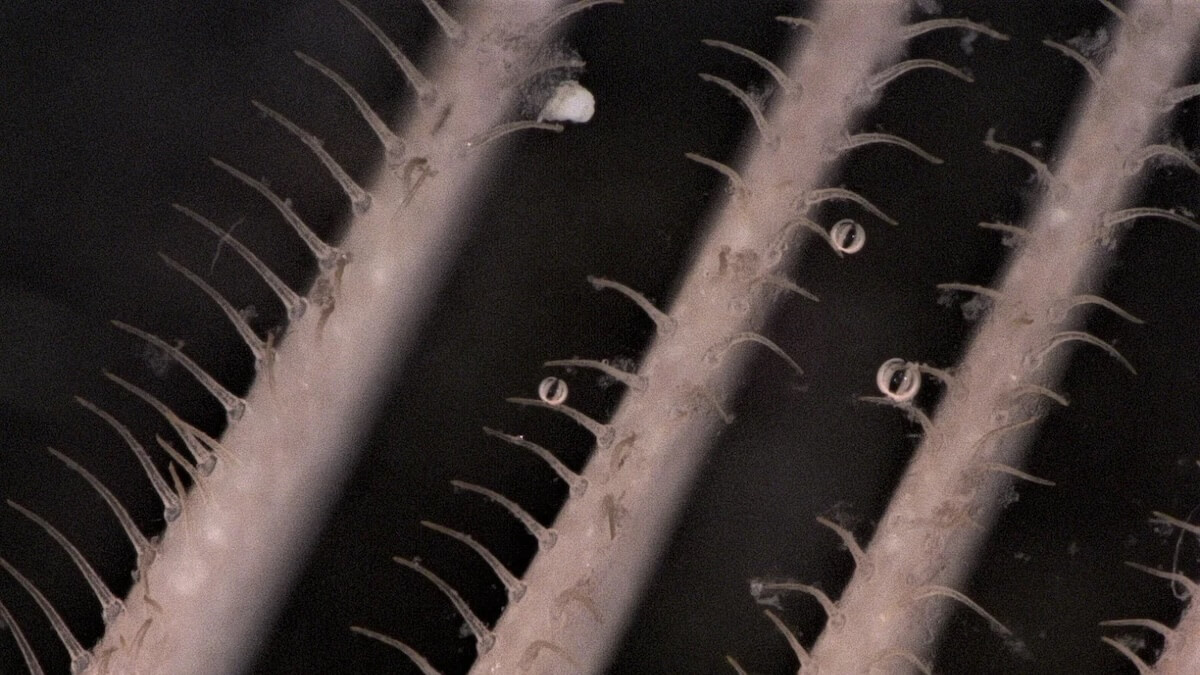
Microplastics represent a major burden on people and nature worldwide. A team of researchers has now developed a microplastic filter for washing machines that is based on the gills of fish. This means that even tiny plastic particles can be filtered out of wastewater particularly efficiently.
Microplastics are considered one of the most pressing environmental problems of our time. The tiny plastic particles are deposited in water bodies, soils and even in the air around the world.
Experts believe that microplastics can cause serious health problems. These tiny particles have also been detected in the brain, breast milk or the placenta.
The small particles are created, for example, by the abrasion of car tires or the decay of larger plastic waste in nature. But when we wash our clothes, microplastics also end up in the wastewater through abrasion.
Researchers at the University of Bonn and the Fraunhofer Institute for Environmental, Safety and Energy Technology have now developed a microplastic filter for washing machines. This is based on the gill arch system of fish and can filter more than 99 percent of plastic fibers from washing machine wastewater.
For washing machines: microplastic filter inspired by fish
Once microplastics have been released into the environment, the tiny particles can be absorbed again by organisms. This means they can also be passed along the food chain. The consequences for ecosystems and human health are potentially serious but are not yet fully understood.
In order to reduce the amount of microplastics produced when washing clothes, researchers at the University of Bonn have now developed a filter. This is inspired by the gill arch system of fish and has already been able to remove 99 percent of plastic fibers from washing machine wastewater in initial tests.
The researchers who developed the filter together with the Fraunhofer Institute for Environmental, Safety and Energy Technology are currently working on an EU-wide patent for their development. They have their jobs in the specialist journal npj Emerging Contaminants publishedthe patenting in Germany has already been completed.
According to the researchers, wastewater from a washing machine in a four-person household produces 500 grams of microplastics every year. The main reason for this is the abrasion of textiles.
This means that the small particles can get directly into the sewage sludge of sewage treatment plants. This in turn is often used as fertilizer, which means that the microplastic particles can end up in the fields.
How does the microplastic filter work?
The solution to this problem could be a microplastic filter based on the gill arch systems of fish such as mackerel, sardines and anchovies. These fish swim through the water with their mouths open and filter out plankton for their diet.
“We took a closer look at the design of this system and used it as a model for developing a filter that can be used in washing machines,” explains lead author Dr. Leandra Hamann from the Institute for Organismic Biology at the University of Bonn. Over the course of evolution, the gill arch system has formed like a funnel, which is widest at the fish’s mouth and tapers towards the throat.
This funnel in turn has a comb-like structure. This creates a kind of net that stretches over the gill arches and serves as a filter.
“During feeding, the water flows through the permeable funnel wall, is filtered and the particle-free water is then released back into the environment via the gills,” explains co-author Prof. Dr. Alexander Blanke. “However, the plankton is too large for this; it is retained by the natural sieve structure. Thanks to the funnel shape, it then rolls towards the throat, where it is collected until the fish swallows, thereby emptying and cleaning the system.”
It is precisely this system that the researchers oriented themselves towards. This made it possible to create a filter that can filter more than 99 percent of microplastic particles from the water – without becoming clogged.
The filtered microplastic collects in the filter outlet and is sucked out several times a minute. According to the researchers, this could be pressed in the washing machine in the future to remove the remaining water. The resulting plastic granules could then be disposed of with household waste.
Also interesting:
- Lifespan of solar cells: This is how long PV systems last
- Social leasing of e-cars: This is how the funding works
- Researchers are developing a method to produce hydrogen without electricity
- Waste heat from data centers: Finland shows how the energy transition works
The post Researchers develop a highly efficient microplastic filter for washing machines appeared first on BASIC thinking. Follow us too Google News and Flipboard or subscribe to our newsletter UPDATE.
As a Tech Industry expert, I am excited to hear about the development of a highly efficient microplastic filter for washing machines. Microplastic pollution is a major environmental concern, and finding ways to prevent these particles from entering our waterways is crucial.
The fact that researchers have created a filter that is effective at capturing microplastics during the washing process is a significant step forward in addressing this issue. It shows that technology can play a key role in mitigating the impact of plastic pollution on our environment.
I believe that the adoption of this technology in washing machines could have a positive impact on reducing microplastic pollution, especially as more and more people become aware of the importance of environmental sustainability. I hope to see this innovation being widely implemented in households and commercial settings to help protect our oceans and wildlife from the harmful effects of microplastic pollution.
Credits