The article Road power plant generates electricity when cars drive over it first appeared in the online magazine BASIC thinking. With our newsletter UPDATE you can start the day well informed every morning.
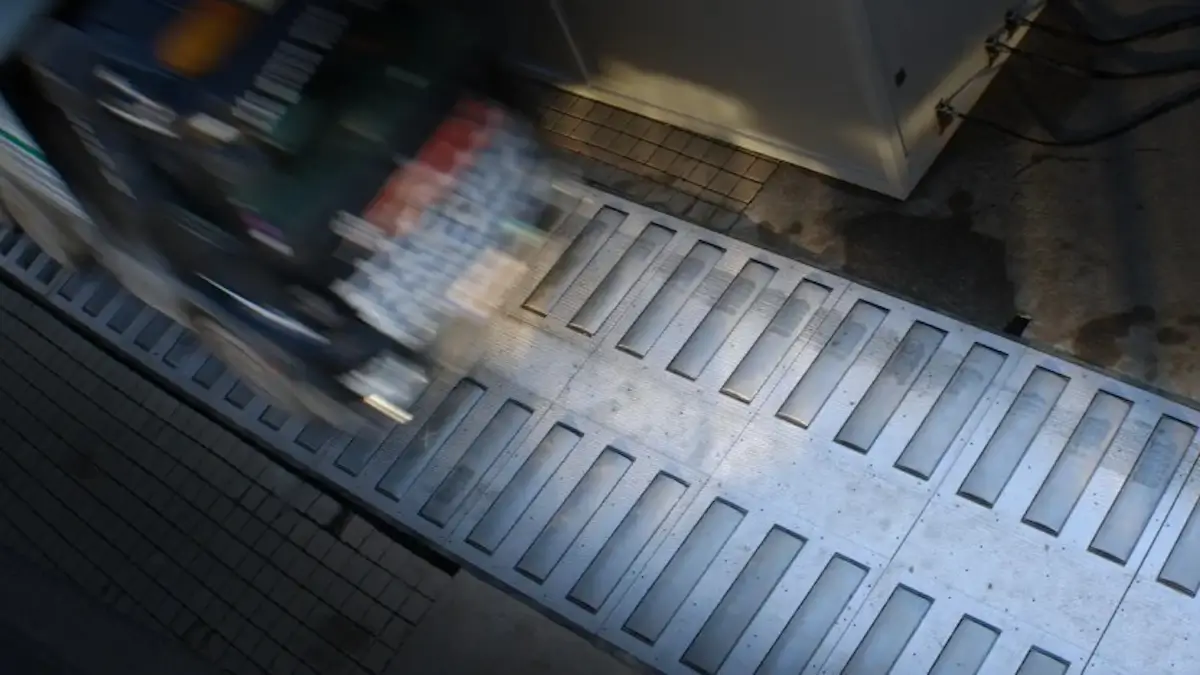
An Austrian start-up has developed a road power plant that generates electricity when vehicles drive over it. Heavy trucks alone could generate 40,000 kilowatt hours in the port of Hamburg every year.
As part of the energy transition, researchers and companies are constantly developing new concepts. A new approach demonstrates how roads carrying heavy trucks can become so-called road power plants.
For this type of electricity generation, the Austrian company Road Energy Production Systems (REPS) has a facility in operation at the port of Hamburg. The road power plant works like a speed bump. As soon as heavy vehicles drive over them, they dent segments in the road surface.
The system mechanically transfers the resulting impulses from the road to an energy converter. This converter is based on the world’s first permanent magnetic bearing, which uses a patented magnetic suspension to generate almost no friction when converting mechanical energy into electrical energy.
Road power station generates electricity on roads
Simply put, the system converts braking energy into electricity in a roundabout way. The electricity generated is temporarily stored and can either be fed into a storage system or fed directly into the power grid as required.
The system only requires a penetration depth of eight to ten centimeters into the ground, allowing for quick and easy installation. All moving components, such as the triggers, should be replaceable. In addition, the road maintenance department can service all critical components outside of the roadway. This leads to greater safety as well as high efficiency and service life.
The port of Hamburg could supply small towns with energy
The technology is particularly suitable for places where heavy vehicles travel at low speeds. One example is the test area on the harbor area in Hamburg. Other possible locations include intersection areas, highway entrances or toll booths with high freight traffic.
The first system in the port of Hamburg is twelve meters long and is expected to deliver electricity in the kilowatt range. According to the start-up’s estimates, 16 trucks are enough to generate one kilowatt hour (kWh) of energy. Due to the high volume of traffic in the port of Hamburg, the company expects that the first system alone can deliver almost 40,000 kWh of electricity annually.
If all of the more than 200 suitable locations in the port were used, annual electricity production could be ten gigawatt hours. This roughly corresponds to the electricity needs of a small town. Road Energy Production Systems assumes that such a system will pay for itself within ten years at the latest. 40 ports worldwide are said to have already expressed interest in the facilities.
Also interesting:
- ChatGPT is listening: This is how you can deactivate background conversations
- Electricity through steps: the future of sustainable energy?
- Solar implant with AI should enable blind people to read again
- Vertical wind turbine with AI – for houses in the city
The post Road power plant generates electricity when cars drive over it appeared first on BASIC thinking. Follow us too Google News and Flipboard or subscribe to our newsletter UPDATE.
As a Tech Industry expert, I find the concept of a road power station that generates electricity when cars drive over it to be a fascinating and innovative idea. This type of technology has the potential to revolutionize the way we think about energy production and distribution, especially in urban areas where space is limited.
By harnessing the kinetic energy generated by vehicles driving over the road surface, these power stations could provide a sustainable and renewable source of electricity that is not only efficient but also environmentally friendly. This could help reduce our reliance on fossil fuels and decrease carbon emissions, ultimately leading to a cleaner and more sustainable future.
However, there are also some challenges and considerations that need to be addressed when implementing this technology. For example, the durability and maintenance of the road surface need to be taken into account to ensure that the power station can withstand the constant wear and tear of vehicles driving over it. Additionally, the cost of implementing and maintaining these power stations may also be a factor that needs to be considered.
Overall, I believe that road power stations have the potential to be a game-changer in the energy industry and could play a significant role in our transition towards a more sustainable and renewable energy future. It will be interesting to see how this technology develops and is integrated into our infrastructure in the coming years.
Credits