The article Sodium-ion battery: The first electric car with a salt battery is coming first appeared in the online magazine BASIC thinking. With our newsletter UPDATE you can start the day well informed every morning.
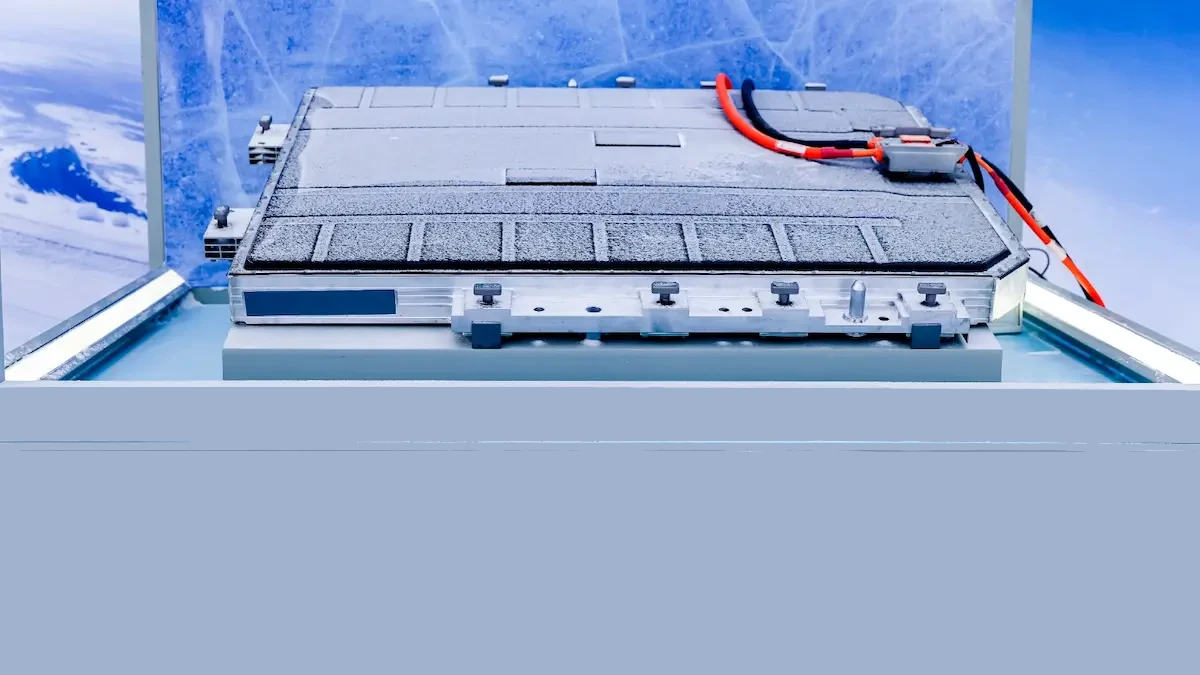
The two Chinese companies CATL and Changan want to bring the first series-ready electric car with a sodium-ion battery onto the road this year. The so-called salt battery is said to be safe and inexpensive and can withstand temperatures of up to minus 50 degrees Celsius.
Changan Automobile and battery manufacturer CATL have the world’s first mass-produced vehicle with sodium-ion batteries in Yakeshi presented. The model is scheduled to come onto the market in mid-2026 and features a Naxtra battery from CATL. This technology is used across brands at AVATR, Deepal, Qiyuan and UNI. The launch could mark the transition to an ecosystem with two complementary battery technologies.
The Naxtra batteries achieve an energy density of 175 watt hours per kilogram. In purely electric cars, the system currently enables a range of around 400 kilometers. Further developments should enable ranges of between 500 and 600 kilometers in the future. The technology would thus cover over 50 percent of the range requirements of the global market.
Sodium-ion battery promises high performance in cold conditions
At temperatures of minus 30 degrees Celsius, the sodium-ion cells deliver almost three times the discharge power compared to LFP batteries. Even at minus 40 degrees Celsius, they retain over 90 percent of their capacity. A stable power output is guaranteed even in extreme conditions of up to minus 50 degrees Celsius. For hybrid vehicles, the technology offers an electric range of between 300 and 400 kilometers.
The stress tests include extreme mechanical impacts such as crushing, drilling or sawing. There was no smoke or fire and the power supply remained stable. The result demonstrates reliability in the vehicle sector. The batteries are specially designed for use in the most difficult climatic conditions.
CATL also plans to build over 3,000 Choco Swap stations in 140 cities this year. Of these, more than 600 stations are specifically being built in the cold northern regions of China. This network is intended to ensure drivers fast and reliable access to energy. The infrastructure supports the deep integration of technology across multiple vehicle brands.
Research effort and industrial scaling
The global sodium-ion battery market could reach $6.83 billion by 2034. A significant advantage lies in the use of abundant raw materials for production. These resources help diversify global supply chains and reduce dependencies. The process is also considered environmentally friendly in production and recycling.
Targeted research into sodium ion technology began at CATL in 2016. Around 1.45 billion US dollars went into the development and testing of almost 300,000 test cells. A team of over 300 specialists, including 20 scientists with doctorates, formed the scientific basis. This preparatory work now enables industrial production on a large scale.
With the current presentation, the technology is finally leaving the laboratory phase. Changan Automobile and CATL are transferring the research results into scalable mass production. The batteries are intended to establish themselves as a global standard solution for worldwide electromobility. This makes sodium technology a viable alternative for the broad mass market.
Also interesting:
- Buying a used electric car: This is what you should pay attention to
- Data protection at ChatGPT: You can protect yourself with these 10 tips
- AI chatbots in comparison: How good are ChatGPT, Gemini and Co. really?
- These are the 6 best greentech newsletters
The post Sodium-ion battery: The first electric car with a salt battery is coming appeared first on BASIC thinking. Follow us too Google News and Flipboard or subscribe to our newsletter UPDATE.
As a tech industry expert, I am excited to see the development of a sodium-ion battery for electric vehicles. This technology has the potential to revolutionize the industry by providing a more affordable and sustainable alternative to traditional lithium-ion batteries.
Sodium-ion batteries are cheaper to manufacture and use more abundant materials compared to lithium-ion batteries, making them a more environmentally friendly option. Additionally, sodium-ion batteries have a higher energy density, which means they can store more energy and potentially provide longer driving ranges for electric vehicles.
The fact that the first electric car with a salt battery is coming is a promising sign of the advancements being made in battery technology. I believe that sodium-ion batteries could play a significant role in the future of electric vehicles and help to accelerate the transition to a more sustainable transportation system.
Overall, I am optimistic about the potential of sodium-ion batteries and look forward to seeing how this technology continues to develop and be adopted in the electric vehicle market.
Credits