The article Sodium-ion battery: water trick doubles performance first appeared in the online magazine BASIC thinking. With our newsletter UPDATE you can start the day well informed every morning.
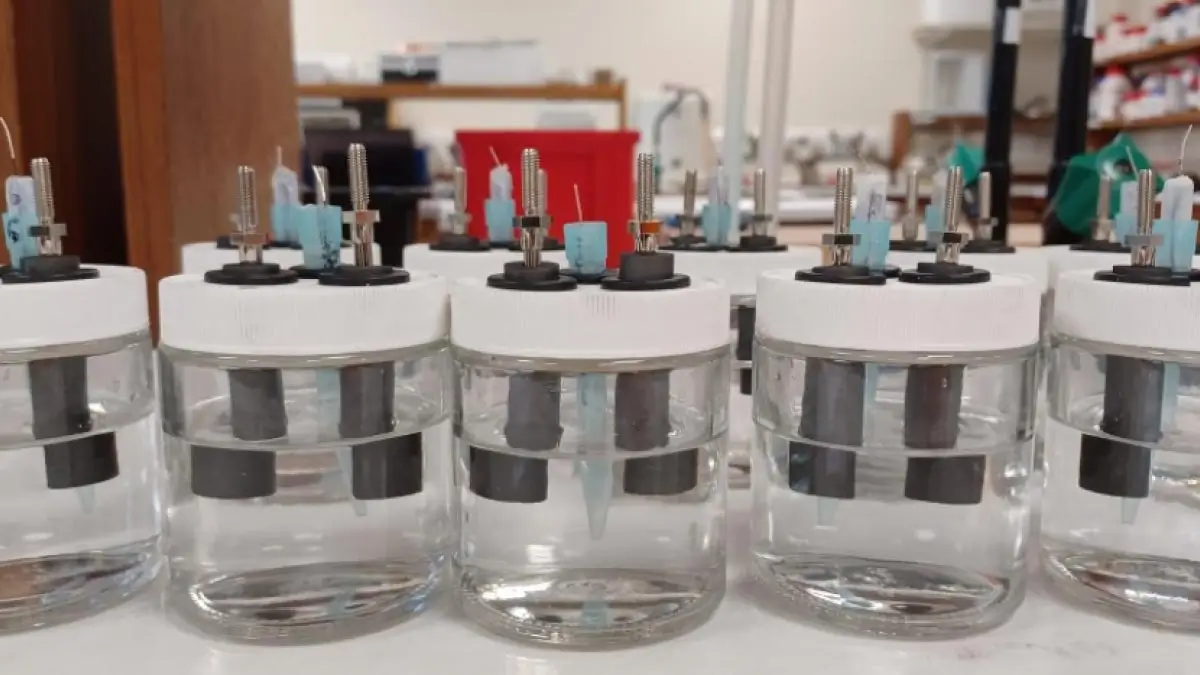
Sodium-ion batteries not only serve as energy storage devices, but also convert seawater into drinking water. Researchers have now discovered that a well-known battery material works significantly better if its water content is retained.
Researchers at the University of Surrey recently made a surprising discoverywhich could significantly improve sodium-ion batteries. Until now, scientists have laboriously removed the water contained in the batteries by heating them because they suspected that their performance would be impaired. However, a new study shows that leaving water in the material can almost double energy storage.
The team uses a special material called Nanostructured Sodium Vanadate Hydrate (NVOH). By keeping the water in the NVOH, the system achieved a significantly higher charging speed and more stable use in everyday life. In a series of tests, the battery withstood more than 400 charging cycles without any significant losses.
Clean water through energy storage
The material is one of the most powerful cathodes for sodium systems to date. Sodium offers the industry decisive advantages over lithium because it is found in abundance all over the world. This reduces the acquisition costs for storage technologies and at the same time protects the environment.
The researchers achieved a particular breakthrough thanks to the versatility of the system, which even works in ordinary salt water. As the battery stores energy, it actively draws sodium from the surrounding solution. Scientists call this dual benefit electrochemical desalination.
A graphite electrode extracts the chloride from the water. This enabled the team to obtain fresh drinking water from undrinkable seawater. This process runs parallel to storage and makes the system a multifunctional tool for coastal regions.
Safe sodium-ion batteries in everyday life
In terms of safety, the new technology impresses with its stable chemical reaction. When tested with a universal indicator, the salt water on the counter electrode turned red. This proves that the system does not produce any gas, which is an important argument for its safe use in everyday life.
The absence of dangerous gas formation increases the lifespan and reliability of the battery. This creates a system that is ready for use in sensitive environments. In the long term, engineers are designing systems that use seawater as a safe and inexhaustible electrolyte.
This reduces the industry’s dependence on expensive chemical additives. The simplified production of these batteries brings commercial use within reach.
Also interesting:
- This is how you find out everything ChatGPT knows about you
- ChatGPT: Activate parental controls – this is how it works
- Electric car: What happens if the battery is empty?
- Why electric cars use more energy on the highway
The post Sodium-ion battery: Water trick doubles performance appeared first on BASIC thinking. Follow us too Google News and Flipboard or subscribe to our newsletter UPDATE.
As a Tech Industry expert, I find the development of sodium-ion batteries using a water trick to double performance to be a fascinating and exciting advancement in the field of energy storage technology. Sodium-ion batteries have long been considered a promising alternative to lithium-ion batteries due to the abundance and low cost of sodium, but they have historically lagged behind in terms of performance.
By incorporating water into the electrolyte of sodium-ion batteries, researchers have been able to significantly improve their energy storage capacity and charging speed. This breakthrough has the potential to revolutionize the energy storage industry by making sodium-ion batteries a more viable and competitive option for a wide range of applications, from consumer electronics to grid-scale energy storage.
I believe that this development is a testament to the power of innovation and collaboration in pushing the boundaries of what is possible in energy storage technology. It is an exciting time to be working in the tech industry, and I look forward to seeing how this breakthrough will continue to shape the future of energy storage.
Credits