The article World’s first E-STATCOM: Artificial inertia should stabilize the power grid first appeared in the online magazine BASIC thinking. With our newsletter UPDATE you can start the day well informed every morning.
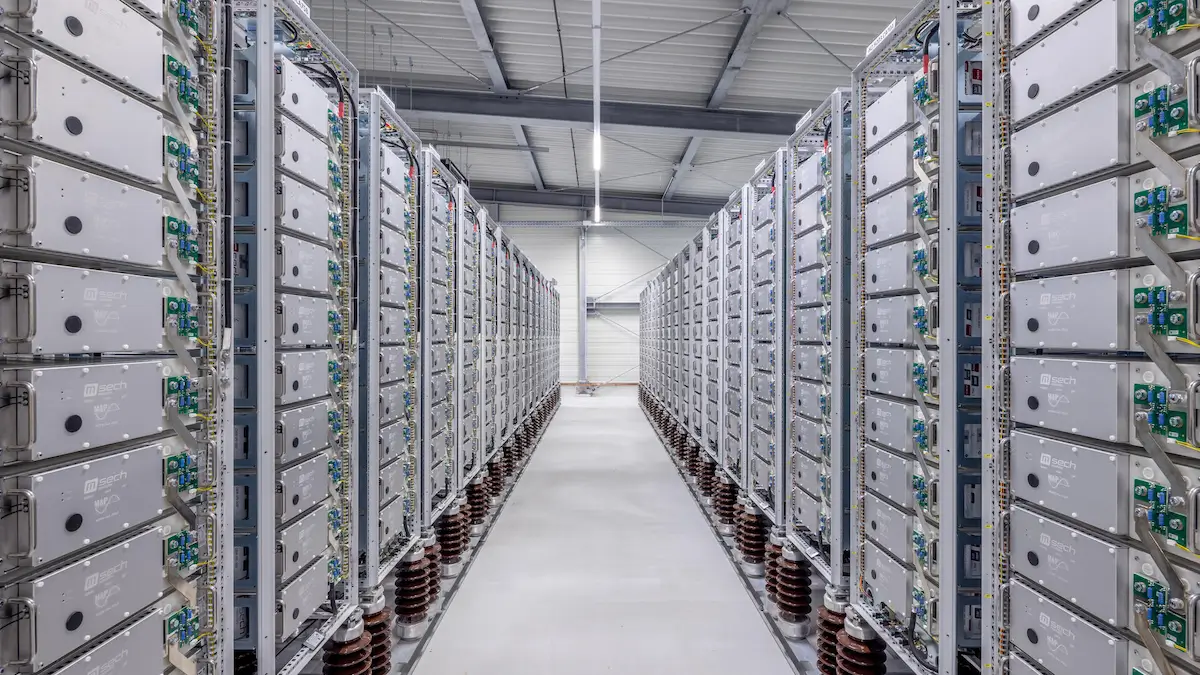
TenneT and Siemens Energy have introduced the world’s first E-STATCOM with supercapacitors. The compensator system is intended to introduce artificial inertia into the German power grid in order to stabilize it and avoid blackouts.
The energy transition poses major challenges for the power grids, as conventional power plants such as coal-fired and nuclear power plants are gradually being shut down. For decades, these conventional systems not only provided electricity, but also stability, with their massive, rotating generators keeping the grid frequency constant at 50 Hertz.
If demand increased or a generator failed, the kinetic energy of these rotating masses served as a buffer, giving grid operators time to react. Without this buffer, the lack of grid stability can lead to equipment damage, cascading failures, or even nationwide power outages.
E-STATCOM with supercapacitors: Artificial inertia as a stabilizer for the power grid
Switching to renewable energy sources such as wind and solar systems connected by inverters exacerbates the problem as they do not add inertia to the grid. This is where the world’s first E-STATCOM comes into play.
This is a technology that… was developed by TenneT Germany and Siemens Energy in Germany. The system stabilizes the grid by using supercapacitors that deliver short bursts of energy in milliseconds, creating a type of “artificial inertia.”
The E-STATCOM simultaneously stabilizes both the voltage and the frequency in the power grid. It acts as a reservoir for instant electrical energy. This stability is consistently maintained around the clock, mitigating key network challenges and preventing blackouts.
A model for future networks
The Mehrum location was deliberately chosen because it lies exactly between two north-south corridors and from there it can influence the network stability on both corridors.
The technology is an important step for the integration of renewable energies. Without a modernized grid that ensures stable transmission of renewable energy, the energy transition cannot be successful. The E-STATCOM in Mehrum is considered an important project that proves that the global energy transition is feasible.
At the same time, it serves as a blueprint for renewable-capable networks worldwide. After the construction phase, the system will be tested for months before it goes into commercial operation.
Also interesting:
- ChatGPT is listening: This is how you can deactivate background conversations
- Electricity through steps: the future of sustainable energy?
- Vertical wind turbine with AI – for houses in the city
- Solar implant with AI should enable blind people to read again
The post World’s first E-STATCOM: Artificial inertia should stabilize the power grid appeared first on BASIC thinking. Follow us too Google News and Flipboard or subscribe to our newsletter UPDATE.
As a tech industry expert, I am excited about the development of the world’s first E-STATCOM with artificial inertia capabilities. This technology has the potential to play a crucial role in stabilizing power grids, especially in the face of increasing renewable energy sources and fluctuating electricity demands.
Traditional power grids rely on rotating machinery to provide inertia, which helps maintain stability during sudden changes in power supply or demand. However, as more renewable energy sources like wind and solar are integrated into the grid, the need for alternative methods of providing inertia has become apparent.
The E-STATCOM with artificial inertia is a promising solution to this challenge. By using advanced control algorithms and energy storage technologies, this system can mimic the stabilizing effects of inertia without the need for traditional rotating machinery. This not only helps improve grid stability but also enables better integration of renewable energy sources, ultimately leading to a more reliable and sustainable power system.
Overall, the development of the world’s first E-STATCOM with artificial inertia is a significant milestone in the evolution of power grid technology. I believe that this innovation has the potential to revolutionize the way we approach grid stability and pave the way for a more resilient and efficient energy system in the future.
Credits