The article Lost in Translation? ChatGPT gets its own translator first appeared in the online magazine BASIC thinking. With our newsletter UPDATE you can start the day well informed every morning.
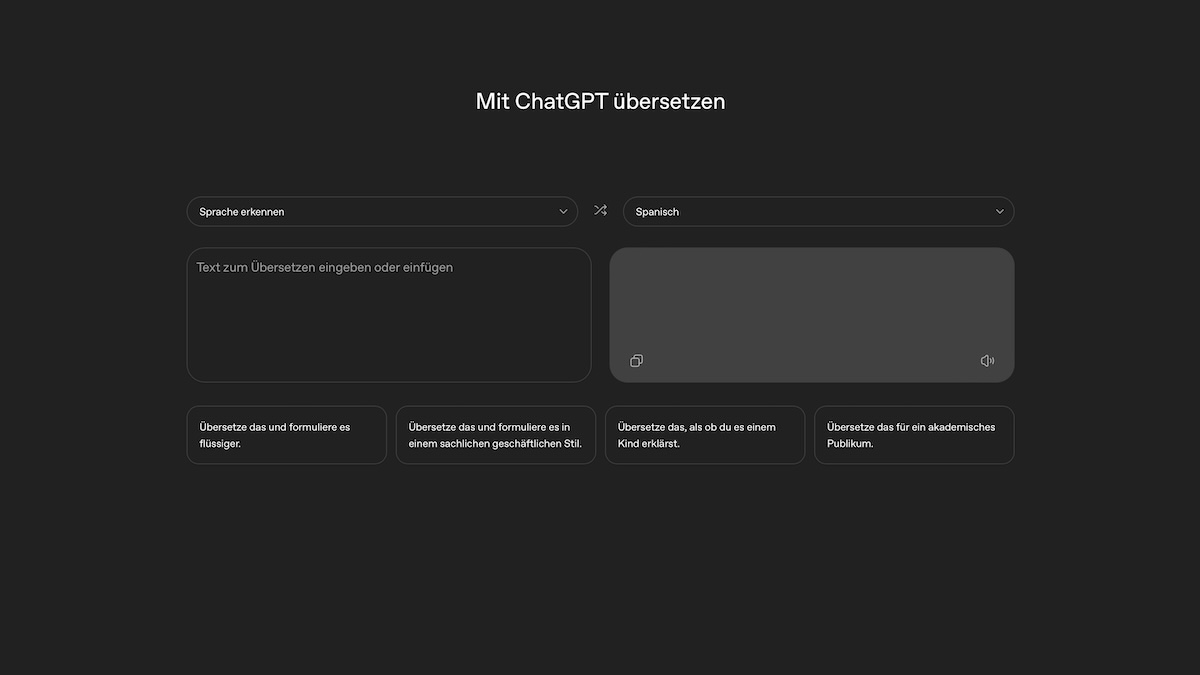
OpenAI has launched its own translator, ChatGPT Translate. In addition to classic translations, the tool also enables reformulations for specific target groups such as children or an academic audience. However, the translator still has some weak points. A commentary analysis.
ChatGPT gets its own translator
- ChatGPT Translate can According to OpenAI Recognize tone, idioms and contexts in textsto deliver accurate translations. Colloquial and regional expressions should also not be a problem for the tool.
- Like Google Translate or DeepL, the OpenAI translator should be able to automatically recognize the source language. Those too user interface similar to those of the competition. Currently ChatGPT supports Translate around 50 different languages. Including: English, German, French and Spanish.
- According to OpenAI, ChatGPT Translate goes beyond a classic translator. The tool should also be possible with a mouse click special text adjustments make possible. These include: more fluid phrasing, rephrasing into a factual, business style, translation for understanding by a child, and translation for an academic audience.
ChatGPT Translate: Not fully developed yet
Normally, OpenAI makes a big deal out of every function, no matter how small. So far, however, there are unusually no official statements about ChatGPT Translate (As of January 15, 2026). The tool still represents a direct competitor to established translators such as DeepL or Google Translate.
It was previously possible to translate texts with ChatGPT. But OpenAI has one with ChatGPT Translate separate translation interface created that is not accidentally similar to the competition’s offerings, but is intended to create a familiar feeling.
The actual added value of ChatGPT Translate could be in the post-processing of translations. There are clickable options below the translation. However, the selection takes you to the normal ChatGPT interface.
The translator doesn’t seem to be fully developed. The offer to breathe an academic tone into texts is also not without a certain irony. Because Studies According to AI translators, they especially have problems with technical and scientific terms.
Voices
- Loud Franziska Neziri, Vice President of the Swiss Association of Translators, Terminologists and Interpreters (ASTTI)is AI incapable of human experiencesand therefore cannot compare the input received with previous experiences, which is what we humans do every day. So you can e.g. B. do not feel emotions and therefore cannot understand them.
- Oliver Czulo, Professor of Translation Studies at the Humanities Center (GWZ) at the University of Leipzigin one interview: “The machine has no understanding of what gender is and what stereotypes are. Translation models are nothing more than statistical models, but they have no understanding of the world at all. How well models work depends on data. There are certain language pairs such as English-German or English-French for which the machine can sometimes do really good pre-translations.”
- Interpreter Nathan Chacon to the Impact of AI translators on his job: “There are many translators out there and they confirmed my concerns. I see AI tools taking control.” Chacón currently primarily has to correct AI translations because artificial intelligence cannot recognize phrases such as “it’s raining cats and dogs”.
AI Translator: OpenAI is lagging behind the competition
It remains to be seen whether ChatGPT Translate can establish itself as a solid alternative to Google Translate and DeepL. Because: so far OpenAI lags significantly behind the competition when it comes to language selection. However, the publication of an in-house dedicated translator shows that the company wants to position itself more strongly in this area in the future.
Additional languages, functions and, above all, more marketing are likely logical consequence be. OpenAI is not yet on a par with the competition. But with further upgrades and the popularity of ChatGPT, the company could quickly make up ground.
The tool should therefore quickly become a practical companion in private and interpersonal everyday life. AI translators will still be useful for professional translators and interpreters no direct danger represent.
However, their job profile is likely to continue to shift: away from direct translations and towards more proofreading. Because hallucinations, cultural mistakes or misunderstood metaphors are not Children’s diseasesbut side effects of static language models.
Also interesting:
- Due to a shortage of personnel: Less bureaucracy through AI?
- For Siri: Apple buys Gemini intelligence from Google
- Metaverse: How Mark Zuckerberg dug a grave for billions
- EU authority embarrasses itself with AI glitch
The article Lost in Translation? ChatGPT gets its own translator appeared first on BASIC thinking. Follow us too Google News and Flipboard or subscribe to our newsletter UPDATE.
As a tech industry expert, I think that having ChatGPT get its own translator is a great idea. This feature would allow ChatGPT to communicate with users in multiple languages, making it more accessible and useful for a wider range of people. By breaking down language barriers, ChatGPT can provide more accurate and personalized responses to users, enhancing their overall experience.
Additionally, having its own translator would also showcase the advancements in natural language processing technology and further demonstrate the capabilities of AI in facilitating cross-cultural communication. This feature could potentially open up new opportunities for ChatGPT to be used in various industries and regions where language barriers may have previously been a hindrance.
Overall, integrating a translator into ChatGPT would be a valuable addition that could greatly enhance its functionality and utility for users worldwide.
Credits