The article No more toxins? New battery relies on water-solvents first appeared in the online magazine BASIC thinking. With our newsletter UPDATE you can start the day well informed every morning.
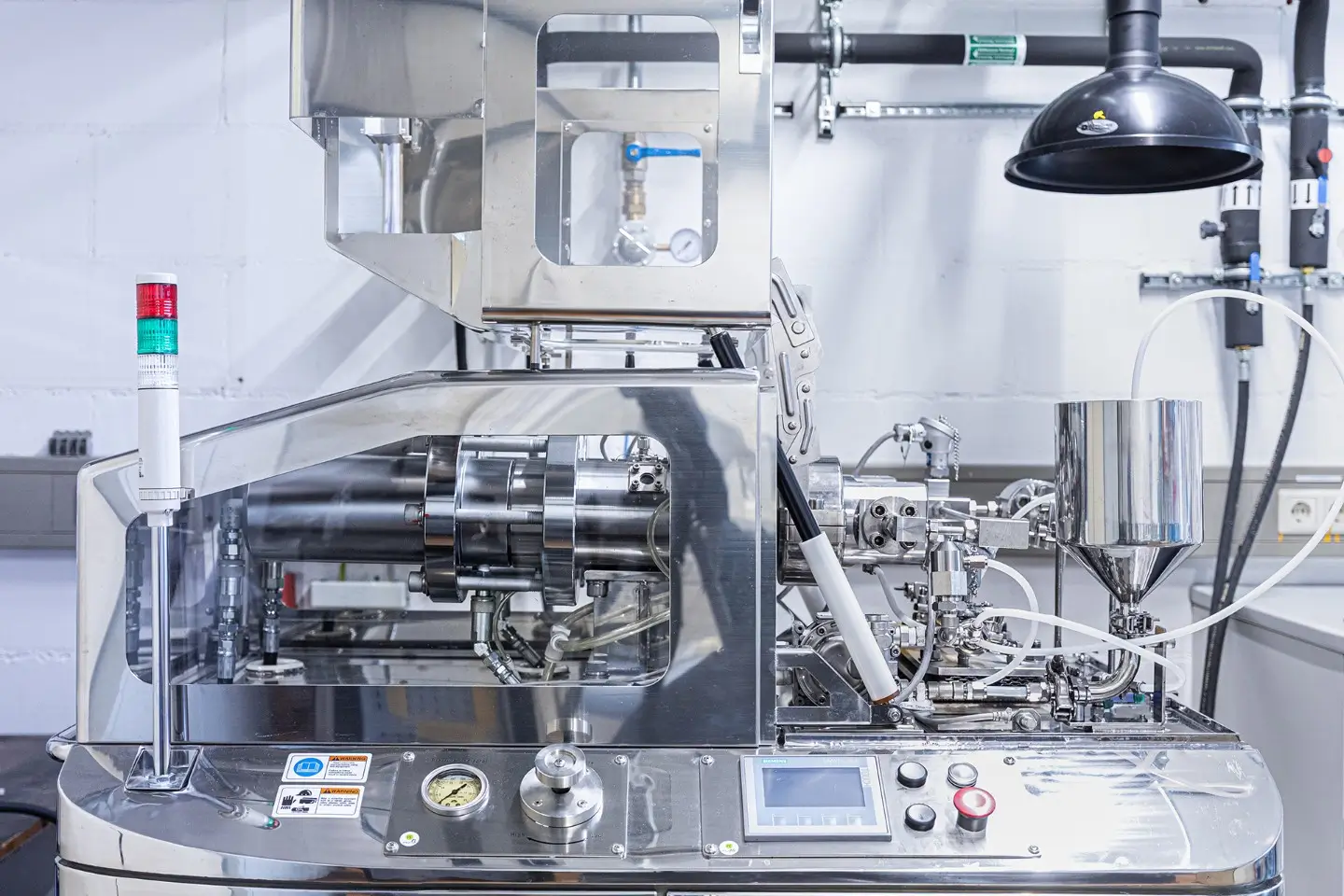
With a new water-based production method, LFP batteries could be produced in a significantly more energy-efficient and environmentally friendly manner. Because: Instead of toxic solvents, a special water mixture is used.
Lithium-ion batteries form the backbone of electromobility, but pollute the environment with toxic substances. Standard binders such as polyvinylidene fluoride (PVDF) traditionally require the toxic solvent N-methyl-2-pyrrolidone (NMP) for electrode production. Researchers at the Fraunhofer Institute for production technology and automation IPA have now developed a sustainable water-based solution.
Study author Leah Jalowy and her colleague Dominik Nemec rely on the bio-based binder carboxymethylcellulose (CMC). In close cooperation with the Japanese machine manufacturer Sugino, they optimized the production processes for lithium iron phosphate cathodes (LFP). The team published its scientific findings in the journal Applied Chem.
LFP cathodes: New battery relies on water-solvents
The team systematically examined two industrially relevant processes for mixing electrode paste, also known as slurry. While dissolver mixing rotates a toothed disc in the paste, wet jet milling uses extreme high pressure. The system presses the material through precise micro-nozzles at up to 2,200 bar.
This method reduces the average particle size of the materials by 39 percent. Wet jet milling also reduces viscosity by 96 percent at low shear rates, by 80 percent at medium shear rates and by 64 percent at high rates. This physical optimization improves the flow behavior and enables a higher solids content in the paste.
Improved performance and energy balance
High-resolution images under the electron microscope show that the electrodes produced in this way are more homogeneous and densely packed. A smoother interface to the current collector leads to better current flow and higher mechanical stability. The researchers attribute this quality to the efficient size reduction of the particles.
At a nominal charging rate of 1.0 C, which corresponds to a full charge within an hour, the capacity increased significantly. The high-pressure version achieved 83.8 milliamp hours per gram compared to 73.1 for the standard method. This 12.8 percent increase results from the larger active surface area of the smaller particles.
Sustainable production saves 42 percent energy
The combination of wet jet milling and dissolver mixing requires only 0.98 kilowatt hours per kilogram of paste. In comparison, the pure dissolver process uses significantly more process energy at 1.70 kilowatt hours per kilogram. Together with the saved drying energy, the new process achieves a total saving of 42 percent.
LFP cathodes are considered a safe and more cost-effective alternative to nickel-based systems because they do not contain critical raw materials such as cobalt or nickel. In practice, this means thermally more stable batteries with a long service life for electric drives or industrial storage solutions. Jalowy and Nemec emphasize that, according to the study, the advantages of the process could be even greater if scaled up industrially.
Also interesting:
- Simply explained: How does a wind turbine actually work?
- E20: What you need to know about the new organic fuel
- Battery technologies in comparison: lithium, sodium, solid state and redox flow
- Electricity through steps: The future of sustainable energy?
The article No more toxins? New battery relies on water-solvents appeared first on BASIC thinking. Follow us too Google News and Flipboard or subscribe to our newsletter UPDATE.
As a Tech Industry expert, I am always excited to see innovative solutions being developed that can help reduce the use of toxins in our everyday products. The new battery that relies on water-solvents is a promising development, as it not only eliminates the need for toxic solvents but also has the potential to improve the overall sustainability and environmental impact of battery technology.
By using water-solvents instead of traditional toxic solvents, this new battery has the potential to reduce the environmental footprint of battery production and disposal. This is a significant step forward in creating more eco-friendly and sustainable energy storage solutions.
I believe that this new technology has the potential to revolutionize the battery industry and pave the way for more environmentally friendly and sustainable energy storage solutions. It is innovations like these that will help drive the tech industry towards a more sustainable and greener future.
Credits