The article German court decides: Google is liable for incorrect AI answers first appeared in the online magazine BASIC thinking. With our newsletter UPDATE you can start the day well informed every morning.
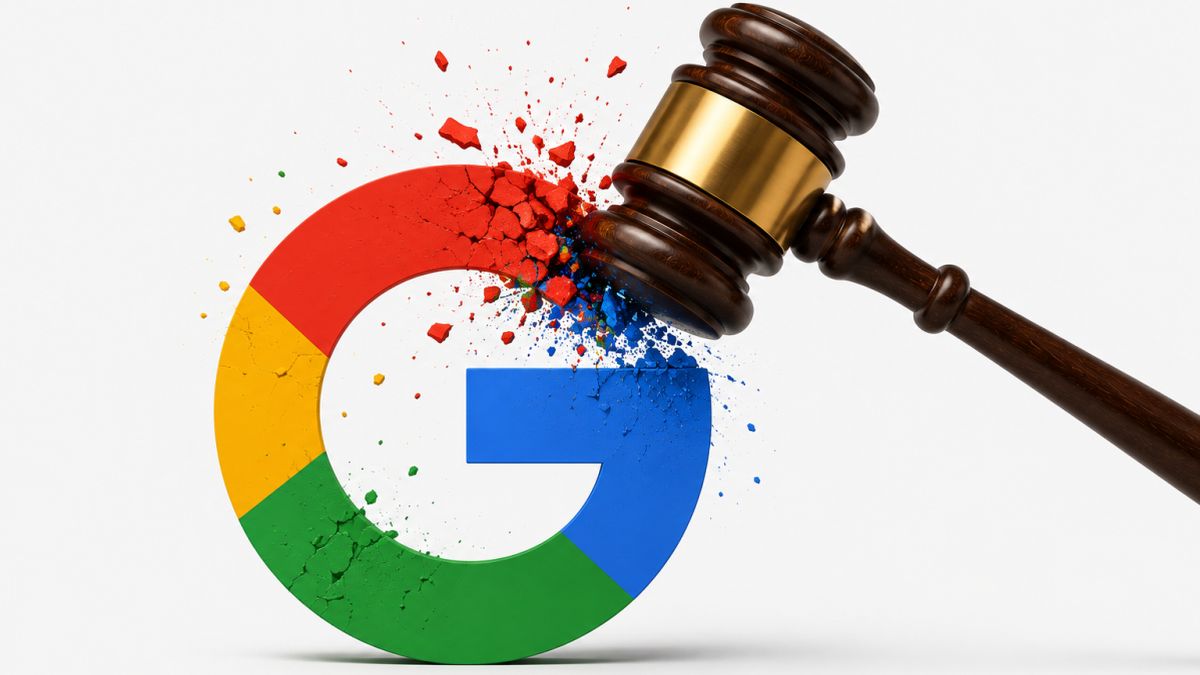
Google’s AI overview has incorrectly linked two Munich publishers to fraud schemes. Both went to court – and were proven right. The Munich Regional Court decided: If the AI generates its own false statements, Google is liable. The ruling could fundamentally change the rules of the game for AI-generated search results.
Google has been the most successful search engine on the Internet for years. Originally, users were simply provided with a curated list of results that, according to the algorithm, matched the query in question. But there is now a so-called AI overview in front of these links. Users are receiving an answer less and less directly from a website and more and more often from Google’s own AI.
As we all know, artificial intelligence has a tendency to distort or misinterpret facts. This also applies to Google’s AI answers. But what happens if this causes damage or damages the reputation of a company? A German court has decided that in the event of errors in the AI overview, it is not the operators of a source site that are liable, as was previously the case, but rather Google itself.
Publishers sue against Google’s invented AI answers
Two Munich publishers had sued for damage to their reputation. Their argument: Anyone who googled certain terms was told by the AI overview that the two companies were known for scams, subscription traps and dubious business practices.
These allegations are untenable and are based on the fact that the Google AI mixed information about other, actually dubious companies with the two publishers and constructed connections that cannot be found in any of the linked sources.
Google did not respond to a warning, so both publishers went to court. With success, because the Munich regional court issued an interim injunction prohibiting Google from further disseminating the false claims and imposed 80 percent of the legal costs on the company.
Google’s AI overview has its own “voice”
From a legal perspective, the case is so relevant because it breaks with previously valid logic. For classic search results the Federal Court of Justice In 2018 it was decided that search engines only have limited liability.
The reasoning at the time was that Google only displayed third-party content that was posted on the Internet by other parties. An obligation to check every single page in advance would make the search engine business model impossible, and without such services the Internet, with its flood of data, would hardly be usable.
According to the Munich judges, it is precisely this argument that cannot be transferred to the AI overview. Because the AI doesn’t just display external sites, it also evaluates them, links them and uses them to formulate its own, self-contained statement. Although this is presented as objective information, it is often an interpretation of the sources.
This turns the neutral intermediary into an independent author. And you have to stand up for your own statements. Especially since Google develops the AI itself and operates the underlying algorithms.
This is how Google defends the AI overview
Google defended itself with the argument that users could check the linked sources themselves and already knew that AI answers should not be blindly trusted. The court did not accept this. The mere possibility of refuting a statement through one’s own research does not release anyone from responsibility for that statement. The AI overview is understandable in itself and does not provide any indication that it may contain errors.
The Verdict However, this is not a general accounting for the function. Google still does not have to be liable for third-party content, even if it is used by the AI. The company is only responsible if the AI claims something that is not stated in any source. The false information must therefore have been self-generated.
Almost every tenth AI answer is wrong – out of trillions of queries
The extent of the hallucinations shows one in the New York Times published study. Accordingly, Google’s AI overviews with the current model were correct in 91 percent of cases. Accordingly, almost every tenth answer was incorrect. With over five trillion search queries per year, that’s several million wrong answers per hour.
Even among the correct answers, more than half could not be clearly substantiated by the sources provided. So the AI claims things whose origins can hardly be traced. A problem that the Munich regional court has also recognized.
At the moment, however, there is no final judgment; so far it is only an interim injunction. Google will probably move on to the next instance. It remains to be seen whether the decision will stand there. However, this has a basis – a fundamental decision by the Frankfurt am Main Regional Court from September 2025. If the case law prevails, Google and other AI providers would have to be much more responsible for what their machines say in the future.
Also interesting:
- Apple is racing to catch up: Siri AI is supposed to bring AI magic to the iPhone
- AI boycott: First Netflix productions without German voice actors
- New EU plan – because the USA could paralyze our digital systems
- Advertising now even during streaming breaks – users love it
The post German court decides: Google is liable for incorrect AI answers appeared first on BASIC thinking. Follow us too Google News and Flipboard or subscribe to our newsletter UPDATE.
As a Tech Industry expert, I believe that the German court ruling holding Google liable for incorrect AI answers sets a significant precedent in the field of artificial intelligence. This ruling highlights the importance of accountability and transparency in AI systems, as well as the potential risks associated with relying solely on AI technology for providing information.
It is crucial for tech companies like Google to ensure that their AI algorithms are accurate and reliable, especially when it comes to providing information that could have a significant impact on users. This ruling serves as a reminder that companies must take responsibility for the outcomes of their AI systems and work towards improving the accuracy and reliability of their technology.
Moving forward, tech companies should prioritize the development of AI systems that are transparent, explainable, and accountable. It is important for companies to invest in robust testing and validation processes to mitigate the risks of incorrect AI answers and ensure that users can trust the information provided by these systems. This ruling should serve as a wake-up call for the tech industry to prioritize ethical AI development and ensure that AI systems are held to high standards of accuracy and accountability.
Credits