The article New process pushes lithium costs below $6,000 per tonne first appeared in the online magazine BASIC thinking. With our newsletter UPDATE you can start the day well informed every morning.
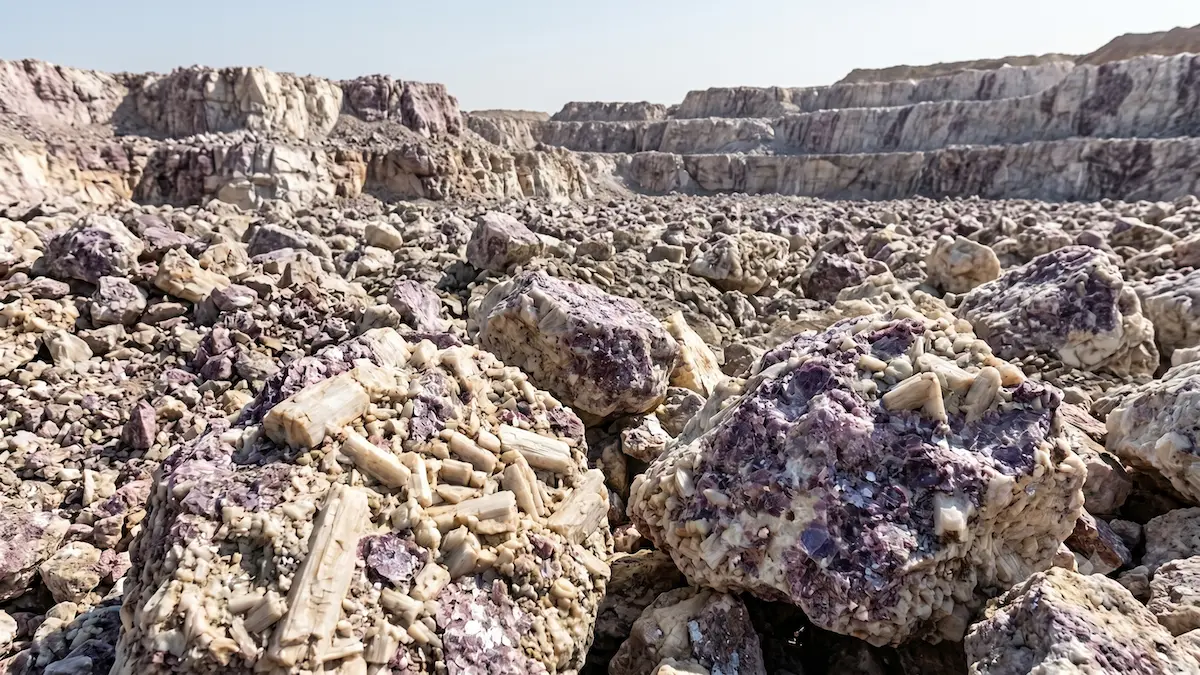
Lithium is the most important raw material for electric car batteries. But mining is expensive, energy-intensive and environmentally harmful. MIT researchers have now developed a process that dissolves the raw material from rock using a weak acid at just 95 degrees Celsius and could bring the cost down to less than $6,000 per ton. The spin-off Rock Zero is already planning a pilot plant by the end of 2026. What that means for the lithium market and what the risks are.
To date, the metal in demand has usually been mined via two established routes. It is either laboriously evaporated from salt lakes or extracted from hard rock in mines using a lot of energy. Traditional hard rock mining requires heating the ore at extremely high temperatures and using dangerous chemicals. These traditional processes often require huge areas or put a lot of strain on the environment.
The new procedures instead relies on a weak acid called ammonium fluoride to dissolve the normally unreactive silicate minerals. This chemical compound is known, among other things, from commercially available pastes for etching glass.
The chemical reaction takes place at moderate temperatures of up to 95 degrees Celsius in simple, stirred plastic tanks. This means that the formation of highly dangerous hydrofluoric acid can be completely avoided.
Study author Camden Hunt, former project manager at the MIT Center for Electrification and Decarbonization of Industry, in addition:
By 2040, we need to quadruple global lithium production, which will require hundreds of new lithium production facilities. Hard rock is abundant; you find it everywhere. But the majority of hard rock refining takes place in China. Our central thesis is that if you can find an easier way to break up the rock, extract the lithium, and produce battery-grade lithium salts, you can transform the lithium market.
Lithium: What makes the low-temperature process so efficient
By eliminating the energy-intensive roasting of the ore in a furnace, energy costs could be reduced significantly. In addition, this technological approach would potentially reduce greenhouse gas emissions during production. Ore with too high an iron content will not undergo the phase change correctly in traditional furnaces, but instead melts into a glass-like material. However, this high iron content is not a problem with the new low-temperature process.
In initial laboratory experiments, it took a few days to extract the lithium from the spodumene ore. The team has now shortened this period to under twelve hours. In addition to the valuable lithium, the process also produces alumina for aluminum production and cementitious silicon dioxide, which can be added to concrete. The inventors therefore speak of a holistic approach that utilizes all components of the ore.
Lithium extraction for $6,000 per ton
Assuming that the ammonium fluoride can be recycled to a high degree, the researchers estimate the cost of extraction to be less than $6,000 per ton. This would make the method cheaper compared to current processes in solid rock mining and even competitive with extraction from salt lakes.
The test tanks in the laboratory in Cambridge currently handle a volume of three kilograms per run. The young company is already planning to build a first pilot plant by the end of 2026 in order to start test operations in 2027.
However, the new process would have to assert itself in a volatile market environment with strong price fluctuations and established large corporations. After a peak in 2022 and lows in late 2024, the market has been slowly rising since early 2026. In addition, technological alternatives such as lithium-free sodium-ion batteries could make market navigation more difficult. In the long term, however, the Rock Zero team hopes to expand the method to other silicate minerals in the earth’s crust.
Also interesting:
- Cloud Edge Enhancement: Cloud effect pushes solar systems above rated output
- Electric car in the summer heat: 5 tips to protect your battery
- Internet addiction: Study identifies three psychological causes
- 4 navigation apps from Europe that will reliably get you to your destination
The post New process pushes lithium costs below $6,000 per ton appeared first on BASIC thinking. Follow us too Google News and Flipboard or subscribe to our newsletter UPDATE.
As a tech industry expert, I believe that the development of new processes that are able to push lithium costs below $6,000 per ton is a significant advancement for the industry. This lower cost will make lithium more accessible and affordable for manufacturers of electronic devices, electric vehicles, and energy storage systems.
This development is likely to drive further innovation and adoption of lithium-based technologies, as the lower cost will make these products more competitive with traditional alternatives. Additionally, lower lithium costs could potentially lead to increased investment in lithium mining and production, which could help to meet the growing demand for this important mineral.
Overall, this news is a positive development for the tech industry and is likely to have far-reaching implications for the future of technology and sustainability.
Credits