The article With hydrogen and solar: Floating power plant reduces port emissions by 77 percent first appeared in the online magazine BASIC thinking. With our newsletter UPDATE you can start the day well informed every morning.
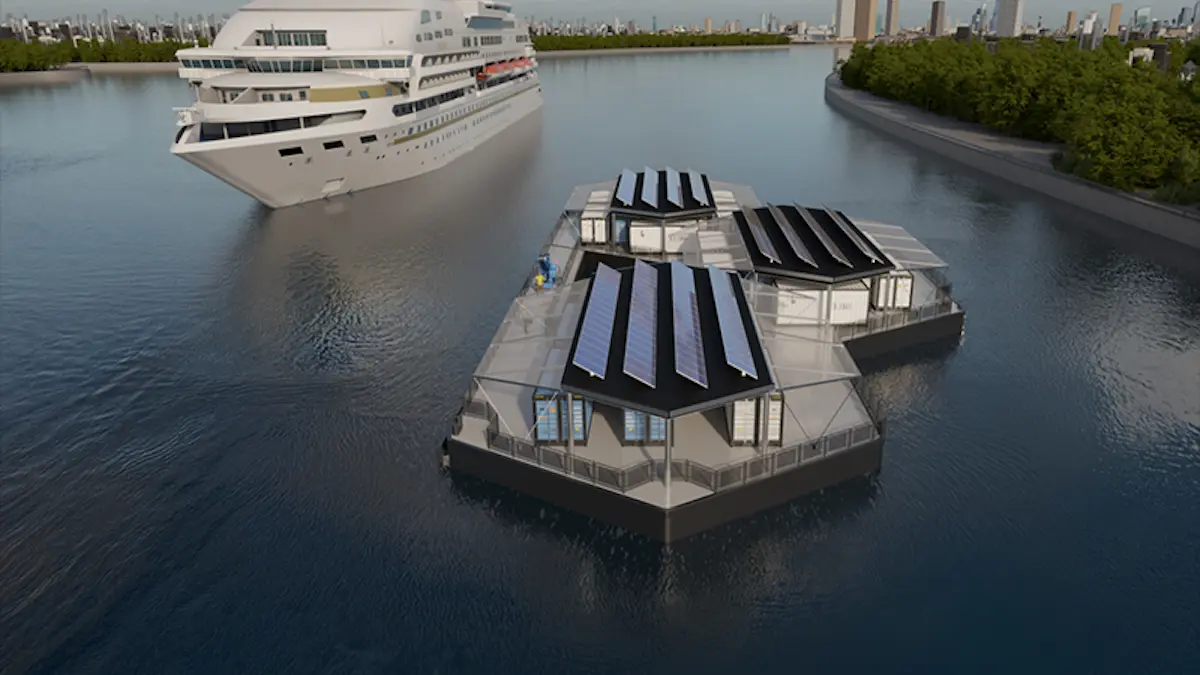
Ships in port often run on diesel generators for hours because there is no shore power. A British consortium wants to change that with a floating platform that combines hydrogen fuel cells, batteries and solar energy. The system is intended to reduce port emissions by 77 percent and make years of onshore network expansion unnecessary. Initial discussions for deployments from Great Britain to Australia are already underway.
The decarbonization of shipping ports often fails due to a lack of local network capacity. An expansion of the traditional onshore electricity infrastructure usually takes between three and seven years. A consortium developed therefore a completely off-grid power center on the water as part of a British innovation program.
The new floating platform is intended to completely avoid the bureaucratic and technical hurdles on land. The modular system consists of three hexagonal platforms with a total area of 1,200 square meters. The system combines a battery capacity of 45 megawatt hours with modular fuel cells.
In addition, on-board solar systems feed up to 146 kilowatts of renewable energy directly into the system. This combination should enable the platform to deliver around 91 megawatt hours of electricity per week. For comparison: This could supply around 1,400 households per week.
Without a grid connection: Floating power plant for ships will deliver 5 megawatts of electricity
The modular fuel cells operate continuously throughout the week with an output of 1.3 megawatts. They charge the onboard batteries slowly and release the energy quickly when a ship arrives. In the maximum configuration, the system can provide five megawatts of continuous power. This could guarantee the power supply of medium-sized cruise ships or other large ships.
The floating infrastructure requires between 7,500 and 8,000 kilograms of hydrogen per week to operate. This is stored in seven special, ISO-compatible low-pressure tanks directly on the floating platform. Refueling would take place about twice a week, allowing ports to gradually introduce the new technology. Permanent hydrogen infrastructures on land would not be necessary for initial use.
77 percent fewer emissions – but at what cost?
An initial analysis shows that the system could reduce emissions from ships at berth by around 77 percent. The production, transport and operational losses of hydrogen are already fully included.
The consortium estimates the global market for these off-grid solutions to be 62 terawatt hours annually. Since the infrastructure is transportable, the risk of bad investments for port operators would be significantly reduced.
At the moment, energy costs are still higher than traditional shore power at 0.25 to 0.50 pounds per kilowatt hour. However, according to the developers, the commercial value lies primarily in the rapid deployment and high flexibility.
Future economies of scale and optimized manufacturing processes are expected to improve price competitiveness over time. Initial discussions for larger operations from Great Britain to Australia are already underway.
Also interesting:
- Simply explained: How does a wind turbine actually work?
- E20: What you need to know about the new organic fuel
- Pseudo-noise and infrasound: No evidence for wind turbine myths
- Battery technologies in comparison: lithium, sodium, solid state and redox flow
The post With hydrogen and solar: Floating power plant reduces port emissions by 77 percent appeared first on BASIC thinking. Follow us too Google News and Flipboard or subscribe to our newsletter UPDATE.
As a tech industry expert, I am thrilled to see innovative solutions like floating power plants that can significantly reduce port emissions. The combination of hydrogen and solar power is a powerful one, as it allows for clean energy generation without relying on fossil fuels.
By reducing port emissions by 77 percent, this technology has the potential to make a real impact on air quality and overall environmental sustainability. It also showcases the importance of investing in renewable energy sources and finding creative ways to implement them in various industries.
I believe that initiatives like this one are crucial for the tech industry to continue making progress towards a more sustainable future. I hope to see more companies and organizations adopting similar technologies and working towards reducing emissions in all sectors.
Credits