The article Who is actually speaking here? The inconvenient truth about AI in politics first appeared in the online magazine BASIC thinking. With our newsletter UPDATE you can start the day well informed every morning.
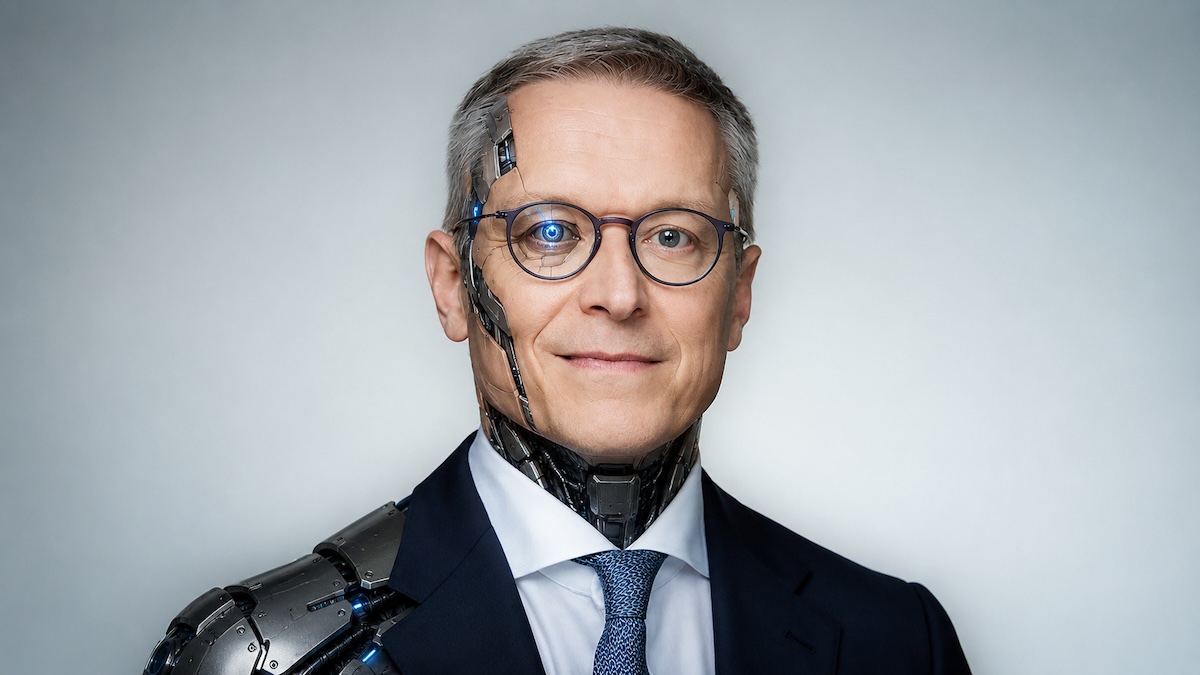
First Mario Voigt, then Digital Minister Karsten Wildberger: Within a few days, two top politicians came under suspicion of having written speeches and guest contributions largely with the help of AI. The cases raise a fundamental question: Where does legitimate AI support end and political deception begin? A commentary analysis.
Politicians use AI: The cases of Wildberger and Voigt
- According to one Research the time (€) there are many indications that Digital Minister Karsten Wildberger apparently Created several speeches and guest articles for major newspapers using artificial intelligence has. The analysis was done using the AI detector Pangram carried out, which is considered relatively reliable. Accordingly, an article under Wildberger’s name in the Handelsblatt is said to have come almost entirely from an AI. An article published by the Frankfurter Allgemeine Sonntagszeitung (FAS) was created primarily with the help of artificial intelligence. A speech in Washington in July 2024 is also said to have come entirely from an AI, as have several speeches in the Bundestag to a large extent.
- Just a few days before the Wildberger revelations, a debate surrounding the Thuringian Prime Minister Mario Voigt (CDU) had already discussed the use of AI fueled at the highest political levels. Due to indications that a guest article by Voigt was generated using artificial intelligence, the Frankfurter Allgemeine Zeitung the published article was taken offline again. The portal Ask the state had previously researched that several of Mario Voigt’s texts and speeches may have an AI background.
- SPD politician Tiemo Wölken had already given a speech in the European Parliament at the beginning of 2023, which he had ChatGPT write. Spicy: Apparently during the entire speaking time no one in the plenary hall noticedthat it is an AI-generated text. Only at the end did the SPD politician dissolve: “Thanks to ChatGPT.” According to his own statements, Wölken wanted to draw attention to the risks of artificial intelligence.
When AI use in politics becomes a problem
The real scandal is not that politicians or journalists use AI, but how they use it. The assistant is artificial intelligence a legitimate tool – similar to speechwriters, editors or research aids. However, it becomes problematic when AI no longer supports but instead replaces. The following applies, especially when it comes to quotations, sources or supposed facts: Anyone who is responsible for a text must also check it.
Anyone who doesn’t do this delegates political responsibility to a probability calculator. There is also a second problem: Bad AI texts are not only boring, they also damage debates. When speeches and guest contributions in one sterile AI bureaucratic Germana lot of hot air remains in ground formulations. However, politics thrives on attitude, exaggeration and comprehensibility. But anyone who makes everything sound like “strategic transformation of resilient future spaces” is saying one thing above all: nothing.
The benchmark should therefore not be whether AI was used, but rather whether the result was convincing and verified. Anyone who accepts machine-generated texts without checking them risks errors, hallucinations and a loss of trust. And sometimes that would be better solution actually the simplest: no AI. After all, authenticity in political communication is not a technical gimmick, but a scarce commodity.
Voices
- A Spokesman for the Federal Digital Ministry confirmed versus time (€): “Yes, Federal Minister Karsten Wildberger also uses AI as a work tool. The texts mentioned were developed with the support of AI. There was no separate disclosure to the editorial teams – because Minister Wildberger sees AI as a supporting work tool, the use of which cannot be accounted for in any other way than word processing, research tools or editorial support.”
- The Erfurt AI expert and political scientist Thorsten Thiel particularly considers the possible use of unverifiable or fabricated quotes for concernas could be the case with Mario Voigt: “That’s problematic. That shows extremely poor craftsmanship.” In principle, the use of AI as an assistant is legitimate: “It seems to me that this type of speech is written with assistance as the norm. There are also speechwriters for that. (…) That doesn’t seem to be a drama to me.” Thiel also warns of a “hunting fever” for alleged plagiarism: “Hunting with tools is definitely dangerous because it constantly creates a model of suspicion. (…) Politics must professionalize itself in order to dampen the risk of scandalization.”
- EU MP and SPD politician Tiemo Wölken at the time about his ChatGPT experiment in the European Parliament: “I want to point out the dangers that unregulated #AI systems pose for our society. The fact that you hardly notice that my speech was written by an AI is problematic. The AI is virtually invisible, but makes mistakes. ChatGPT, like other AI models, is dependent on its data sets. But they are often error-prone or biased. ChatGPT’s filters are easy to circumvent. For example, you can get ChatGPT to be male “Valuing black children as expendable is unacceptable!”
Between AI control and digital witch hunts
Whether in journalism or politics: the debate about the use of AI is just beginning. Just like the hunting fever – with justification, but possibly also irrelevant aspects. Because if you want to understand AI, you have to remember that it makes answers and decisions based on data and patterns.
However, dashes and certain punctuations have always been a popular stylistic device – especially in journalism. And: Who is surprised?that AI copies such patterns? At least I won’t let the AI debates interfere with my writing.
However: I think it is legitimate to a certain extent to have texts sorted, pre-formulated or visualized – provided you have your own thoughts, post-processing and checking. However, guest posts or speeches written entirely by AI are a absolute no-go.
Editorial teams should therefore set transparent standards. This also applies to political communication. Because the truth is: Many AI users In the end, you end up harming yourselfwhen they give up control over their own texts. Or: Anyone who lets a machine lend their voice runs the risk of losing their own.
More cases are likely to follow – in politics as well as in journalism. Such suspicions have been circulating there for a long time. However, the new attention should not turn into a digital witch hunt. Because: Where AI algorithms make hasty judgments about AI authorship, scandals can quickly be constructed that are not scandals at all.
Also interesting:
- SpaceX IPO makes Musk a trillionaire – in the highest castle in the air of all time
- The next lame authority? What is behind the AI Institute for Germany
- Apple is racing to catch up: Siri AI is supposed to bring AI magic to the iPhone
- AI boycott: First Netflix productions without German voice actors
The article Who is actually speaking here? The inconvenient truth about AI in politics appeared first on BASIC thinking. Follow us too Google News and Flipboard or subscribe to our newsletter UPDATE.
As a Tech Industry expert, I believe that the speaker in this case is likely someone who has deep knowledge and experience in the field of artificial intelligence and its impact on politics. They are likely presenting a critical perspective on the role of AI in shaping political discourse and decision-making processes.
The inconvenient truth about AI in politics is that while it has the potential to streamline processes, improve efficiency, and enhance decision-making, it also comes with significant challenges and risks. These include issues related to bias, privacy, accountability, and manipulation.
It is important for policymakers, technologists, and the public to critically examine and address these challenges in order to ensure that AI is used ethically and responsibly in the political sphere. Only through thoughtful consideration and proactive measures can we harness the benefits of AI while mitigating its potential negative impacts on democracy and society as a whole.
Credits