The article Wind turbines without a crane: Namibia tests new assembly system – with success first appeared in the online magazine BASIC thinking. With our newsletter UPDATE you can start the day well informed every morning.
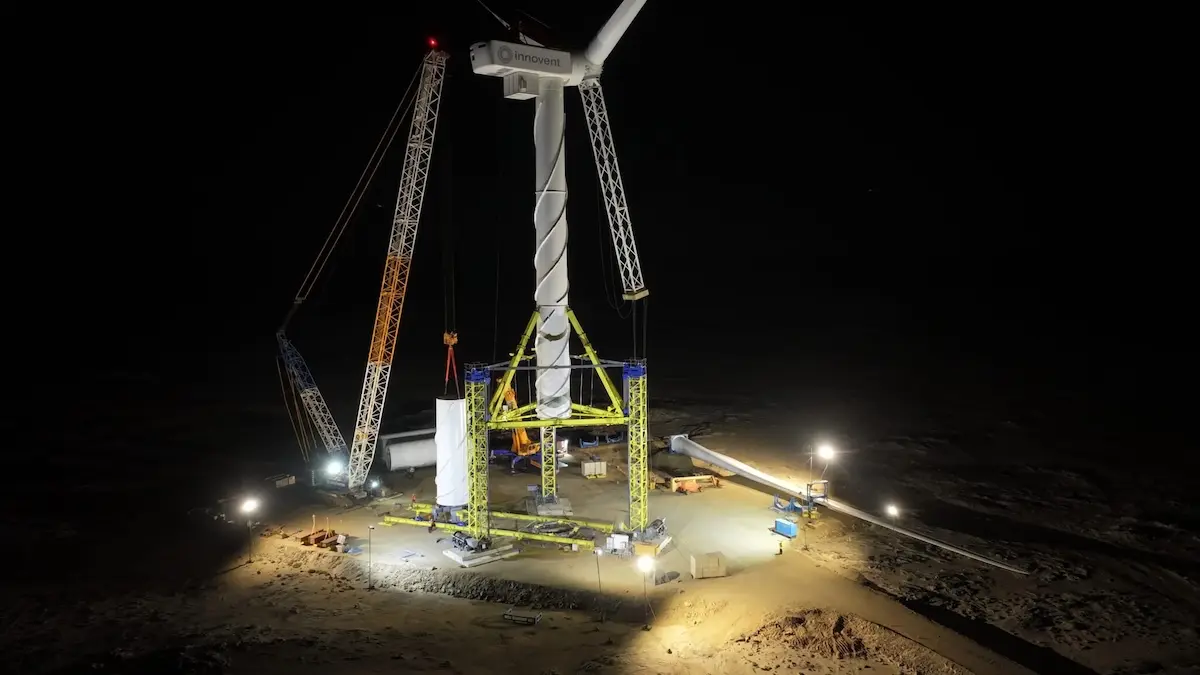
Setting up wind turbines when the wind is too strong for any crane? That’s exactly what the company Nabrawind has now achieved in Namibia. With the so-called Skylift technology, large turbines were built for the first time without heavy cranes and with gusts of up to 20 meters per second. The InnoVent Diaz wind farm is expected to cover six percent of Namibian electricity needs in the future.
Certain regions of Namibia experience some of the strongest winds in the world, making it difficult to set up conventional wind turbines. Large standard cranes can usually only work at low wind speeds of up to eight meters per second.
The novel Skylift system from Nabrawind However, it should also work in unstable winds with speeds of 15 meters per second and gusts of up to 20 meters per second. This would reduce weather-related delays in assembly in the future.
How wind turbines can be erected without a crane
The system combines two proprietary technologies called Total SES and BladeRunner to raise the tower elements without a crane. The rotor is installed at a low height of 30 to 40 meters before the entire tower is gradually raised.
According to Nabrawind, this method ensures that the structural integrity of the thin-walled tube towers is fully protected throughout the entire process. This simplifies on-site logistics, as expensive special cranes no longer have to travel.
In the InnoVent Diaz wind farm, a gearless system of the type Goldwind GW165/6000 was built as the first of its kind using this technology. The engineers had to develop a special process in which two rotor blades were mounted at a 30-degree angle to the ground.
A temporary counterweight stabilized the rotor until it reached the final hub height. Only at the end was the balance weight replaced with the third rotor blade using the BladeRunner system.
Namibia: New wind farm to cover 6 percent of energy needs
A total of seven of these wind turbines are to be built in Namibia. There are also four turbines of a different type that have already been installed. Due to the higher installation rate, the construction of the seventh system should be completed in a net cycle time of one week. Once fully operational, the wind farm is expected to generate 230 gigawatt hours of electricity annually.
The forecast energy production would cover around six percent of Namibia’s total electricity needs. At the same time, around 200,000 tons of climate-damaging carbon dioxide emissions could be avoided every year by operating clean wind turbines. The successful pilot project not only delivers green electricity, but also shows the validation of the installation system. Operators in wind-rich but logistically difficult regions could benefit from this further development worldwide.
Also interesting:
- Cloud Edge Enhancement: Cloud effect pushes solar systems above rated output
- Electric car in the summer heat: 5 tips to protect your battery
- Register a balcony power plant: This is how you avoid a fine of up to 50,000 euros
- Methanol fuel cells in cars: an overview of the opportunities, risks and functionality
The post Wind turbines without a crane: Namibia tests new assembly system – with success appeared first on BASIC thinking. Follow us too Google News and Flipboard or subscribe to our newsletter UPDATE.
As a Tech Industry expert, I am excited to see Namibia testing a new assembly system for wind turbines without the need for a crane. This innovative approach not only reduces the cost and logistical challenges associated with traditional crane assembly but also opens up new possibilities for installing wind turbines in remote or challenging terrains.
The success of this new assembly system in Namibia is a testament to the ingenuity and creativity of the engineers and technicians involved in the project. By utilizing innovative methods and technologies, they have demonstrated that it is possible to overcome traditional limitations and barriers in the renewable energy industry.
I believe that this new assembly system has the potential to revolutionize the way wind turbines are installed globally. It could significantly reduce the time and resources required for installation, making wind energy more accessible and affordable in various regions around the world.
Overall, I am impressed by Namibia’s initiative and success in testing this new assembly system for wind turbines. I look forward to seeing how this innovation will be further developed and adopted in the renewable energy industry.
Credits